Updated 22 October 2026
Plan a photography trip to Yunnan around one main subject region, a base close to the views you want, and enough time to return when the light changes. For a first dedicated trip, a week including gateway days can work better than a province-wide circuit. Keep three nights at the main photography base when you want two full local days, and treat exceptional skies, cloud seas and autumn colour as possibilities.
Choose the holiday you want to remember, not a list of images you feel obliged to reproduce. Rice terraces, tea forests, old towns and lake shores have different seasons, access arrangements and daily rhythms. A route that works for a landscape photographer may be tiring for a companion who wants leisurely meals and later mornings.
Choose a subject before choosing a long route
Pick two or three priorities: broad landscapes, agricultural patterns, street scenes, architecture or portraits with willing participants. Then identify the smallest route that gives those interests time. A few nearby locations can provide varied work without spending every good afternoon in a vehicle.
| What you want to photograph | A useful starting area | The trip choice it creates |
|---|---|---|
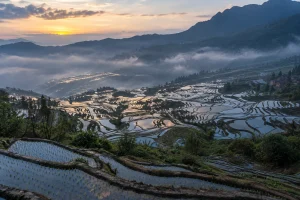
| Terrace patterns and farming landscapes | Yuanyang / Honghe Hani terraces. | Stay near your selected permitted views; allow another full day if the main dawn fails. |
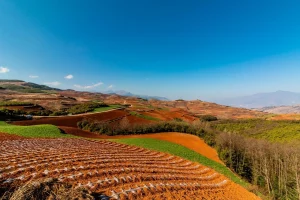
| Red soil, crops and changing side light | Dongchuan Red Land, as an excursion from Kunming. | Use a countryside night for morning and afternoon opportunities; choose fields by actual cultivation. |
| Lakeside scenes, streets and architecture | Dali and nearby towns, or Lijiang with selected local outings. | Keep a practical base and a small daily selection; private courtyards and paid terraces have their own access. |
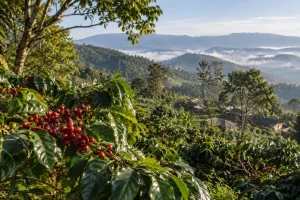
| Tea villages and forest relationships | Jingmai Mountain. | Give the road journey and village stay their own nights; stay on established visitor routes. |
| Autumn colour alongside a relaxed local stay | Tengchong, with a separate ginkgo decision. | Confirm dated local colour reports and make the main trip worthwhile without peak leaves. |
The Duoyishu and Bada photography guide develops the Yuanyang choice. The Dongchuan Red Land guide covers that separate excursion. Use those local pages after choosing your region, rather than combining every dawn recommendation into one compressed Yunnan route.
If your party prefers a general holiday with occasional photography, keep one early session and more ordinary daytime exploring. Say this at the enquiry stage. It changes the hotel choice, driver’s working hours and how much waiting the rest of the group should expect.
Book nights that create usable local days
A transfer day is not a full photography day. Arriving in a gateway city is also different from checking into a mountain guesthouse. Before paying, write down every overnight base and identify which mornings and afternoons are genuinely available there.
| Time at one photography base | What it gives you | Useful compromise |
|---|---|---|
| 1 night | An arrival afternoon and one morning, if transfer and admission allow. | Choose one main subject; do not count on a second weather opportunity. |
| 2 nights | One full day between arrival and departure, with two possible mornings. | Keep the same room and revisit a nearby view rather than changing base. |
| 3 nights | Two full days, with time for landscape, village context and a slower session. | Include rest after early starts and a genuinely flexible block. |
| A week including gateways | One main subject region with gateway and transfer nights. | Remove distant extensions before reducing every local stay to one night. |
Three nights are a choice about flexibility, not a promise of three successful dawns. Ask about the room’s access, heating or cooling, bathroom, meals and secure space for equipment. For a predawn departure, agree breakfast and the return time so an early start does not lead to an entire day without proper rest.
Choose a hotel for its relationship to the actual pickup and viewpoint, not a generic destination name. Confirm the final vehicle stop and the walk with your bags. An atmospheric upper-floor room may involve steep steps; a balcony view may face a different valley from the one you intend to photograph.
Keep one subject region in a six-day framework
This example gives five nights: one gateway night, three at the photography base and one back at the gateway. Use it as a planning pattern for an outing such as a terrace-area stay, with the actual road stages, accommodation and open viewpoints checked separately.
| Day | Main purpose | Overnight |
|---|---|---|
| 1 | Arrive at the gateway, recover and confirm transport, room and equipment. | Gateway, night 1. |
| 2 | Travel to the photography base in daylight; inspect a permitted nearby view. | Photography base, night 2. |
| 3 | One early session, breakfast and rest, then a manageable afternoon choice. | Same base, night 3. |
| 4 | Revisit or choose village and landscape context; keep room for weather. | Same base, night 4. |
| 5 | Return to the gateway, without an essential remote session first. | Gateway, night 5. |
| 6 | Depart at the agreed time. | Departure; no sixth night. |
A shorter trip can remove a local night, but recognise what you lose. Adding another distant region requires additional travel stages; it should not happen by labelling a long transfer a “scenic photography day”. If you add Jianshui, Dali or another town for architecture and street work, give it a real place in the overnight plan.
Keep the final return independent of an essential onward connection where possible. A gateway night lets you finish without rushing a mountain-road journey to catch a train. Obtain the driver’s current estimate and the carrier’s check-in requirements before selecting the final departure.
Plan the light on the fields, not only the sunrise clock
Tell the local guide what you want to see: reflections, side-lit contours, people at work, changing cloud or a broader landscape. Ask when that subject normally receives direct light on your date and where you can stand lawfully. A sunrise time for a town does not say when light reaches a valley behind a ridge.
Earlier Dongchuan travellers described fields entering shadow before the horizon sunset, and a morning when sunrise itself did not light the intended view. Others found agricultural coverings where they expected colour. Those are reasons to ask a precise local question and keep another composition available, rather than promising a photograph from a clock time.
Agree the meeting point and likely return the previous evening. Save the Chinese name and the correct viewing-platform pin; a village pin may lead to a narrow approach that is unsuitable for your vehicle. Use only currently open platforms and permitted routes. A gap in a fence does not become an entrance because someone posted a photograph from the other side.
Expect a working landscape to change
Terraces are agricultural land with a water system, villages and forests around them. UNESCO’s account of the Honghe Hani terraces explains those relationships. Looking for the way the landscape works can be more rewarding than looking only for an uninterrupted mirror of water.
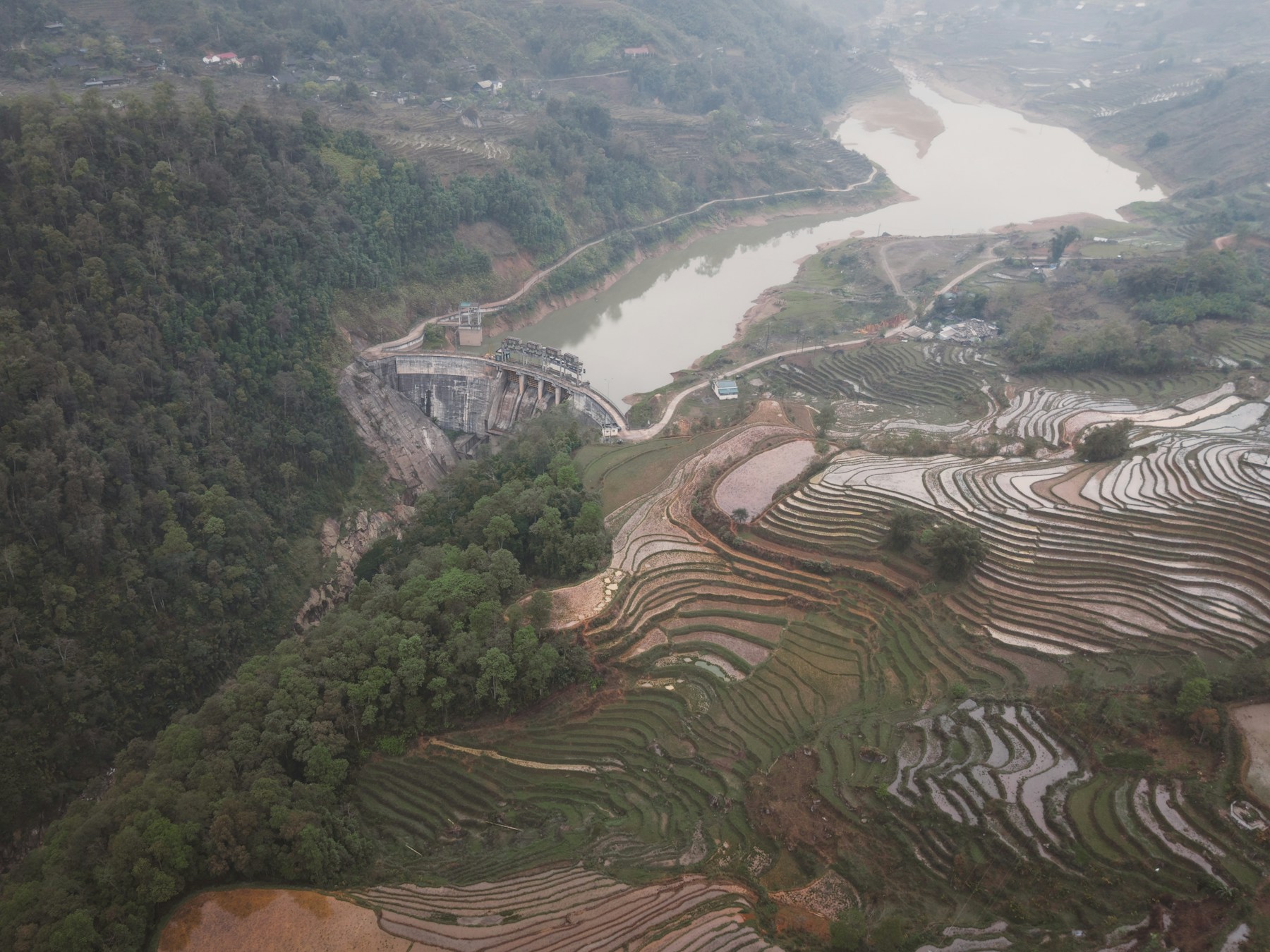
Reference images may show a different planting stage, a different corner of a village or a view taken from the air. Ask for a recent dated report from the area you plan to visit. Do not infer a public ground-access route from an aerial photograph, or assume a private cafe’s terrace is an unrestricted viewpoint.
For seasonal foliage, compare dated reports rather than fixed peak-week claims. A Tengchong contributor’s explicit 17 October visit described trees at different stages of colour. That does not establish the colour of another village or a future date. Use the Tengchong ginkgo guide for the separate seasonal decision and keep a worthwhile local alternative.
Make weather alternatives part of the photography plan
Allow a useful response to each likely change before setting off. One misty morning might favour details; persistent fog might favour breakfast and a later reassessment. Heavy rain or a local warning can require cancelling the outdoor outing altogether. Another night increases choice without controlling the weather.
| What changes | A photographic alternative | A practical limit |
|---|---|---|
| Dense fog or an obscured distant view | Closer details from an open, safe location; a later session or a seated break. | Do not race between mountain viewpoints or stop on a blind bend. |
| Fields differ from the reference photograph | Look at actual crops, water, coverings and people’s work. | Do not step into crops or ask a farmer to alter the scene. |
| Rain, strong wind or an unsuitable approach | Use a sheltered, permitted subject or rest and protect equipment. | A promising sky does not override a closed platform or local warning. |
| A resident or venue declines photography | Choose another consenting subject or a public view that respects privacy. | A guide, entry ticket or purchase does not supply another person’s permission. |
| A paid session or access permit falls through | Agree a different allowed visit and clarify any refund before proceeding. | Do not move a commercial shoot onto an unapproved site. |
Discuss a shorter walk, village interpretation, an open exhibition or a quiet meal as alternatives. Confirm the actual opening and accessibility before relying on an indoor venue. Do not assume a closed outdoor attraction leaves its visitor centre operating, or that any cafe provides shelter without a purchase or reservation.
For a mixed-interest group, agree which sessions are optional. A companion can sleep in or enjoy breakfast only when the room access, meeting arrangement and any support are workable. Splitting a party may need extra transport or guiding; settle that in the proposal rather than improvising at a remote viewpoint.
Carry the equipment you can comfortably use
Bring a kit suited to the actual walking and transport. A phone or a modest camera can be a sensible choice when you want to explore without heavy bags. If carrying more, keep essential equipment in a manageable day bag and decide what stays securely at the hotel. A longer lens is useful only if you are willing to carry it and the visibility supports the subject.
Pack rain protection, a lens cloth, charged batteries and a way to back up files. For a dark approach, use an appropriate small light while respecting other visitors and local instructions. Keep hands free on steps. Put a tripod where it will not block a walkway, access ramp or another person’s safe passage.
Check your carrier’s current cabin-baggage and battery requirements for the actual flight or train; do not rely on another photographer’s allowance. Tell the transport planner about cases and tripod bags so the vehicle proposal leaves room for people and luggage. Do not leave visible equipment unattended at a roadside stop.
Ask before portraits, courtyards and organised shoots
A living village is not an open studio. Ask before photographing someone closely, entering a home, moving furniture or joining an activity. Explain what the picture is for and accept a refusal. If you want a hosted portrait session, agree the participant, payment, intended use and scope; keep it distinct from an unarranged street encounter.
Families, ceremonies and work routines deserve the same respect even when you have come a long way for a photograph. Avoid blocking a doorway, interrupting worship or asking someone to repeat daily work as though the resulting picture were an unstaged record. For children, involve the responsible adult and respect the child’s response.
A commercial shoot, pre-wedding session or filming project can have different venue, participant and access requirements from ordinary sightseeing. Arrange those permissions and service terms separately. This guide helps plan a photography holiday; it does not book a photographer, supply a model release or grant use of a private location.
Keep drone permission separate from sightseeing access
Do not build a holiday around aerial work before the relevant permissions are established. At Jingmai, the heritage authority’s April 2026 notice describes continuing controls across the heritage area and approval requirements for exceptional operations. A hotel’s consent, a scenic ticket and a drone app are different from the required approvals.
For any other location, check the current aviation requirements and the local landowner or venue rules before carrying out a flight. A photograph published by someone else does not prove what is allowed for you. Keep a ground-based alternative so refusal or unsuitable weather does not undo the day.
Arrange the service around photographs and people
Separate transport, interpretation and photography instruction. A driver can know safe stopping places without teaching composition. A local guide may explain a village without acting as a professional photographer. If you want instruction, ask who provides it, in which language, for how long and with what actual experience relevant to your interests.
Ask for a proposal that names hotels, working days, pickup windows, meals, admissions, hosted sessions and the approach to weather changes. Agree any early-start or evening arrangements with the transport provider. Buying a long sightseeing itinerary does not automatically extend the driver’s day to cover every dawn and sunset.
Send Vero Trip your dates, gateways, party size, nationalities, equipment and luggage, walking comfort and two or three main subjects. Explain the balance between photography and ordinary travel, and include room, food and prayer requirements. Use the Yunnan photography route collection to compare published outlines, or describe a different region in your enquiry so the route can be built around it.
Couples arranging a portrait production can use the separate How to Plan a Pre-Wedding Photoshoot in Yunnan.
Related Journeys to Compare
These existing routes offer starting points for the region or travel interests discussed above. Read the full daily itinerary to see what is included. A visit described in this guide, a specialist session or an international border crossing is added only when confirmed in your own programme.