Shigu works best as a river-town visit with a realistic view of the First Bend of the Yangtze, rather than a brief stop intended to reproduce an aerial photograph. Give the town and its history time, choose a currently permitted viewing place, and leave a comfortable margin for the road journey from Lijiang.
A useful plan combines a town walk, the stone-drum monument and Tiehong Bridge area, then a river view and a meal or seated break. Treat a higher viewpoint as a separate decision that needs its own access and walking checks. You do not need an unmarked hillside climb to make the visit worthwhile.
What the First Bend name means
At Shigu in Yulong County, the Jinsha—the upper Yangtze—turns sharply and continues toward the northeast. The English edition of Qiushi describes this as the First Bend of the Yangtze. A 2023 Changjiang Daily field report also records a local museum interpreter explaining that the name does not mean the river has made no earlier turns.
Save both names for planning: Shigu Town, 石鼓镇, and First Bend of the Yangtze, 长江第一湾. The town is the cultural stop; the bend is a much larger feature of the valley. A business with “First Bend” in its name, a roadside photograph point and a walk through Shigu do not necessarily describe the same visit.
Use a map to understand the river’s direction, then enjoy the view available from the place you can legitimately reach. A ground-level visit can reveal the breadth of the water, the mountains and the settlement without showing the entire bend in one frame.
Choose the right kind of stop
| Your priority | A suitable plan | What to establish |
|---|---|---|
| A short river pause | One agreed visitor viewpoint and a rest before continuing. | What the actual viewing angle shows and where the vehicle can stop. |
| Town and heritage | A compact walk around the stone monument, bridge area and selected lanes. | Current access, steps, interpretation and the meeting point. |
| Photography | A viewpoint selected for your walking ability and the day’s conditions. | Legitimate access, climbing, permission and realistic light expectations. |
| A fuller day from Lijiang | Town, river view and a proper meal break, with an unhurried return. | Total road travel and any fixed evening connection. |
Choose the purpose before booking transport. A quick viewpoint stop will feel too short if you want historical interpretation, while a longer town visit may be unnecessary if your only aim is a brief landscape pause. Describe what would make the stop worthwhile for you.
A practical town walk
Start with the stone drum
The town takes its name from a drum-shaped stone monument. A China Energy News travel account describes it as a Ming Jiajing-period inscription associated with the Mu rulers, standing in a pavilion. Ask about the inscription and its setting rather than expecting an ordinary musical drum or treating a legend as a documented explanation.
Begin with the currently open visitor approach and give the monument enough space for other people to pass. If you want historical explanation, arrange the language and duration in advance. A driver who knows the route does not automatically provide a detailed account of the inscription or local history.
Continue toward the Tiehong Bridge area
The same account places Tiehong Bridge beside the monument’s pavilion over the Chongjiang River. This is a useful detail when reading the landscape: the bridge is associated with the smaller river, rather than being a crossing of the broad Jinsha itself.
Look at the relationship between the bridge, the lanes and the riverside settlement, using the public route available that day. Check access before assuming you can cross or walk along every bank. If a section is closed, keep the visit on the open side rather than looking for an informal way around it.
Choose a historical or everyday-life focus
Shigu also has Long March memorial landmarks. A Yunnan Daily report of an October 2026 organised walk names the crossing memorial, the “Jinsha Shui Nuan” bronze sculpture, Tiehong Bridge and a riverside Long March path. These provide possible themes for a historical visit; the event itself is not a regularly available visitor programme.
Ask which public memorial areas or exhibitions can be visited on your date and whether there is an appropriate explanation in your preferred language. An outdoor landmark and an indoor exhibition can have different visitor arrangements. Do not make a town walk depend on an unconfirmed museum entry or a promised ceremony.
For a lighter visit, use a compact selection of public lanes and a seated pause. A January 2026 Lijiang Daily feature describes the street-centre old theatre, market activity and local snacks. Observe how the town works as a place to live, allowing residents room to carry on with their day.
Match the viewpoint to the photograph
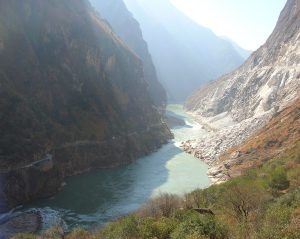
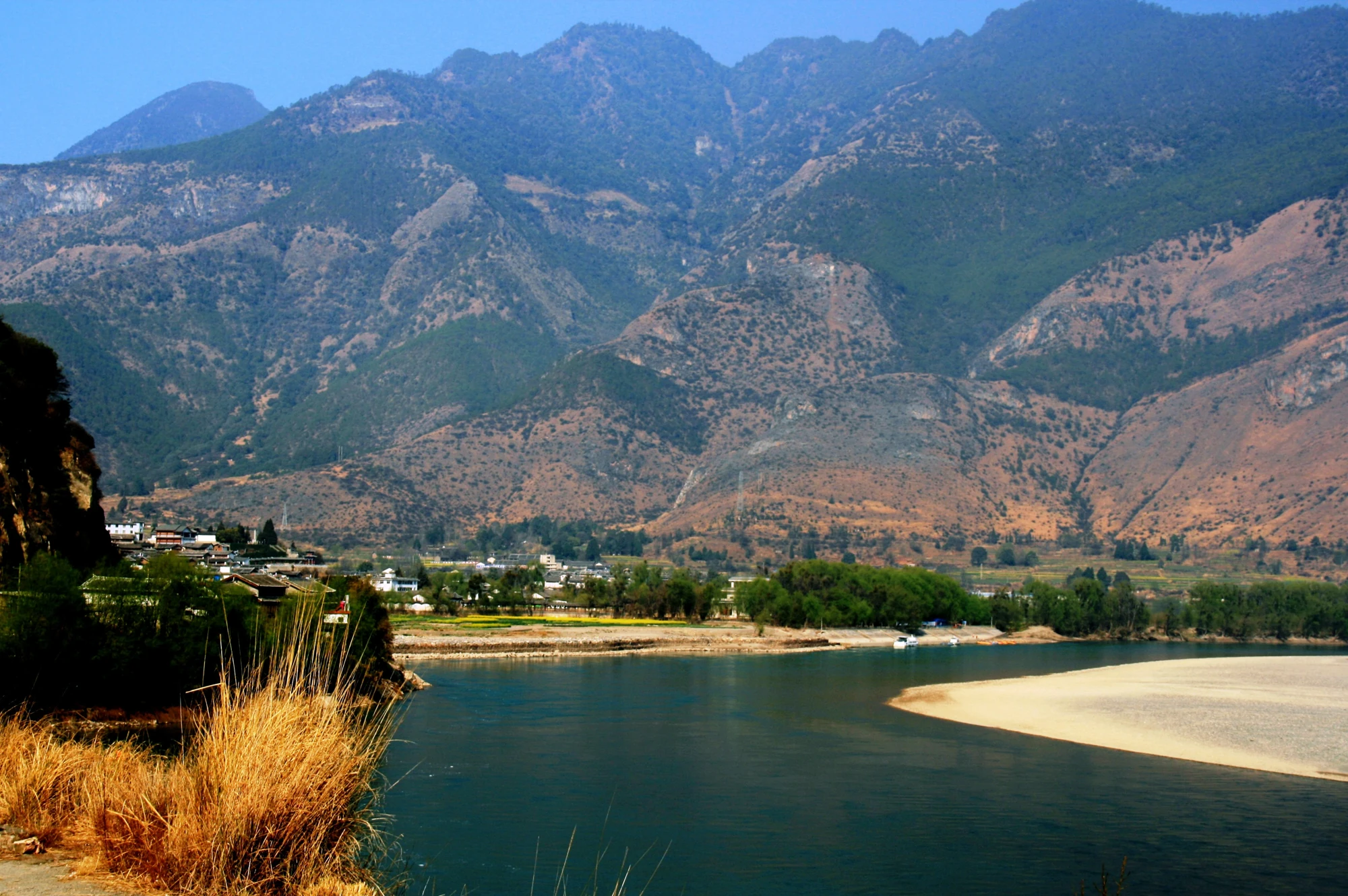
A 2023 reporter’s visit makes the distinction clear: the riverside view showed a broad river and mountains, while an aerial image revealed the larger shape. This explains why a perfectly legitimate town stop can look different from the sweeping picture that first attracted you.
Before accepting a proposed viewpoint, ask to see a representative ground-level photograph from that exact place. Establish whether it is a public visitor platform, a private premises or a walking route, and what permission or charge applies. Ask about the surface, steps and descent as well as the time required to go up.
Do not rely on years-old claims about a cheap terrace, a guesthouse shortcut or a predawn hill path. A route’s popularity online does not establish current permission or suitability. If the access cannot be clearly explained, keep the town and a confirmed visitor view as the plan.
Aerial photographs are also not an invitation to fly a drone. This guide does not establish drone permissions, a launch location or a flight route. Enjoy the view from an authorised place, without entering fields, climbing private roofs or moving past barriers to imitate someone else’s composition.
The main photograph here is a real view taken in March 2013. It is useful context for the river and mountain setting, but it does not identify a current visitor platform or guarantee today’s shoreline, water colour, buildings or visibility.
Market days and a meal break
Lijiang Daily’s January 2026 feature describes recurring market days, with produce, mountain goods and snack stalls. Confirm the next market date locally before arranging the trip around it. Do not convert a brief reference to dates ending in three, six or nine into a booking calendar without establishing the local convention.
The feature also describes chicken-pea jelly, rice cakes and sesame sweets among the town’s foods. Treat these as things to look for, rather than a guaranteed menu at a named restaurant. Ask about ingredients, preparation and any allergy before ordering; photographs of food do not establish that it suits your needs.
Give lunch enough time to be a real rest. On a market day, decide where the vehicle will wait and where the group will meet after browsing. Ask before photographing people or taking close pictures of their stalls, and keep narrow lanes and shop entrances clear.
Fit Shigu into a journey from Lijiang
| Travel pattern | How to use the stop | What can make it rushed |
|---|---|---|
| Return to Lijiang | Give Shigu the main sightseeing block, then return after a meal or rest. | Adding a long climb or several distant villages. |
| Onward road journey | Check the actual road sequence and allow a defined town or viewpoint stop. | Calling it “on the way” without checking the detour. |
| Tiger Leaping Gorge as well | Budget for two separate visits, their transfers and the chosen walking route. | Assuming a photograph pause is a full gorge experience. |
| A fixed train or flight later | Work backward from luggage collection and the departure procedure. | Leaving the return time open after a meal or uphill walk. |
Our suggested full outing is arrival and orientation, a selected town walk, a river view, then a meal before returning or continuing. Allow a generous half-day or more including transport, depending on the starting point and walking choice. This is planning advice, not a verified road time or a promise about site hours.
If you want Shigu during a longer journey, provide the next hotel and the day’s other commitments. Being in the same northwestern Yunnan region does not make every attraction a convenient stop. Compare the actual route before adding more sightseeing.
The Tiger Leaping Gorge planning guide explains a separate river outing with its own walking and access decisions. For a broader cultural stay, use the Lijiang cultural travel guide. A visit to one place does not include the other’s admission, transport or guiding.
Transport, costs and walking comfort
Give the driver your hotel’s permitted vehicle meeting point and the exact Shigu stop you want. Agree whether the arrangement includes waiting, moving between town and a viewpoint, a meal stop and the final return or onward drop-off. Keep the contact and collection location available offline.
Separate transport from admission, a viewpoint fee, guiding and food. This guide does not publish a current bus schedule, entrance price or universal opening-hours range for the town and its individual sites. A public street, a memorial, a private terrace and a higher walking route can have different arrangements.
Explain any need to avoid steps, steep slopes or prolonged standing. Check the actual route rather than describing the whole town as flat. Wear shoes with grip and carry water and sun or rain protection. If the proposed climb does not suit the least confident walker, use a shorter route.
Stay in designated visitor areas beside the river. A broad or calm-looking surface does not establish safe water access. Keep away from informal banks and sandbars, follow barriers and current instructions, and do not assume that a boat trip described in an old travel account is available or authorised now.
Questions before choosing Shigu
Will I see the whole bend from a roadside stop?
Not necessarily. Ask what the exact viewpoint shows. The town, a lower river view and an aerial panorama are different perspectives.
Is the stone drum a separate reason to visit?
Yes, if local history interests you. Combine its setting with the bridge area and selected lanes, with interpretation arranged if you want more than a visual stop.
Is the market held every day?
Do not assume so. Confirm the actual market date and leave the town visit worthwhile even when the stalls are quieter.
Can I combine it with Tiger Leaping Gorge?
Only after comparing the road sequence, walking and total day. They are separate destinations; the answer depends on the exact version of each visit.
Can Vero Trip plan the stop?
Send your travel date, hotel, next destination, party size and walking needs through Plan My Trip. Tell us whether the river, town history, market or photography is the priority. Price on request. Any confirmed vehicle, guiding language, site access and meals should be identified in the written proposal.
Sources and photograph
Reviewed on 31 October 2026: Qiushi’s English Yangtze geography account, March 2025; Changjiang Daily’s reported Shigu visit, September 2023; China Energy News: stone monument and Tiehong Bridge, October 2021; Lijiang Daily’s town and market feature, January 2026; and Yunnan Daily’s October 2026 organised-walk report. These sources establish context, not current prices, transport schedules or access to every site.
Shigu and the Jinsha River landscape, photographed on 1 March 2013. Photo: Lee E Harding, original photograph, CC BY-SA 4.0. Proportionally resized and converted to WebP; this adapted image is shared under the same license. This archival view does not identify a current visitor route or guarantee present water level, access or scenery, and is not a Vero Trip customer or tour record.
Related Journeys to Compare
These existing routes offer starting points for the region or travel interests discussed above. Read the full daily itinerary to see what is included. A visit described in this guide, a specialist session or an international border crossing is added only when confirmed in your own programme.