Updated 22 October 2026
For a first Huangshan and Anhui trip, build the holiday around one mountain plan and one village or town stay, with the transfers counted separately. Four days and three nights can work for a selected mountain overnight and a Huizhou cultural visit when the arrival and departure fit. With only a short weekend, choose the mountain or a village-focused break before trying to fit both.
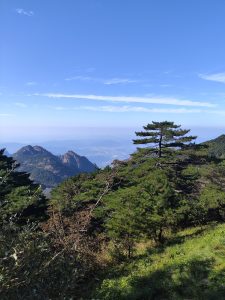
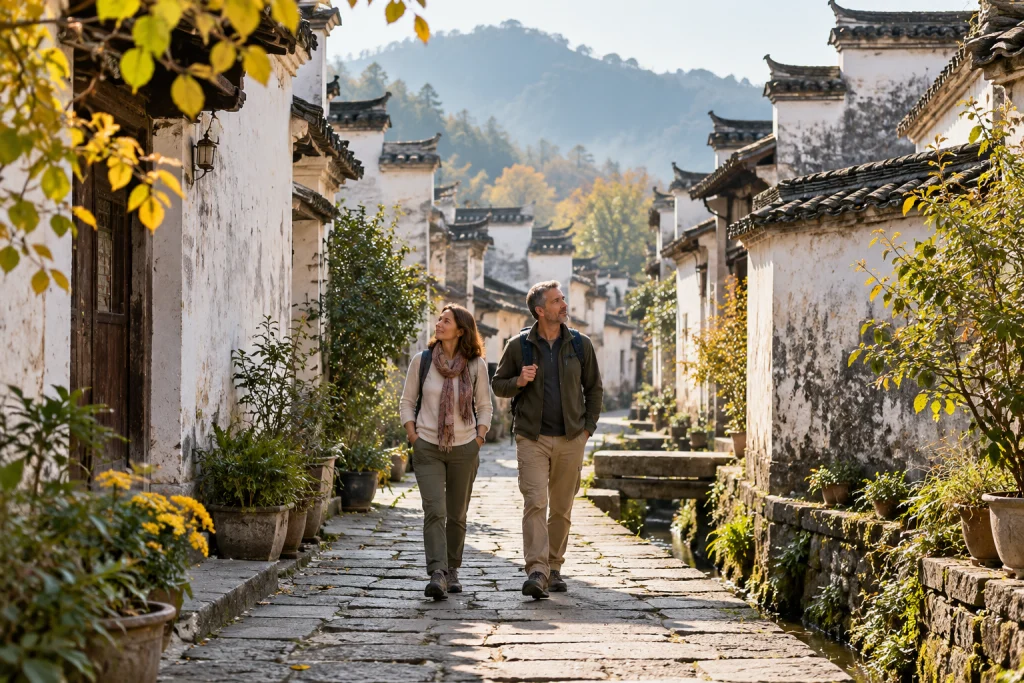
The main image is an illustration of an imagined Anhui-style village walk. It does not show a particular Hongcun or Xidi lane, real Vero Trip travellers or a confirmed tour. The mountain photograph below is a historical real view, not a forecast for your dates.
Huangshan city is not the mountain entrance
Huangshan can mean Yellow Mountain itself or the wider city and region. Tunxi is the older urban centre; Tangkou serves the South Gate approach. Huangshan North railway station is an arrival point with road connections, not the mountain’s North Gate. These distinctions determine where you sleep, how early you start and where your larger bags remain.
| Base | Choose it for | Check before booking |
|---|---|---|
| Tunxi / central Huangshan | A city stay, old-street time and arrival or departure arrangements. | The road transfer to the mountain or village you plan to visit. |
| Tangkou / South Gate approach | A start or finish for a southern mountain route. | The exact hotel, transfer centre and connection to your booked cableway. |
| A named mountain hotel | A room break and a possible evening or morning viewpoint. | Its position on your walking route; a lower town hotel is not equivalent. |
| Hongcun or another Huizhou village | A slower village visit and time before or after day visitors. | Inside or outside the ticketed area, access with bags and the return if visiting another village. |
| Huangshan North station area | A particular late arrival or early departure. | Whether this saves a transfer for your actual itinerary rather than adding one. |
Ask for the hotel’s Chinese name and map pin before comparing room rates. A listing headed Huangshan can be convenient for a railway departure while being a poor choice for your chosen mountain start. Likewise, a village room may be excellent for quiet local time but unsuitable as a base for repeated mountain transfers.
North and East Gate approaches require their own route and road-return decisions. The East Gate connects with the Donghai cableway; the administration’s September notice describes that entrance corridor as cableway access without a parallel walking approach. Do not book it simply because its map position appears closer, or assume a footpath will replace a suspended cableway.
Start with usable days and your main reason for coming
Count arrival and departure by the hours left for a visit, rather than by the dates printed in a tour title. A Friday-noon arrival and Sunday-noon departure occupy three calendar dates but provide only a limited middle section. An evening arrival is principally an arrival day.
| Available time in southern Anhui | A workable priority | What changes the choice |
|---|---|---|
| 2 days / 1 night | One mountain outing with a sensible approach night, or a village-focused stay. | Trying to include the mountain, two villages and an evening show can consume the trip in transfers. |
| 3 days / 2 nights | A selected mountain day plus one cultural visit, when arrival and departure allow. | A late arrival leaves less usable time; keep the mountain route modest. |
| 4 days / 3 nights | A mountain overnight and one village, or a slower village and town programme. | The confirmed mountain hotel and descent determine the village sequence. |
| 5–6 days | More room for weather changes, two contrasting villages and a town stay. | Add another Anhui city only for a clear interest and a workable onward connection. |
Choose the mountain if granite scenery, pines and a substantial walk are the reason for the trip. Choose a village-focused break if architecture, local interpretation, meals and a gentler daily rhythm matter more. You can visit southern Anhui without climbing Huangshan; a county and village itinerary is not a failed mountain holiday.
One recently read visitor described a two-night weekend around Tangmo, Xixinan and Chengkan, using a hotel near Huangshan North. That report did not include the mountain. Its useful lesson is to compare the actual places and transfers, rather than assume every Huangshan weekend uses the same route.
Keep the mountain route within the party’s comfort
Cable cars reduce some ascent but do not remove mountain steps. A shorter return walk, a central crossing and a mountain overnight involve different effort. Use the existing Huangshan hiking routes, cable cars and mountain hotels guide to choose the named approach and walking circuit; this wider planning guide helps connect that choice with the rest of Anhui.
Recent travellers described very ambitious crossings and sore legs afterwards. Another account focused on the exposure and steep steps around Tiandu Peak, with differing reactions in the comments. Those experiences are reasons to discuss stairs, heights and recovery time, not evidence that the same route is appropriate for every family or that a summit is currently open.
Keep optional summit climbs outside the core plan until the current access, any separate reservation and your party’s ability are clear. A personal post’s two-day booking advice is not a permanent rule. Do not add a difficult peak solely because it appears between two familiar landmarks in someone’s route list.
For older relatives or children, describe the longest comfortable walking day and any difficulty with descents or exposure. A shorter open circuit with the same cableway back may be more enjoyable than a crossing. Someone who needs little walking needs the exact upper-station-to-viewpoint approach assessed, rather than a general promise that cable cars make everything easy.
Choose a mountain room on the route
An overnight gives a place to stop and a chance to experience changing light. It does not guarantee sunrise, a cloud sea or less walking. Select the actual hotel first, then divide the route around its location. Beihai, Bright Summit, Tianhai and Yuping-area rooms are not interchangeable stops.
Confirm the room category, beds, bathroom, meals, heating and cancellation terms. Ask how long the intended path remains from the upper station and where the following morning’s outing begins. A room described as near a viewpoint may still require steps before dawn and a climb back for breakfast.
Reach the room with time to rest. Locate any nearby morning viewpoint in daylight, follow current signs and staff advice, and skip it when weather or fatigue makes it unsuitable. Protect the main walk and descent rather than making the entire overnight depend on a single photograph.
Compare Huizhou villages by the visit you want
Hongcun and Xidi are the two villages in the UNESCO Ancient Villages in Southern Anhui property. Its description highlights their settlement form, buildings, decoration and water systems. Choose time to understand those features rather than treating the listing as a requirement to photograph both places in one afternoon.
Hongcun suits a visit that combines the village setting, water and lanes. Xidi can reward closer attention to building details and the histories explained during a guided walk. A visitor who preferred Xidi’s interpretation was expressing a personal response, not establishing that one village is universally more authentic or better than the other.
Chengkan, Tangmo, Xixinan, Lucun and other settlements provide further choices, but they are separate visits with their own transport and access. Ask what you will actually do: walk through lanes, enter specified buildings, hear local history, attend a dated programme or stay overnight. Avoid paying for several similar stops without enough time to appreciate any of them.
These are lived places. Respect private doors, residents and everyday work, and ask before photographing people closely. Do not step into crops, courtyards or closed paths for a better angle. A quiet photograph does not show whether a lane is private or whether the person taking it had permission.
Village day visit or overnight?
A day visit can be the best fit when you want an introduction and prefer one hotel base. An overnight can make slower early or evening time easier, particularly if architecture and photography are the focus. Neither choice eliminates the need to check where the room is.
One autumn account described staying outside Hongcun and inside Chengkan on a previous November trip. That distinction matters more than the broad phrase village hotel. For an inside-area stay, ask how entry and re-entry work, where the vehicle stops and whether bags must be carried. For an outside stay, establish the walk or transfer to the entrance.
Ask about the specific bathroom, stairs, noise, heating and breakfast. A traditional exterior is not proof of a comfortable room or easy luggage access. Travellers wanting architectural atmosphere and those needing convenient vehicle access may reasonably choose different properties.
If you plan to change hotels, make the move earn its place. One well-chosen village night can offer more than several short stays with repeated packing. Leave the mountain bag and the main suitcase arrangements explicit, especially when you descend at a different lower station.
Arrange the way back before staying for an evening programme
Fish-lantern performances and other evening events appear in travellers’ reports, but the programme, date, venue and ticket arrangements must be checked with the actual operator. A time given for someone’s past weekend is not a timetable for your trip.
A recent Hongcun visitor explained in the comments that their public-transport option would not cover the whole evening visit; their hotel helped arrange a shared return afterwards. Another traveller described difficulty finding a taxi after a village programme. Neither account guarantees the same assistance or a particular fare for your dates.
Before deciding to stay late, agree the pickup pin, meeting time, contact method and price basis, and confirm whether the vehicle is shared. Ask what happens if the programme ends late or is cancelled. A telephone number saved offline is useful when a busy pickup area makes messaging difficult.
If the return is uncertain, stay locally or leave earlier. Do not assume that a quiet afternoon approach means a taxi will be waiting after a performance, or that the last bus shown in an old screenshot still operates. Keep a meal plan as well; finishing late and then searching for both food and transport can make a short visit unnecessarily tiring.
A four-day sequence with fewer rushed decisions
This example connects a mountain overnight with one cultural visit. It is a planning pattern, not a confirmed group departure or a promise that a particular room, cableway or road service will be available.
| Day | Main purpose | Night and important condition |
|---|---|---|
| 1 | Arrive, settle in and prepare the mountain bag. | Tangkou or the appropriate approach base; keep sightseeing optional after a long journey. |
| 2 | Take the booked mountain approach and a selected walk to the room. | The named mountain hotel, reached with time for a rest before evening. |
| 3 | Optional nearby morning view, then descend and collect bags. | A town or village base; add a village visit only if descent and transfers leave enough time. |
| 4 | One unhurried cultural visit or local town time, then depart. | Match the actual train or flight; do not promise both a full village outing and an early departure. |
If the descent on day three is slow, keep the transfer and hotel check-in and move the village visit to the following day. If your departure is early, make that village the main activity on another day or extend the trip. Trying to preserve every stop after a delayed descent can turn the most tiring day into the longest transfer day as well.
For a village-focused alternative, spend the arrival night at a suitable town or village base, devote the next day to one settlement with interpretation and rest, then choose a contrasting village or Tunxi. Keep the final journey aligned with the actual train or flight. This is a different holiday, not merely a mountain route with its main activity removed.
Leave the weather plan flexible without chasing forecasts
Mountain weather and village conditions can differ. A misty mountain day may conceal distant views even when open paths remain usable. Wind, thunderstorms, heavy rain or ice can change access more substantially. Follow current closures and staff directions; a long walking descent is not an automatic substitute for a suspended cableway.
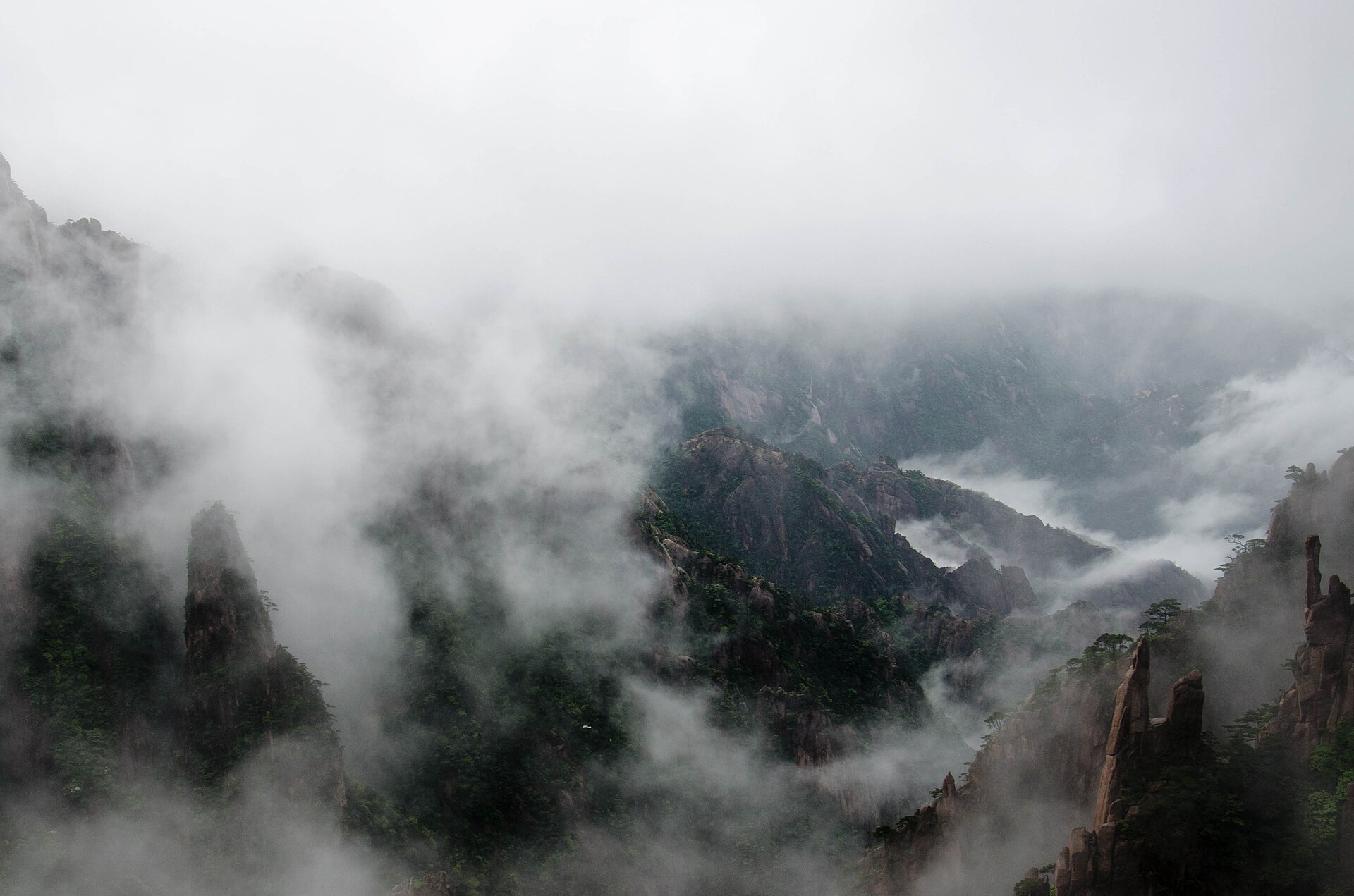
Check the operator’s Huangshan weather channel close to the visit, together with current operating notices. Use the actual dated bulletin rather than a search result saying today. The historical photograph here illustrates how cloud can affect visibility, not what the next morning will look like.
Keep a lower-level option such as Tunxi or an appropriately arranged village visit, subject to its own conditions. Lower elevation does not make every outdoor outing suitable in severe weather. An indoor visit, a shorter local walk or a rest day can be the more sensible adjustment.
Autumn foliage and rice-field photographs need the actual travel year and visit date. A recently published report about last November is useful for preferences and pacing, but does not establish this year’s colour peak or harvesting schedule. Book a trip you would enjoy with different colours, rather than making one exact scene essential.
Reserve admission and transport as separate pieces
The administration’s 28 September 2026 notice, reproduced in full here, describes real-name booking by time and entrance direction. A hotel reservation is not admission, a wait-list entry is not a successful reservation, and a later re-entry needs its own successful booking after the earlier entry is used. Confirm your actual order and current rules.
That notice also contains National Day operating arrangements. Its 1–7 October hours should not be copied as the timetable for a later trip. Ask the official platform for your date, entrance, cableways and passport procedure; do not infer that every attraction mentioned in a holiday notice remains open today.
Carry the original passport and booking information. If a form offers only Chinese identity-card fields, obtain the foreign-passport booking method before payment. Confirm each traveller’s details and actual concession eligibility rather than assuming a domestic age or student discount applies to every document.
| Decision | What to obtain | Why it matters |
|---|---|---|
| Mountain admission | Dated successful reservation, entrance direction and passport details. | A room confirmation or wait-list entry is not mountain admission. |
| Mountain room and walks | Hotel name, room category, meals and the approach / descent route. | Changing the hotel can change both walking days. |
| Village stay or night visit | Property pin, ticket conditions, actual programme and return transport. | An evening event may finish after the public service you intended to use. |
| Luggage | Storage place, operating hours, collection point and any charge. | The car, lower station and mountain room are different locations. |
| Changes | Written terms for weather, closure, missed connections and unused services. | Different reservations may have different change and refund conditions. |
For Huangshan North connections, consult the locally promoted Changxing Huangshan platform, 畅行黄山, or the actual transport provider. Identify whether the service goes to Tangkou, another mountain gate or a village. Spring-holiday service counts, departure times and fares do not establish an October timetable.
A road transfer, scenic shuttle, uphill cableway and downhill cableway are different journeys. Ask the proposal to name them. A private driver waiting below does not automatically provide mountain guiding, a porter or a return from whichever gate you happen to choose.
Should you add Hefei or the rest of Anhui?
Add Hefei for a specific city, museum, regional-history or separately arranged science interest, and allow it its own usable time. It is a different city from Huangshan. Compare the actual onward connection and station before choosing it as an arrival point solely because both places are in Anhui.
A short southern-Anhui holiday does not need to cover the whole province. If Bozhou or another regional city is important, build a broader itinerary with the travel stages shown. Do not squeeze a northern cultural stop into the return day of a mountain weekend.
Shanghai, Hangzhou or other eastern-China cities can form part of a wider journey, but check the dated railway service and both ends of the transfer. A convenient station-to-station connection still leaves the approach from your village or mountain base. Avoid selecting an onward train before deciding how and where you descend.
Meals, luggage and the proposal to request
Carry a small mountain bag with your passport, necessary medicines, charging supply, water, suitable food and weather layers. Ask the lower hotel about overnight storage, charges and collection hours for the main suitcase. A wheeled bag that works at the railway station may be awkward between a mountain station and a hotel.
Discuss allergies and dietary needs before travelling. A vegetable dish may contain meat stock or animal fat; confirm ingredients, cooking alcohol and preparation with the actual restaurant when halal food matters. Arrange suitable mountain food and a practical prayer break rather than assuming facilities at each viewpoint.
Compare the Huangshan destination collection and the published four-day Huangshan outline. The outline combines a mountain overnight, Hongcun and Tunxi; request the actual room, sequence, group conditions and dated inclusions before booking.
Send Vero Trip your dates, nationalities, arrival and departure services, party size, children’s ages, comfortable walking level, concerns about heights, room needs and luggage. Say whether the priority is mountain scenery, village architecture or a slower cultural break. A useful proposal connects the entrance, named hotel, bags, descent and next night in one workable sequence.