For a Huanglongxi road day from Chengdu, make the old town the main outing and settle the return journey before you leave. Travel south from your hotel, park or meet at an agreed visitor entrance, and explore a selected section of streets and riverfront on foot. Lunch and a rest belong in the plan; a second distant attraction usually makes the day less relaxed.
Huanglongxi Ancient Town — 黄龙溪古镇 is a Chengdu-area destination in Shuangliu, distinct from Huanglong scenic area in northern Sichuan. Check the full Chinese name in your navigation or vehicle confirmation. A journey to Huanglong’s mountain pools is a completely different trip.
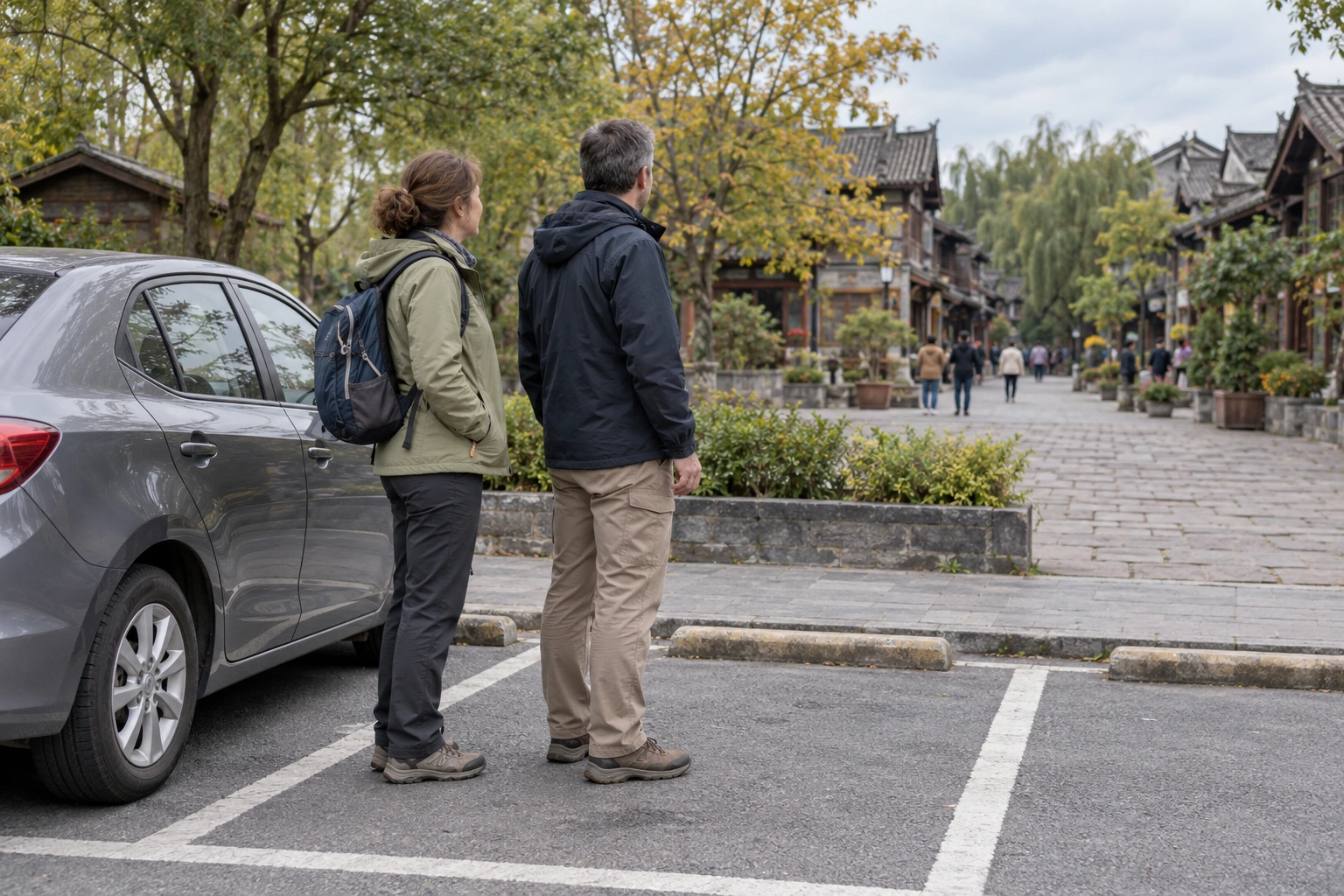
Checked 1 November 2026. The header is an original AI illustration of fictional adult travellers beside a parked car in an imagined Sichuan town setting. It does not show an actual Huanglongxi entrance or parking facility, real customers, a guide or an operated Vero Trip tour.
Choose a town day, not a drive-through stop
The Japanese Consulate-General’s Huanglongxi introduction places the town south of central Chengdu, where the Jinjiang and Luxi rivers meet. It describes a developed visitor area with shops and modern attractions alongside older town features. Expect a popular outing with commercial streets rather than an untouched village.
Huanglongxi works best when the group wants a street walk, waterside views and time over lunch. It is less suitable if you want a quiet wilderness hike or guaranteed access to the interior of every historical building. Separate those expectations before booking transport.
Allow a full day in your Chengdu schedule as a comfortable starting point, with roughly three to four hours for a selective town visit, lunch and pauses. These are our planning allowances, not official opening hours or fixed journey durations. Your hotel location, traffic, parking approach and walking pace decide the actual schedule.
Self-drive or a vehicle with a driver?
Self-drive is an option only after the driving and rental arrangements are in place. Do not rely on a foreign licence alone. The official traffic-police explanation of temporary driving permits says the permit is used together with the foreign licence and its Chinese translation, and that a rental contract should be carried when driving a rented vehicle.
That source explains the national permit framework through Shanghai’s application service. It does not establish where, how quickly or on which day you can obtain a permit in Chengdu. Check the applicable procedure with the relevant local traffic-police office and confirm the rental company’s acceptance before making a non-refundable car booking.
For this single outing, compare the whole cost and effort of renting with an agreed vehicle-and-driver arrangement. A driver option removes the need for you to operate the car, but the service still needs a written scope: pickup, vehicle, waiting time, permitted collection point and return destination. A person driving the car is not automatically an English-speaking guide.
| Travel choice | When it may suit you | What to settle first |
|---|---|---|
| Lawfully arranged self-drive | You already have the required driving documents and an accepted rental | Named driver, insurance terms, operating area, deposit, fuel or charging, and return conditions. |
| Vehicle with a driver | You want a direct hotel-to-town outing with an agreed return | Vehicle capacity, pickup, waiting allowance, parking charges and exact collection point. |
| Public transport or a taxi combination | You are comfortable checking the actual connections for the date | The final connection to the town and the return option; do not assume the metro reaches the old streets. |
Plan the road approach around the actual entrance
Save 黄龙溪古镇 and the precise visitor parking or drop-off pin agreed for your day. Do not confuse the town with nearby leisure attractions that use Huanglongxi in their names. A booking for a separate attraction should be checked against its own entrance and conditions.
Choose the road on the day using current traffic information and official instructions. We do not give a fixed exit-to-exit track here: an old navigation screenshot cannot account for construction, a temporary control or the visitor parking arrangement in use when you arrive.
A September 2026 on-site interview with the town management authority describes work on pavements, visitor facilities and parking management, including clearer prices and extra guidance at busy times. This supports planning for an organised parking approach; it is not a promise that a particular car park has space.
At arrival, follow the signed visitor-parking arrangements and check the displayed charge before leaving the vehicle. Save the car park’s name, the bay or row and the walking route back. Keep any ticket needed for exit. A pin dropped at a shopfront is not evidence that a vehicle can reach that shop.
Agree the return before the driver leaves or before the group begins walking. Decide whether you will retrace the route to the same entrance or finish elsewhere. An alternative exit is useful only when everyone understands where the vehicle can legally collect you.
A selective walk: street, bridge and river view
Begin with the principal visitor street. Use the current visitor map or ask at the information point to orient the group. Notice the relationship between the shops, lanes and river rather than trying to enter every attraction. Choose a short initial section so you can assess the crowd and the walking surface before extending the outing.
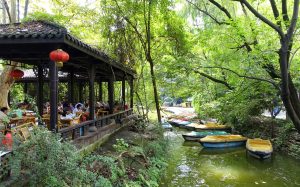
Consider Jinguan Bridge — 锦官桥 — and the riverside town setting. The consular introduction identifies the bridge and the wharf, temple and residential features beyond it. Use this as a possible second part of the visit where the current public route is open, rather than as a guarantee that each named building admits visitors.
Return through a selected lane or stop for lunch. Ask about the operating arrangements and any charge before entering an individual exhibition, historic interior or paid activity. A map label describes a place; it does not establish opening hours, a performance time or what a street visit includes.
For a party interested in architecture, slow down at a few permitted viewpoints and compare building fronts and the waterways. For a party interested in food, shorten the browsing portion and give lunch more space. For children or a slower walker, use an out-and-back walk with an easy-to-find reunion point.
The management interview also discusses the town’s core streets, waterside visitor areas and outer entrances as distinct places needing crowd and traffic management. Treat those transitions as part of the outing. Keep a companion’s energy for the return to transport, rather than reaching the furthest point just as they need to stop.
| Part of the day | Suggested plan | Where the flexibility belongs |
|---|---|---|
| Morning in Chengdu | Breakfast, then leave from the same hotel with a small day bag | Set the departure against live traffic, not an assumed universal one-hour drive. |
| First town walk | Orientation, selected main street and a possible bridge or river view | Turn back early if the surface, weather or crowd does not suit the party. |
| Lunch and rest | One seated meal or a few selected tastings, followed by a proper pause | Choose between more browsing and returning to Chengdu. |
| Afternoon return | Walk to the agreed collection point or car park, then return to the hotel | Keep a buffer for traffic, belongings and any onward departure. |
Lunch and browsing without losing the afternoon
Look at the menu, price and portion before sitting down. Ask about ingredients and chilli levels in a way the provider understands. For a serious allergy, do not infer a safe meal from the English name or appearance of a dish. Take time to communicate the restriction before ordering.
If you want to taste several foods, start with small portions rather than treating every stall as a meal stop. A seated lunch can be a more useful break for a child or older traveller than constant snacking while standing. Confirm whether the quoted price is for a portion, a weight or an individual item.
Some travellers enjoy demonstrations, souvenir shops or a paid activity; others prefer to keep moving. Agree a spending budget and a meeting time before splitting up. Ask permission before photographing a person closely, and do not turn a resident’s doorway or business workspace into a photo set.
Do not build the day around a guaranteed fire-dragon performance, an AR experience or a specific seasonal event. The September management interview discussed programmes for a particular holiday period. That announcement does not establish a daily November performance schedule or an included activity in a Vero Trip proposal.
Weather, river edges and walking comfort
Choose shoes with grip for paved lanes and bridge approaches, and shorten the walk if the surfaces are wet. A town setting can still involve thresholds, steps, crowds and uneven sections. Confirm the actual route for a wheelchair or stroller instead of assuming every lane and historical interior is step-free.
For a family, keep children beside an adult near water and bridges. A photograph of visitors playing in water is not permission to enter a river or a channel. Stay behind barriers and follow current restrictions. This guide recommends a public-path town visit, not swimming, wading or access to unmanaged banks.
In ordinary light rain, reduce the outdoor portion and choose an available indoor meal break. A café is a place to rest during normal conditions, not an assurance that the outing remains appropriate during a severe-weather warning. Follow local instructions and move or cancel the road day if conditions make it unsuitable.
In hot weather, give the middle of the day to a meal and a seated rest rather than continuous exposed walking. In cooler weather, bring a layer for pauses by the river and for the return journey. Neither the season nor a promotional image guarantees comfortable conditions on the actual date.
Hotel base, luggage and departure days
Keeping the same Chengdu hotel usually makes this outing easier to organise. Take only the items needed for the day and leave large cases under an agreed hotel-storage arrangement. If luggage travels in the vehicle, confirm that it fits with the passengers and that you understand the storage and responsibility arrangements.
If checking out before the outing, decide where bags will be retrieved and where the vehicle service ends. Returning to the hotel for cases is another journey segment. Do not omit it from a plan that continues to Chengdu East railway station, Shuangliu Airport or Tianfu Airport.
Those departure points are different destinations. Give the exact station or airport and flight or train details when discussing a transfer. If an onward departure leaves little room for traffic delay, move Huanglongxi to another day and keep the final day in the city.
What belongs in the budget
| Cost or service | How to plan for it | What a proposal should specify |
|---|---|---|
| Road transport | Compare a full round trip, not a one-way headline fare | Pickup and return destinations, waiting, fuel or charging, tolls and parking. |
| Town visit and optional activities | Check current public-entry arrangements and individual paid features | Any admission, guide, activity or equipment actually booked; no assumed all-inclusive ticket. |
| Food and purchases | Keep a separate allowance for lunch, drinks and souvenirs | Whether meals are self-paid, an agreed allowance or a specifically included arrangement. |
| Changes and support | Ask for the applicable terms before payment | Weather alternatives, cancellation, overtime, insurance and who provides each confirmed service. |
Price on request. Tell Vero Trip your dates, Chengdu hotel, party size, preferred walking pace and whether you want lawful self-drive planning or a vehicle-with-driver enquiry. The dated written proposal should state the actual service, price and exclusions. This guide does not confirm an available vehicle, English guide, hotel, meal, ticket or insurance package.
For a wider stay, compare hotel areas and city days in the Chengdu planning guide. If you want a shorter city outing instead, the Wuhou Shrine and Jinli guide explains that separate visit. Neither should be squeezed into an already full road day just to add another name.
Questions before choosing the outing
Can ordinary foreign visitors go to Huanglongxi?
Huanglongxi is presented in the Japanese consulate’s sightseeing information, and a January 2026 report quoting an inbound-tour guide identifies it among places enjoyed by Thai visitors. Plan a normal public-area visit and follow current local arrangements; this does not establish your immigration status, driving permission or access to a private building.
Can I add the Leshan Giant Buddha?
That changes the outing into a fuller regional day with another journey, a separate attraction decision and its own admission arrangements. If Leshan is the priority, give it the time it needs and treat a town stop as optional. Do not sell both as unhurried full visits within the same short allowance.
Is an overnight stay necessary?
A return day from a Chengdu base is the planning option described here. An overnight stay is a different choice for travellers who specifically want more town time. Confirm the actual property, room, document check-in and vehicle access before choosing it; a town recommendation is not evidence that every accommodation can meet your needs.
Where should I start arranging the trip?
Send the dates, hotel, group and return requirements through Plan My Trip. Mention any walking or luggage constraints and whether a same-day flight or train follows. Those details determine whether the road day fits comfortably.
Header: original AI illustration of fictional adult travellers and a stationary car in an imagined Sichuan town setting. It is not a photograph of Huanglongxi’s actual road, entrance, parking, customer, guide or operated tour. Use verified navigation and current on-site directions for the real approach.