Give Guandu Ancient Town a half-day for one heritage area, a freshly made snack and a selected craft stop. Start around the Vajra Pagoda, distinguish it from the nearby brick towers, then explore a few lanes without trying to enter every building. Pair it with Yunnan Provincial Museum only when the museum’s separate admission arrangement is settled.
Save the Chinese destination 官渡古镇. This is southeastern Kunming, a different outing from the central Kunming Old Street area. Guandu suits travellers who enjoy looking closely at architecture and food preparation; someone wanting only a quick walk near Green Lake should compare a central-city route instead.
Use the Vajra Pagoda to understand what you are seeing
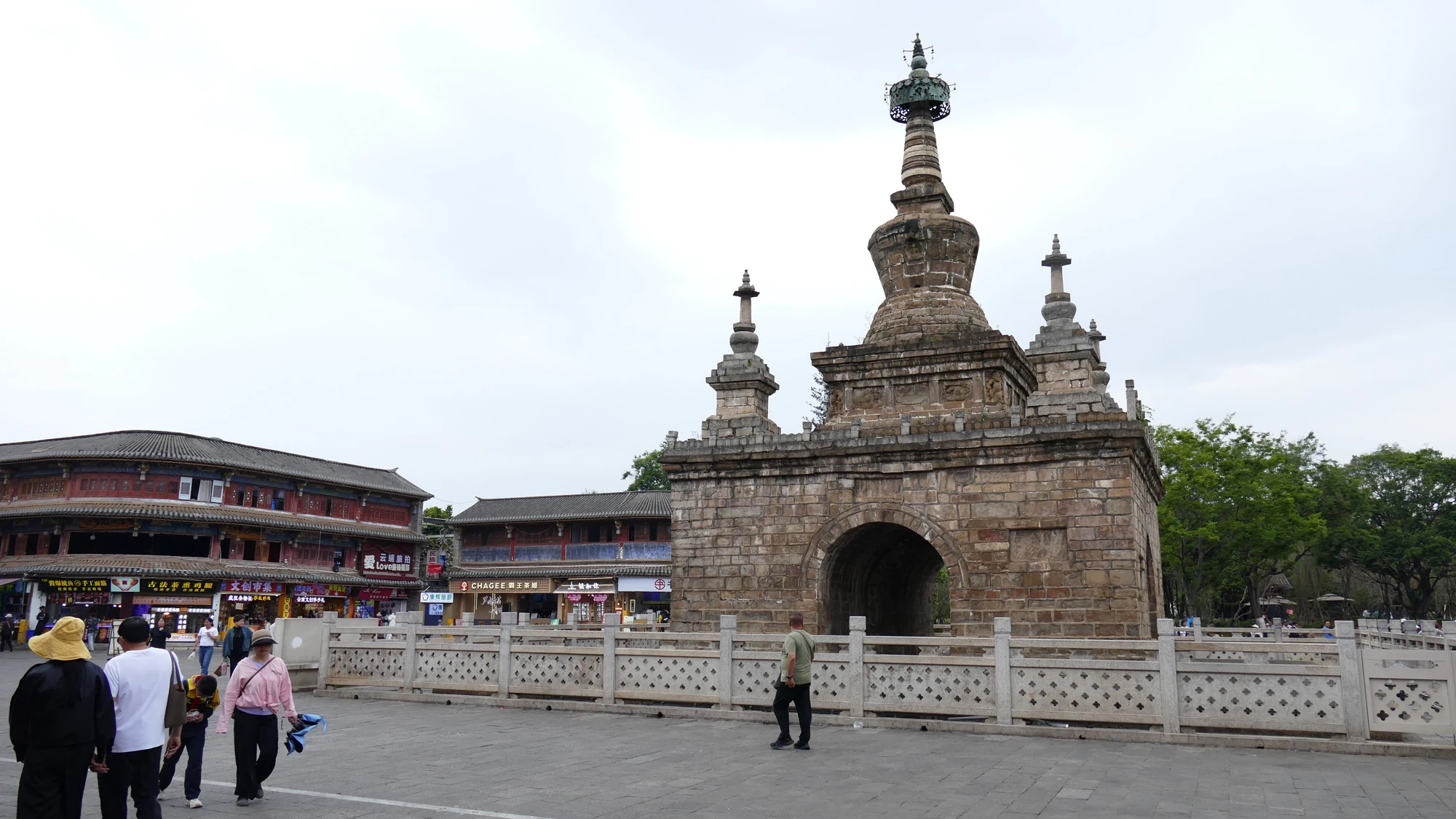
The Jingang Ta, or Vajra Pagoda—金刚塔—is a useful starting landmark. Its broad stone base supports a central tower with smaller towers around it. Step back on the permitted public route to see the composition, then look for the contrast between the heavy base and the more elaborate upper forms. The featured photograph shows this landmark, rather than a generic temple elsewhere in Yunnan.
The Japanese consulate’s Guandu visitor account describes the town’s former trading role near Dianchi and identifies its Ming-era stone pagoda among the surviving heritage sights. Think of Guandu as a place that has changed through trade, repair and modern tourism, rather than an untouched settlement from a single dynasty.
Do not confuse the stone Vajra Pagoda with the slender Miaozhan Temple brick towers—妙湛寺塔. Local heritage reporting distinguishes the older east tower from the reconstructed west tower. Similar-looking monuments can have different histories; look for each building’s own identification board instead of assigning the same date to the whole square.
A May 2025 report quoting Guandu’s cultural-relics bureau documented protective barriers and monitoring at the east tower. It is not a current access update. Follow the barriers and signs present on your visit, observe from the permitted area, and keep climbing or passing a closed base out of your route.
Tuzhu Temple, 土主庙, and Fading Temple, 法定寺, are other names worth recognizing. Choose an interior only if it is open to visitors and suits your interests. An accessible street or square does not establish access to every religious space. Ask about photography, avoid blocking worshippers and keep a useful exterior-focused walk as your fallback.
A half-day sequence with room to stop
Allow roughly two to three hours for a selected town walk, food and a rest, plus travel from your accommodation. This is a suggested planning allowance, not an official route time. Shopping, a longer seated meal or a prearranged craft activity can use more time than the distance on a map suggests.
| Sequence | What to do | Keep flexible |
|---|---|---|
| Orient at the heritage area | Identify the stone pagoda and the separate brick towers from permitted paths. | Conservation barriers and access inside buildings. |
| Choose one cultural focus | An open temple space, architectural details or a craft introduction. | Interpretation language and whether a demonstration is actually available. |
| Take a food and seating break | Try a suitable snack or choose a proper meal. | Ingredients, queues and how much more walking the group wants. |
| Finish through selected lanes | Return to an agreed road-accessible meeting point. | Optional purchases; leave time for the final walk to transport. |
For a short visit after travelling, stop after the pagoda area and one food break. For a fuller half-day, add one open cultural venue or spend longer comparing craft objects. Avoid turning a compact outing into a task to photograph every gate, inspect every shop and sample every snack.
Choose daylight if architecture is the priority. An evening visit can suit food and atmosphere, but do not postpone your only chance to see a particular building until after its visitor hours. Set a finish point before separating to browse; a photograph of a recognizable shopfront can help a group regroup.
What to order: Guandu baba and other local staples
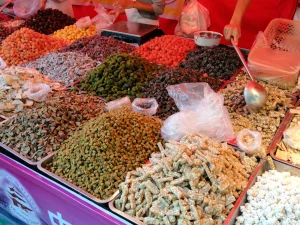
Guandu baba—官渡粑粑—is a local baked or griddle-cooked wheat-flour cake. The Yunnan Culture and Tourism Information Centre’s food account describes sweet fillings including nut, seed and bean-paste varieties. The name does not tell you the filling, and this wheat-based snack should not be mistaken for a rice cake.
Watch a batch being prepared if the stall permits, then ask what is available and how many pieces the quoted price covers. Start with a small order rather than carrying several large cakes around the town. Do not assume a familiar-looking bean or rose filling establishes every ingredient or the cooking fat.
The same official account identifies Guandu erkuai—官渡饵块—and small-pot rice noodles—官渡小锅米线—as other local staples. They offer a different choice from a sweet cake. Ask about the sauce, broth and toppings separately: a rice-based main ingredient does not establish that the finished dish is vegetarian.
| What you are choosing | A useful question | What it resolves |
|---|---|---|
| A filled cake | “What is the filling?” / 这是什么馅? | Choose the actual variety, then discuss any ingredients you need to avoid. |
| A noodle meal | “What is in the broth and toppings?” | Decide on the whole dish, not only the noodles. |
| A craft introduction | “Is this a display, a demonstration or a hands-on activity?” | Clarify the format, language, duration and any charge. |
| A souvenir | “What material is it, and can that be written on the receipt?” | Separate an attractive object from unsupported claims about purity or age. |
Carry a short written description of dietary restrictions and choose another food if the answer is uncertain. A seated meal can be the most useful break for a mixed-age group; snacks do not have to replace lunch simply because the street has plenty to browse.
Choose a craft you want to understand
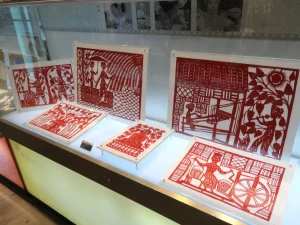
Guandu’s craft interest goes beyond souvenir stalls. Yunnan Net’s reporting from local craft venues describes wutong zouyin—乌铜走银, interior painting and Yunzi Go stones. These are possible subjects to explore, not a promise that a particular workshop or production area is open every day.
For wutong zouyin, look at the contrast between the dark metal ground and the bright inlaid pattern. The national intangible-cultural-heritage register describes a process of engraving a metal body, introducing silver or gold into the design, and finishing the surface to create that contrast. Ask which stage an object demonstrates instead of judging workmanship only by its shine.
For Yunzi, begin with the object itself: these are stones used to play Go, or weiqi. Ask how the two colours are used and whether the venue offers an explanation appropriate to someone unfamiliar with the game. Do not assume a retail display includes a factory visit, a game lesson or a production demonstration.
If an activity matters, establish the host, date, language, length and price before building the day around it. For an ordinary shop visit, there is no need to buy because someone answered a question. Compare materials, intended use and the written description; leave historical-age or precious-metal claims unresolved when evidence is missing. The Kunming shopping guide covers the wider choices.
Pair with the museum only after arranging admission
Yunnan Provincial Museum is a sensible nearby cultural partner, but it has its own visitor procedure. Read the museum reservation and gallery guide, resolve the process for your documents, and let the accepted visit arrangement determine the order. Paying for commentary or transport does not establish museum admission.
A useful full-day structure is museum, lunch and seated rest, then a shorter Guandu walk. If your museum visit is later, reverse the order while protecting the admission time. With children or strong museum interests, omit the town’s extra craft stop rather than rushing through both places.
Guandu remains a worthwhile standalone outing if museum admission is unavailable. Do not treat an unresolved reservation as a reason to wait at the museum gate for hours. Equally, a museum visit need not end with a compulsory shopping walk if everyone is tired.
Getting there, returning and managing the walking
Save the agreed entrance and a road-accessible pickup point, not just a pin on the pedestrian square. Compare a current public-transport journey with a taxi or requested vehicle, including the last walk. The Kunming metro guide helps with route checks; it does not make every station exit equally useful for your destination.
Allow for uneven paving, thresholds, standing at stalls and wet surfaces. For someone avoiding steps, prioritize permitted exteriors and a seated break, then confirm any doorway before adding it. A short distance does not establish a fully step-free route.
For onward travel, distinguish Kunming Railway Station, Kunming South Railway Station and the airport. Work backwards from the actual departure, including luggage collection and the trip to the correct station or terminal. Keep the last optional shop outside that connection margin.
Questions before choosing the visit
Will there be a lantern parade or performance?
Only if it appears in the programme for your date. October 2026 reporting says the National Day fish-lantern festival had concluded. Its photographs do not establish a nightly year-round show, a future schedule or an included ticket.
Is the street walk the same as entering every venue?
No. Temples, museums, craft activities and shops can have separate hours and conditions. For a particular venue, confirm opening, any admission or reservation, document requirements and photography rules. Budget for your transport, food, purchases and chosen activities without assuming a single all-inclusive town ticket.
Can Vero Trip help combine Guandu and the museum?
The existing Yunnan Provincial Museum and Guandu culture day offers a route to discuss. It is a one-day plan with no hotel night. Price is on request; guiding language, transport, admission arrangements, meals and any craft activity must be specified in your written proposal.
Send your date, hotel area, walking needs and preferred focus through Plan My Trip. Naming architecture, food, metalwork or Go makes it easier to shape a useful half-day than requesting every possible stop.
The featured photograph shows the Vajra Pagoda and surrounding public space at Guandu on April 27, 2026. It does not establish today’s access or shop openings. Photograph: Hermann Luyken, original image, CC0 public-domain dedication.