At Dieshuihe, a town river drops over volcanic rock beneath a stone bridge. Add the inscriptions at the opposite viewing terrace to understand the water, engineering and visitors’ responses together. A Tengchong hotel leaves a morning for these details and lunch.
Save 叠水河瀑布 and ask which public viewpoint has the clearest cliff view. Start there before choosing terrace steps. This city morning offers a look at volcanic rock without making the longer trip to the cones.
Reading the cliff at Dieshuihe
Compare the 46 m drop with the fixed vertical joints beside the water, as identified in the municipal account. Follow one rock line, then return to the moving curtain, staying at a public viewpoint.
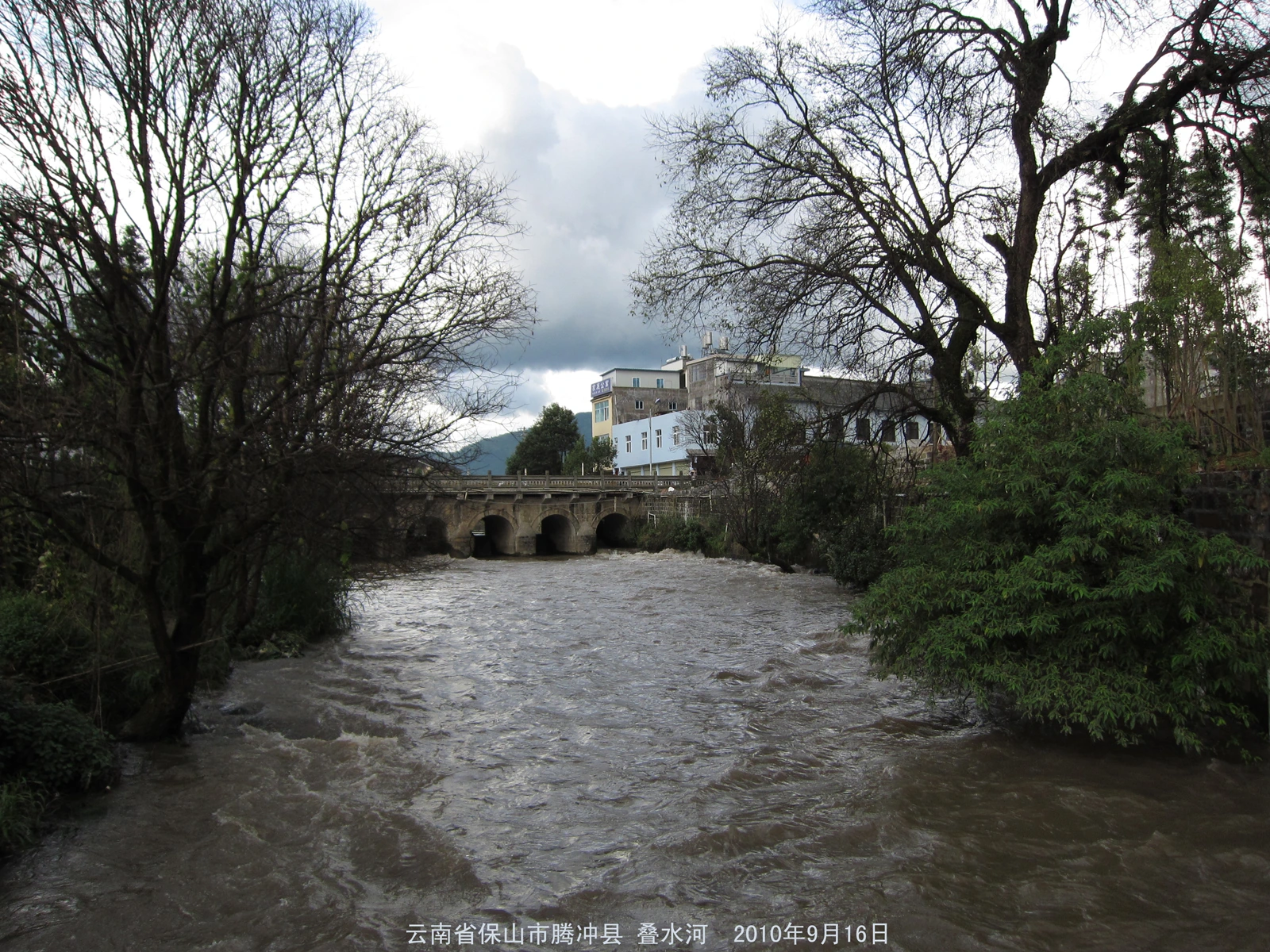
Find the top edge where the horizontal river becomes a fall. The September 2010 cover shows the channel instead. Water width, colour and force vary; spray may favour a wider view including both sides of the cliff.
Someone interested in volcanoes might reasonably ask whether to spend the day here or at Tengchong’s volcanic cones. At Dieshuihe you see what a river does when it meets a break in the rock. At the volcano park, the shape of the land itself is the subject, and you need time for a trip out of town. The guide to Beihai and the volcano park explains the walking choices if you have another day.
Taiji Bridge and Longguang Terrace
At Taiji Bridge upstream, look for its two openings and small pavilion above the middle pier. A natural boulder supports that pier, with projecting long stones carrying the flat deck.
The municipal account dates the bridge to September 1913. Look for 观瀑, “view the waterfall”, on the pavilion’s west side when visible. Keep a distant view if the close approach is closed or awkward.
Across from the falls, Longguang Terrace has Ming origins and later visitors’ inscriptions. Read one with an interpreter, then look back at the view it describes instead of trying to translate everything.
Three ways to spend the morning
| What interests you | Where to spend your time | When to turn back |
|---|---|---|
| The waterfall and rock columns | Choose the clearest open view facing the cliff. Look at the edge and the exposed rock beside the water. | After a good view, return by the same public approach if further steps are wet or tiring. |
| The bridge and its engineering | Find an open sightline to the middle pier of Taiji Bridge. Trace how the stones support the deck and square pavilion. | If a closer view would require a closed crossing, use the view you already have. |
| History and inscriptions | Make Longguang Terrace the optional extra after seeing the falls. Check the return climb before taking it on. | Leave time to retrace your route and meet for lunch, especially if the group splits. |
See the cliff together before choosing the terrace. Agree a same-side meeting point and save its photograph before anyone goes farther; water noise makes calling across viewpoints unreliable.
A visitor who needs level access should ask about the whole distance from vehicle drop-off to an open view, including any kerbs, slopes or steps on the return. A city address alone tells you little about the last section. If the accessible approach cannot be confirmed, leave the morning flexible and discuss another town stop.
From a Tengchong hotel to lunch and back
After breakfast, leave cases by agreement and travel to the current 叠水河景区 entrance. Save the hotel and legal pickup in Chinese. A Heshun-lane room may need a different vehicle meeting point for the final return.
Leave a morning free for the river and lunch. Buy or collect admission through the channel accepted for your travel document. Carry your original passport and check that the name on any reservation matches it. Ask which viewing paths are open and whether reaching the terrace involves steps in both directions. Ordinary visitors have described the outing in English, but individual online purchase, identification and payment arrangements still need checking for the date.
Return to town for dajiujia stir-fried rice cakes or a bowl of ersi. Rice-cake pieces may include vegetables, egg, meat and chilli; plain-looking rice strands can use meat stock. Show dietary requirements in writing.
| Part of the outing | A workable arrangement | What to confirm |
|---|---|---|
| Hotel to the falls | Leave the cases at your base, then travel to the scenic-area entrance. Carry a light layer and a small bag. | Hotel baggage arrangements, the current entrance and the actual vehicle pick-up point. |
| Falls to lunch | Decide about the terrace at the first viewpoint. Return to town for rice cakes or a bowl of ersi. | Who is making the return journey, where the vehicle can wait and which dishes suit the group. |
| Lunch to your base | Return to the same city hotel or drive to the agreed Heshun drop-off and walk back to your room. | A complete return, any luggage collection deadline and the final walk from vehicle to door. |
If you still have time, Guoshang Cemetery and the western Yunnan war museum give the afternoon a different focus. Take a proper lunch break between them. Cemetery inscriptions, a hillside walk and a museum visit deserve more time than a quick photo stop. Check the museum’s admission and opening arrangements separately. The Guoshang Cemetery guide describes what is in the hall, on the hillside and in the museum so you can choose one part. You can also go straight back to your hotel after lunch.
Where to stay in Tengchong
Choose a city hotel for simple vehicle access, meals and departure, particularly with cases. Check room floor and lift: a central map pin does not remove luggage stairs.
Stay in Heshun if evenings in the old town are part of the trip you want. A trip into Tengchong for the river can still fit alongside that choice. Count both the ride out and the ride home, and ask how far your bags have to travel on foot. The Tengchong and Heshun hotel comparison can help you choose a single base for the stay.
| Time in Tengchong | Suggested order | Nights and return |
|---|---|---|
| Three days, two nights | Arrive and settle in. Use the full day for the waterfall, town lunch and an optional memorial visit. Leave on day three. | Two city nights keep the waterfall day and departure straightforward. Return to the hotel after the last stop. |
| Four days, three nights | Arrive, spend a day on the falls and town, and give Heshun a separate day for its streets and courtyards. Depart on day four. | Three nights at one city or Heshun base. If sleeping in Heshun, include the ride back there after the falls. |
| Five days, four nights | Keep the river day. Add a day in Heshun and one outside town for Beihai or the volcano area. Day five is for departure. | Four nights at one base avoid repacking. Allow a separate outward transfer on the final day. |
The two-day volcano and Beihai Wetland itinerary gives the volcano area its own first day and visits Beihai on day two, followed by lunch and a hotel return. It suits a traveller who wants the two out-of-town landscapes. To see Dieshuihe as well, reserve a separate city morning before or after those touring days and check how that changes your hotel nights.
Rain, photography and the cost of the day
Frame rock beside the waterfall or Taiji Bridge’s central support from a dry public position. Protect lenses from spray. Keep lunch in town and move the visit if wet paths, closure or visibility make it uncomfortable.
Price on request. Share the hotel, date, group and step limits, naming waterfall-only or a separate museum. The proposal should cover pickup, waiting, lunch and actual hotel return, with tickets, guide, rooms and airport travel separately identified.
Questions about visiting Dieshuihe
Can we see the falls without crossing Taiji Bridge?
Ask for the open viewpoint facing the cliff. Crossing the bridge is unnecessary for understanding the drop, and a view from the side can make the structure of the bridge easier to read. The route available on the day determines the exact position.
Which part should we choose if someone finds stairs difficult?
Prioritise the first suitable view of the waterfall. Find out what the ground is like from drop-off all the way back to the car. Longguang Terrace is an optional extension with a climb described by visitors. Another member of the party can visit it while you rest at an agreed point.
Is the river likely to look like the cover photograph?
The photograph records the channel on a particular September afternoon in 2010. It shows the urban setting. The view of the falling water comes from a different position, and water level, spray and visibility vary. Plan around the cliff, bridge and inscriptions so you have more than one thing to look at.
Can we fit it in before a flight out of Tengchong?
It works best with a generous gap and a confirmed luggage and airport plan. Work backwards from your airline’s check-in requirements, then allow for the ride, collecting bags and returning from the viewpoint. An early flight is a good reason to visit on the previous day and leave departure morning for the transfer.
Cover photograph of the Dieshuihe river in Tengchong, taken on 16 September 2010 by wanghongliu. Converted to WebP and shared under CC BY-SA 3.0.