Start in the lower lanes of Nayun, then go up to the former chieftain’s compound if the museum confirms access. This half-day in Menglian, in southwestern Yunnan, follows the slope of a historic Dai settlement. The lower lanes, the upper compound and the temples each tell a different part of the story. Leave time for a Menglian lunch and arrange the last ride before you leave your hotel.
Read Nayun from the lower lanes to the upper town
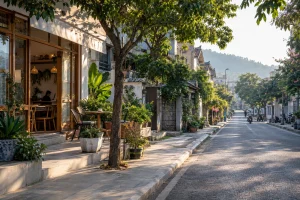
Use 孟连县娜允古镇 for the old town and 孟连宣抚司署 for the upper compound, which houses the Menglian County Museum of Ethnic History. Share the exact meeting pin as well as the name. The lower lanes and the museum sit at different levels on a slope. For visitors who walk slowly or want to save energy for the buildings, ask whether you can start closer to the upper entrance or end the walk at a confirmed lower pickup point.
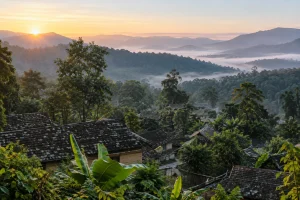
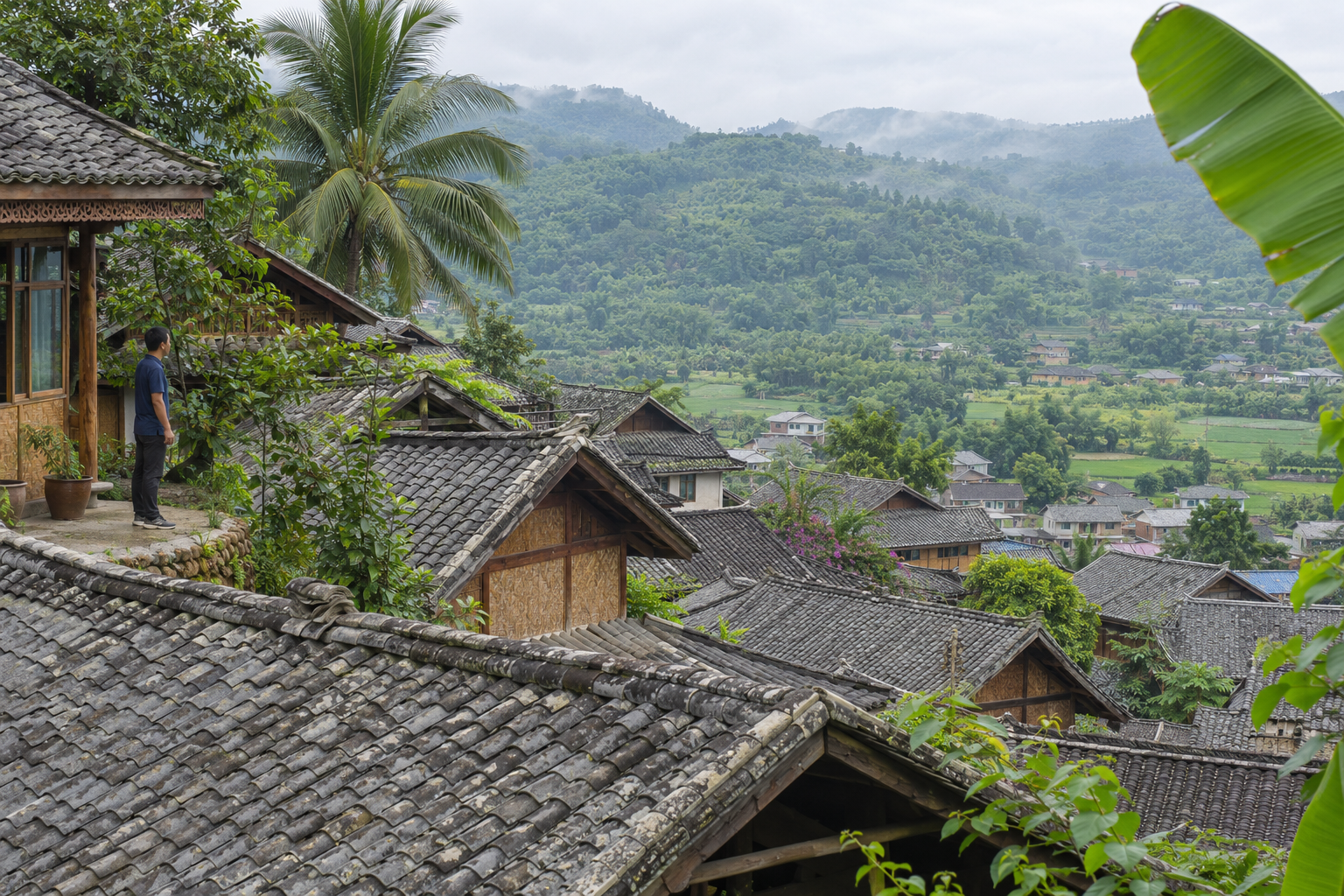
Nayun was traditionally divided into three sections, the Upper, Middle and Lower Towns, alongside two smaller settlements. The old social divisions followed the landscape, with the hereditary local ruler and his household based uphill. Today the areas join into a lived-in neighborhood. Walk uphill along public lanes and look back once or twice. From the slope you can see how the government compound sat above the residential streets. At a junction, pause for a side view of the rooflines and keep entrances clear for residents.
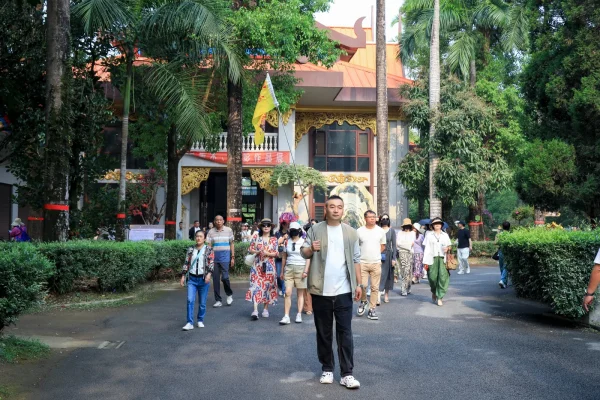
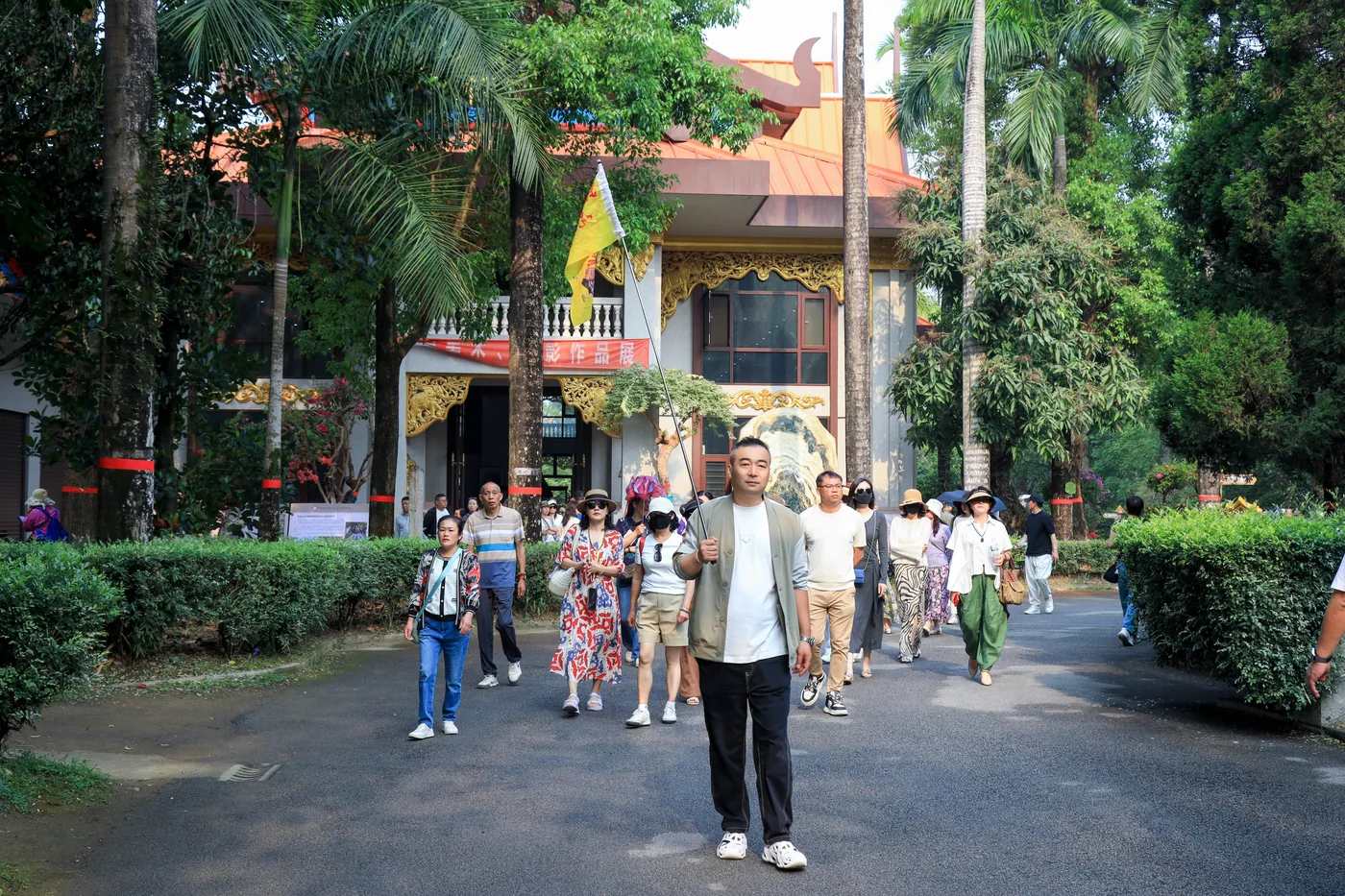
The compound is a good place to learn what a tusi was. It was a hereditary local office recognized by imperial governments, and the buildings here served both official and household functions. The surviving ensemble was rebuilt across the late Qing and early Republican periods. In public sections, look for the way tiered roofs project beyond timber supports, and compare the formal buildings with the smaller structures around them. If the rooms have historical objects on display, start with their labels and look for a connection to the function of the room. Check open rooms and any exhibition you especially want to see before you go.
The Upper Town and Middle Town Buddhist temples are separate from museum admission. If a temple is welcoming visitors, take time to look at its entrance or roof and follow instructions on shoes, photographs and where to stand. For an easier walk, keep one temple as an optional exterior only. A calm look at one place generally tells you more than trying to step into every doorway.
| Area | What to look for | What to confirm |
|---|---|---|
| Lower lanes | Hillside houses and how the street changes with the slope. | One safe public segment and the return pickup. |
| Upper compound | Tiered roofs, timber supports and possible historical displays. | Museum access, which rooms and exhibits are open, and the original passport channel. |
| One temple | Entrance roof, surroundings and a short quiet stop. | Worship schedules, permitted exterior views and whether visitors are welcome inside. |
Build the half-day around a Menglian meal
Leave from your hotel after breakfast and start with one lower lane. In clear weather, save some energy for the upper site and plan to finish at a known vehicle pickup. If the museum is open for your visit, make it the main stop and have lunch after coming down. If you are starting near the museum to reduce the uphill walk, look around the upper area first and descend on the easiest public route your group can manage. Avoid wet stone steps if there is a simpler road approach.
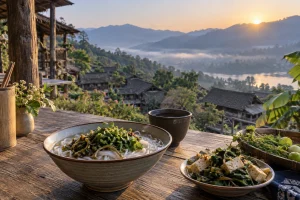
For lunch, ask what Dai dishes the kitchen is preparing that day. If there is a pounded fish dish, chong yu (舂鱼), ask whether the fish is cooked and how the kitchen handles chili and herbs. Another option is to ask how local avocado is served, such as in a cold dish or in a drink. The kitchen may use different seasonings for an avocado snack and a Dai salad. Ask about fish, peanuts and any other ingredients you need to avoid. A cup of locally grown coffee is an easy separate stop if a nearby café is open. See the Pu’er food and coffee guide for other parts of the region.
If heavy rain or a site closure changes the morning, limit the visit to a safe public lane and an indoor meal or another confirmed indoor stop. Bring a rain layer and shoes with tread. In humid weather, drink water and use a seated break between the slope and lunch. In town, check whether the path at the end of your visit is walkable for everyone or whether an early pickup would help.
| Plan | Walking choice | Lunch and pickup |
|---|---|---|
| Dry and comfortable | Start lower and follow a public route uphill. | Eat in town and return from the agreed pickup. |
| Shorter walks preferred | One lower lane or a closer upper drop-off if available. | Choose a seated meal and a pickup point with a short approach. |
| Wet paving or museum closure | Use a short, safe public segment or a confirmed indoor stop. | Bring lunch forward and confirm the revised pickup with your driver. |
Choose where to stay and how to finish the trip
Stay in Menglian county town if you want an unhurried Nayun morning. A room in the town centre is useful if the group values a simple car pickup or a choice of evening meals. A guesthouse near Nayun can work if the car can reach its door or the walk from the drop-off is short enough for your luggage. Ask the property to confirm the real driving pin and any stairs before you book. When returning to the same place, leave your main bags there during the visit.
If you are combining the town with Jingmai Mountain, give the tea villages a separate day and choose where to sleep according to the onward transfer. The Jingmai gateway guide explains how the airport and road legs fit together. Travelers staying in Simao should allow for a separate road transfer to Menglian. See our Simao station and hotel guide and the Pu’er destination guide when comparing the bases. Book the actual station or airport by name and allow a margin between the last visit and departure.
Agree the first pickup, the lunch transfer if needed and the final drop-off before you leave. For a same-day hotel change, confirm where the bags stay during the visit and choose a lunch stop with a reliable meeting point. If using a public connection, establish the return boarding point and departure that fits your date before committing to a longer visit.
| Trip | Nights | Sequence |
|---|---|---|
| 3 days / 2 nights | Menglian × 2 | Day 1 arrive. Day 2 Nayun, town lunch and hotel return. Day 3 transfer to the booked departure point. |
| 4 days / 3 nights | Menglian × 2, Jingmai area × 1 | Day 1 stay in Menglian. Day 2 Nayun with a flexible museum visit. Day 3 transfer to the Jingmai area. Day 4 include the road leg to your departure. |
| 5 days / 4 nights | Menglian × 2, Jingmai area × 2 | Days 1 and 2 in Menglian. Day 3 transfer to the Jingmai area. Day 4 use a confirmed tea village stop. Day 5 travel to the agreed airport, station or next hotel. |
Price on request. Tell your Verotrip travel consultant which buildings matter most, whether you prefer a shorter walk and the actual addresses for arrival and departure. Check that the museum is receiving visitors and how the relevant booking channel handles each original passport. Ask for a written breakdown of admission, transport and waiting, the full return, English interpretation, lunch and any lodging.
Questions about visiting Nayun
Is the former chieftain’s compound the museum?
Yes. The county’s museum uses the historic compound in the Upper Town. Check which spaces are receiving visitors and whether the items you want to see will be on display.
Can I visit without a long uphill walk?
Yes. Choose the lower lanes alone, or check whether your driver can drop you closer to the upper part and collect you again. Confirm steps and surface conditions on the route you will actually use.
Can I see Nayun if the museum is closed?
You can plan a shorter visit around public lanes and an earlier lunch. Check each temple separately and skip private courtyards. If the museum is your main reason to travel, change the date when possible.
Should I stay overnight in Menglian?
One night is useful if you arrive from outside the county or want to see Nayun before lunch. Add a second night if you want a slower visit and a flexible onward connection. A night on Jingmai Mountain serves a different part of the trip.