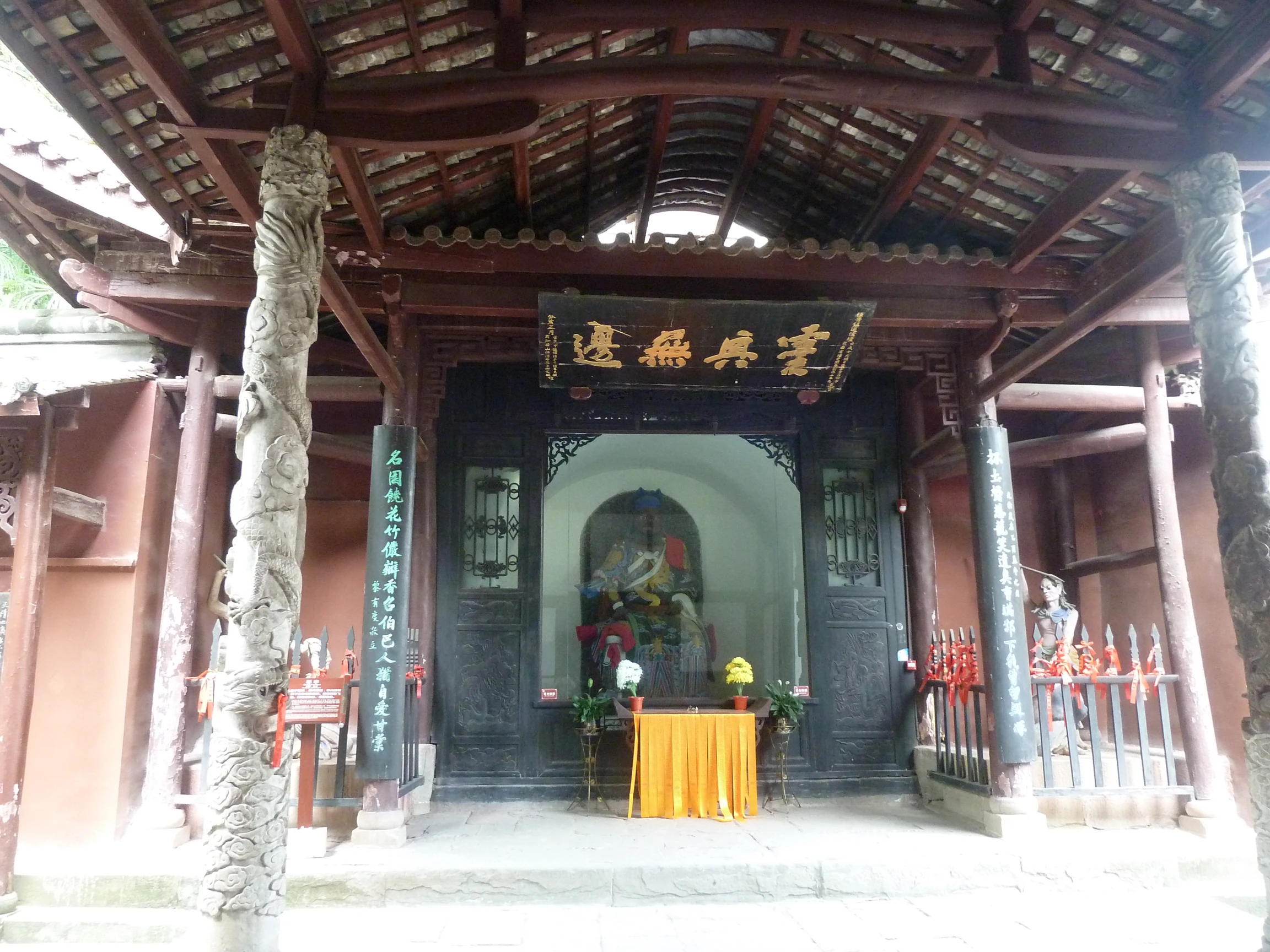
Follow Han Huanhou Shrine, also Zhang Fei Temple, from West Street through its courtyards to the tomb pavilion. The morning’s story is how a soldier remembered for ferocity came to be honoured in Langzhong as a governor, with lunch back in the old town.
Choose this particular Zhang Fei Temple when you are planning a stay in northern Sichuan. There is another shrine to Zhang Fei at Yunyang in Chongqing. A search by the general’s name alone can lead to the other site. Save the address 阆中古城西街59号, 59 West Street, Langzhong Old Town, with your hotel address. For the journey from Chengdu and a wider choice of ancient-town sights, see the Langzhong two-night travel guide.
The soldier, the governor and the name over the door
Set the novel’s warrior beside Langzhong’s local governor. Zhang Fei served Liu Bei and governed this part of northern Sichuan for seven years. The Jialing River explains the posting’s strategic value and the civil life the town remembers.
Huanhou was an honour given to Zhang Fei after his death. The word ci identifies a commemorative shrine. Together these details explain why a temple named for one man incorporates a burial place, halls for honouring him and inscriptions left by later generations. The practice of commemorating him here goes back much further than the courtyard buildings visitors see today. The Nanchong cultural bureau describes those buildings as rebuilt in the Ming and Qing periods. Looking at a timber roof, you are looking at a later community’s care for his memory. Nanchong cultural bureau’s account of the shrine.
Three stops inside the shrine
| Stop | What to look for | A question worth asking |
|---|---|---|
| West Street gate and Diwan Lou (敌万楼) | Look through the entrance towards the next roof. From the courtyard, compare the width of the tower with the opening beneath it. | Where does the busy street fall out of view? |
| Main hall (大殿) | Look at the figure’s clothing, hands and posture. Compare the impression these make with the warrior you may know from the novel. | What would tell a visitor that this man also held civil authority? |
| Tomb pavilion (墓亭) and burial mound (墓冢) | Follow the change from a hall with an image to the structures marking a burial. Stand where the visitor path gives a clear view. | Which building protects a commemorative space, and where is the mound itself? |
Find 桓侯 on the plaque to connect the formal name with your map. Continue towards Diwan Lou, looking back through the doorways to understand the courtyards. The tower’s arrangement can be appreciated from the public ground-level route.
In the main hall, compare formal robes and a court tablet with the familiar spear-bearing warrior. A 2020 visitor described that composed image, while noting its uncertain manufacture date. Check the current figure’s label rather than assuming the account is a live display list.
At the tomb pavilion, timber, carved supports and its central opening frame a closer view. Distinguish the pavilion from the burial mound. Stay at the public viewing point and give people paying respects room to pause.
A morning on foot, from your hotel and back
After breakfast, leave bags by agreement and find 59 West Street. From outside the old town, save a legal vehicle meeting point. Traditional-roof views from a room may still mean carrying cases from the road.
Allow roughly one to one-and-a-half hours inside as a planning guide for the three stops, with travel and entry queues additional. For calligraphy, ask an interpreter to explain one short inscription rather than try every line.
Return to West Street for a seated lunch. Try a small portion of seasoned preserved Zhang Fei beef alongside a hot dish, rice or vegetables. Baoning vinegar is another flavour to ask about. A packet purchase and a restaurant meal are separate.
After lunch, choose a short Jialing River section or hotel rest. Agree any later meeting before separating and keep bag collection ahead of a station transfer.
What to pair with Zhang Fei Temple
The Sichuan Examination Hall, or Gongyuan (贡院), offers a useful change of subject. Where the shrine commemorates one man, the examination complex shows how candidates competed for public office. At the shrine, look at the figure holding a tablet. At the examination hall, look at how little space was allotted to an individual candidate. The contrast is memorable even if you visit only one or two sections of each. A group from Goshen College recorded visiting both in September 2014. Read the college’s account of the visit.
| Time or interest | A manageable combination | What to leave for later |
|---|---|---|
| A short morning before leaving town | Gate, main hall and tomb pavilion, followed by a meal close to your pickup | A second ticketed courtyard that would leave little time to collect luggage |
| A full local day with an interest in history | Zhang Fei Temple in the morning, a seated lunch and one section of the examination hall in the afternoon | A tower climb or evening performance unless you still have time and energy |
| A family group with different walking speeds | Make the main hall your shared stop. One person can continue to the pavilion while others return to the agreed meeting point. | A strict group timetable built around seeing every room |
For travellers visiting Chengdu as well, the Wuhou Shrine there offers another perspective on Liu Bei’s state and the people remembered alongside him. Langzhong brings the story down to one posting, one town and the memorial at the end of West Street. If you enjoy comparing the two, visit with one question in mind: whose story does each shrine tell first? Read about Chengdu’s Wuhou Shrine and nearby Jinli.
Where to sleep in Langzhong
An old-town inn suits a morning walk and afternoon rest. Check room floor, thresholds and bag distance. An outside hotel with a lift and vehicle entrance may suit mobility needs better, with an extra ride each way.
| Time available from Chengdu | Where to spend the nights | When the shrine fits |
|---|---|---|
| 2 days / 1 night | One night in Langzhong | Arrive on the first day, have a town dinner and visit the shrine the following morning. Check the return departure before adding lunch or the river. |
| 3 days / 2 nights | Two nights in Langzhong | Travel in and settle on day one. Give the complete middle day to the shrine, lunch and your choice of the examination hall or river. Return on day three. |
| 4 days / 3 nights | One night in Chengdu, then two in Langzhong | Use the first night to absorb a flight arrival. Reach Langzhong on day two, visit on day three, and book the return to Chengdu for day four. |
Verotrip’s five-day Chengdu, Langzhong, Jiuzhaigou and Huanglong itinerary reaches Langzhong on day two after the panda stop. It names the ancient town and shadow puppetry, then continues towards Jiuzhaigou on day three via the Tiangong Hall area. If Zhang Fei Temple is the reason for your journey, ask to set aside a town visit or add a night before the onward drive. The existing route gives a clear idea of how little unallocated time a multi-stop trip can leave. See the five-day itinerary.
Tickets, language and your way back
Bring the original passport you plan to use and have the Chinese name 汉桓侯祠 ready. Check how that document is accepted for your date, where to collect or validate the ticket, and whether a town pass covers this particular entrance. Overseas educational visitors and visiting journalists have described seeing the shrine. Their accounts establish the visitor setting, while the booking channel, available ticket and staff language depend on the arrangements you actually make. A pass makes sense only if you want to see the other places on it.
A rainy day can still suit a visit built around doorways and halls. The courtyards and the walk to lunch have exposed sections. Wet paving, steps and raised thresholds may slow the return, especially for someone using a stick. If step-free access is essential, ask about the precise route from the drop-off to the main hall and the pavilion. A car reaching the old town answers only the first part of that question. On a hot day, visit the shrine first and decide about the river over lunch.
Price on request. Tell your Verotrip travel consultant your hotel, travel date, number of nights and the part of the shrine you most want to understand. A useful proposal will name the ticket arrangement, any English-speaking accompaniment, the vehicle pickup and return, and whether lunch and accommodation are included. For a station connection, include your departure time and where your bags will be. Plan a Langzhong stay with Verotrip.
Questions about Zhang Fei Temple
Is this the Zhang Fei shrine I can see on a Yangtze cruise?
The shrine described here is in Langzhong, Sichuan, on West Street in the old town beside the Jialing River. Yunyang in Chongqing has a separate shrine associated with Zhang Fei. Check the city on any ticket or route description before arranging transport.
Which part should I see if I have little time?
Prioritise the main hall and tomb pavilion for the portrayed governor and his commemoration. The gate and Diwan Lou come on the approach. Ask staff for the day’s suitable viewpoint if steps limit the route.
Do I need to know the Three Kingdoms story first?
You can visit with just two details in mind. Zhang Fei was both a general and a local governor, and Huanhou was a title granted after his death. Those facts help you recognise why a town associated with a warrior might show him in robes carrying a tablet.
Should I book one night or two in Langzhong?
One night can work with dinner on arrival and the next morning free. Two nights leave a full day for the shrine, lunch and an optional second subject, especially useful for slower walking or inscription study.
The cover shows the tomb pavilion at Han Huanhou Shrine on 24 August 2018. Photograph by STW932. The original and resized WebP carry the same CC BY-SA 4.0 license. The crop varies with screen size.