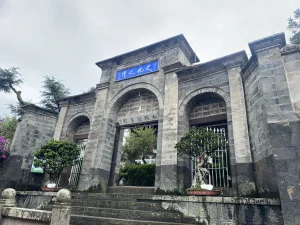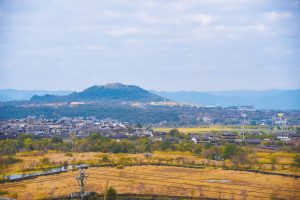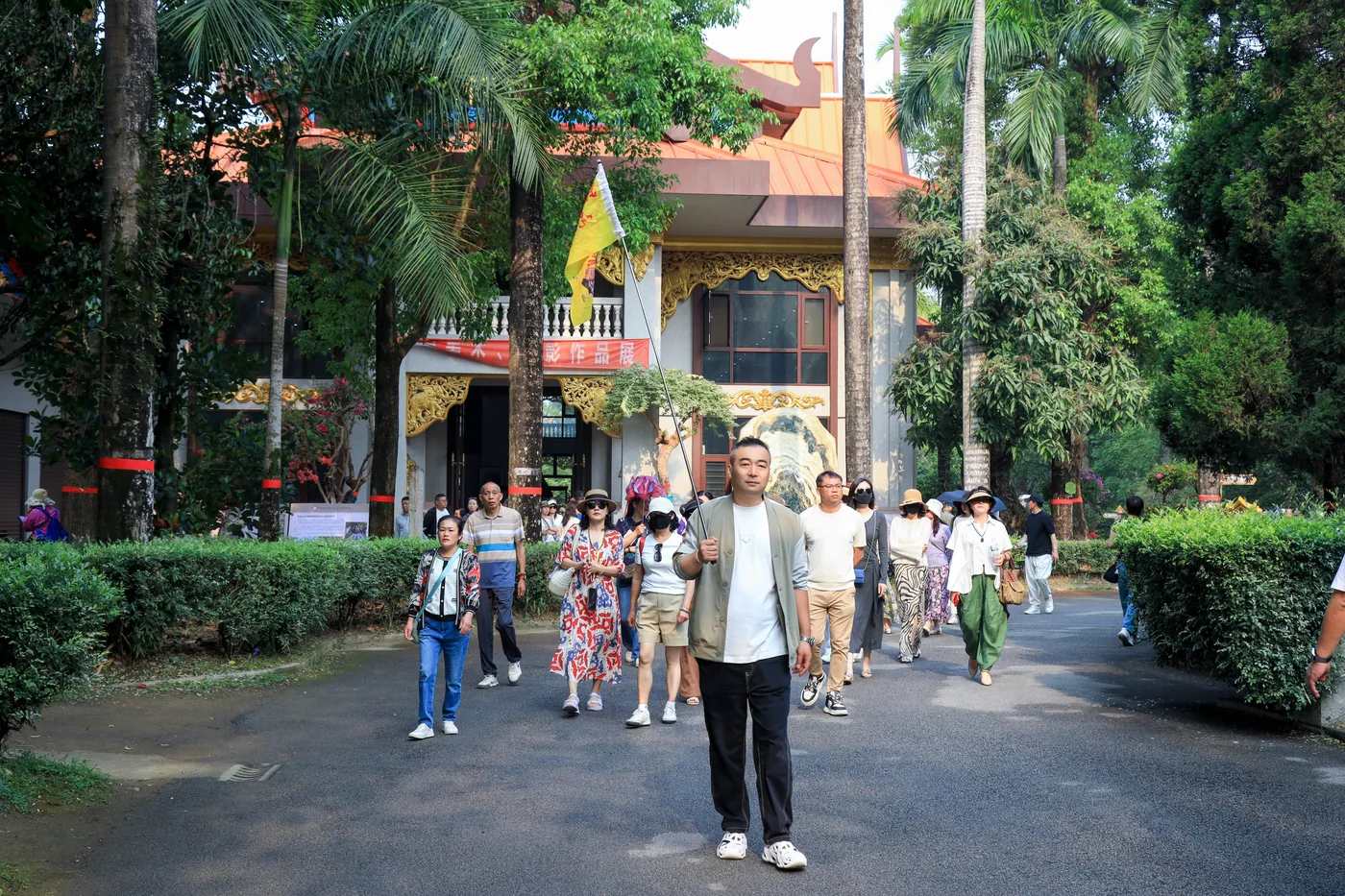
Read Guoshang Cemetery through the hall and the rising rows on Xiaotuanpo. The hall commemorates deaths in the 1944 fighting; the small hillside stones mark individual burials. A short visit can join hall and lower slope, while a full morning leaves room for the climb or neighbouring museum.
Ask for Guoshang Muyuan (国殇墓园). English signs and travel accounts have used several names, including the National Martyrs Cemetery. The adjoining Museum of the War of Resistance in Western Yunnan (滇西抗战纪念馆) has a broader subject and its own exhibition spaces. Save both Chinese names if you want to see both places. A city hotel gives you the simplest return after lunch. Heshun works well if you also want an evening in the old town and arrange the extra transfer.
Why Tengchong has a wartime cemetery
In 1942 Japanese forces occupied western Yunnan and cut the Burma Road, a supply route linking China with what is now Myanmar. In the 1944 counteroffensive, soldiers of the Chinese Expeditionary Force’s 20th Group Army crossed the Nu River and fought across the Gaoligong Mountains before reaching Tengchong. The campaign in the region lasted months. Fighting for the town ended with its recapture on 14 September 1944.
That sequence helps explain why a memorial to a battle for one town also records people from well beyond it. Chinese soldiers came to this part of Yunnan from other provinces, and Allied personnel took part in the campaign. Local people contributed money and land for the cemetery. Li Genyuan advocated its construction and drew the name Guoshang from the ancient poetry collection Songs of Chu. Work began in the winter after the battle. The cemetery was completed on 7 July 1945, less than a year after the town was retaken.
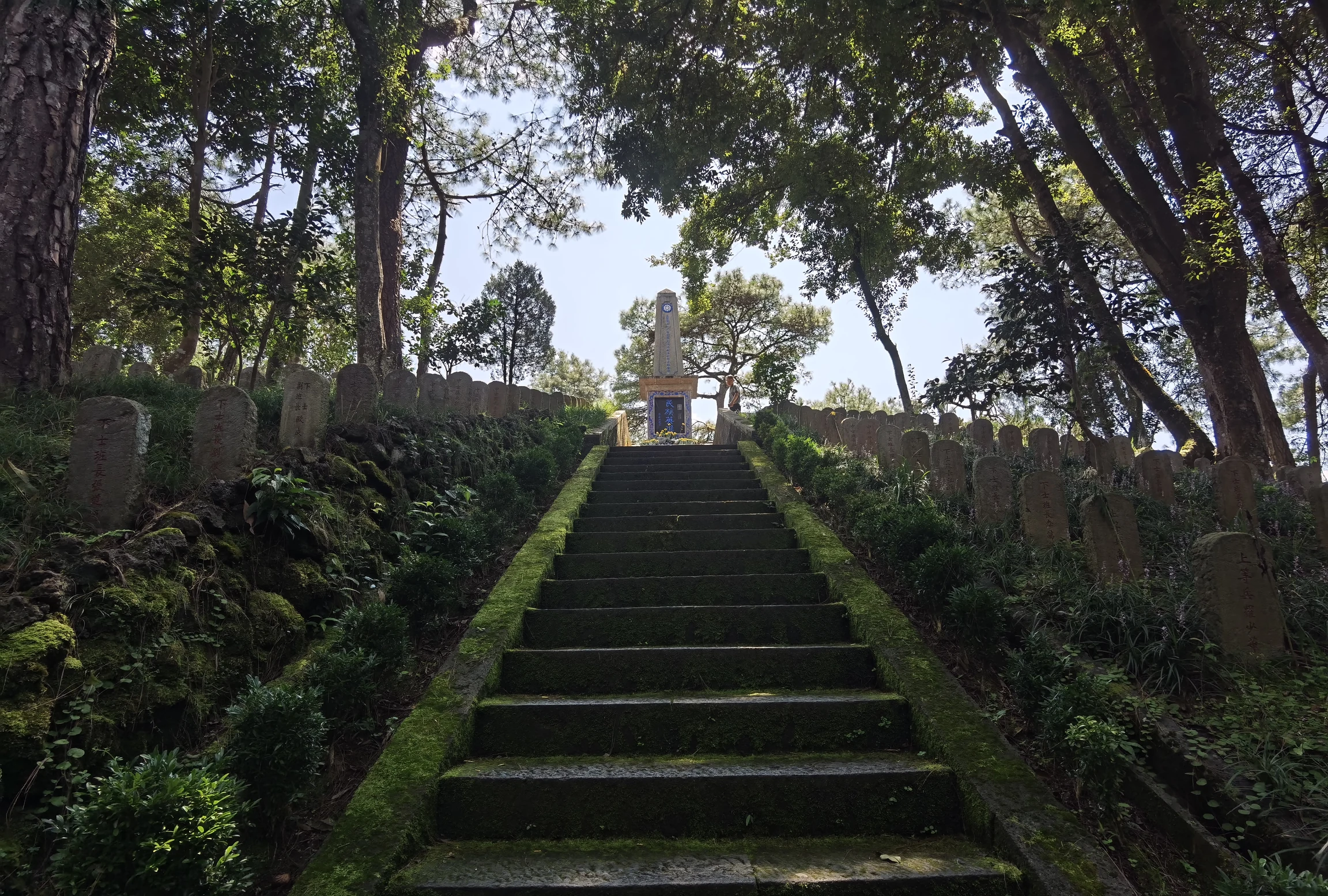
Follow the line from entrance to memorial hall and hillside monument with your eyes before climbing. From below the markers form rows; partway up the public stair, individual stones become easier to distinguish. That change of scale can be understood without reaching the summit.
Three places to read the names
At Zhonglie Ci (忠烈祠), look first at Yu Youren’s three entrance characters and the double-eaved roof. Inside and along open corridors, distinguish name tablets from accounts of the battle and cemetery. Translating one title and a few lines can make the place clearer than trying to read every wall.
The Allied memorial beside the hall records 19 people in the city’s account. Behind it, Xiaotuanpo rises about 31 metres. From the public stair, choose a marker visible without entering burial rows, then look towards the larger monument. Individual grave and collective memorial belong to the same view.
| Place | Look for | What it tells you |
|---|---|---|
| Zhonglie Ci memorial hall | Calligraphy over the entrance, tablets inside and longer inscriptions in the corridors where open. | The hall records names and preserves accounts of the battle and the founding of the cemetery. |
| Xiaotuanpo hillside | Rows of individual markers beside a stair rising towards a single monument. | The hillside is a burial place. Its headstones commemorate individuals within a much larger loss. |
| Expeditionary Force name wall beside the museum | A long inscribed wall associated with the museum complex. | Its commemoration extends to Allied personnel, guerrillas, local people and other participants. A name here need not correspond to a grave on the hill. |
For a relative’s name, bring Chinese characters, unit, rank and any alternate spelling or date. Ask which register matches the information. Graves, hall names and the museum’s wider commemoration are different groups; a similar name on a wall cannot establish a burial on this hill.
When to choose the museum as well
The museum east of the cemetery broadens the visit to the China–Burma–India theatre. Choose supply routes or the Nu River displays for the campaign’s geography, or veterans’ accounts where shown for individual experience. Its 2013 V-shaped building is a later addition to the original memorial.
After the hall, choose the hillside or one museum subject when time is limited. Both can require sustained time on your feet. With children, one map or photograph discussed together may be enough; ask staff about age-suitable galleries because some address casualties and atrocities.
A half-day from a Tengchong or Heshun hotel
Leave larger bags at the hotel and give the driver the cemetery’s Chinese name. From Heshun, agree on the vehicle-accessible meeting point at your end of the journey. A room down an old-town lane can add a walk before the drive even begins. At the complex, note where the driver can legally meet you afterwards. The place you leave the vehicle may be different from the pedestrian exit you use after visiting the museum.
| Part of the day | A practical plan | A shorter option |
|---|---|---|
| After breakfast | Travel from the hotel to the public entrance. Establish where to meet again, then walk to the hall before deciding on the climb. | Arrange a pickup at the nearest permitted point and ask about steps on the approach to the hall itself. |
| Late morning | Read one hall inscription, find the Allied memorial and follow the central stair partway up Xiaotuanpo. Choose the summit monument or a museum display if energy allows. | Look up the hillside from below and go directly back to the meeting point, or visit one open gallery. |
| Lunch and the return | Meet the vehicle and eat in Tengchong. Return to your city hotel or continue by road to your Heshun meeting point and walk back to the inn. | On a departure day, choose a restaurant convenient for collecting your bags and allow a separate transfer to the airport. |
For lunch in town, compare dajiujia (大救驾), with sliced stir-fried rice cake, and ersi (饵丝), with strands. The described dajiujia includes meat, egg, tomatoes, greens and dried chilli. Discuss omissions before cooking. A seated meal outside the grounds also gives a family-history visit breathing room.
Keep a little space after lunch, especially if someone is visiting for family reasons. On another day, Heshun Library offers a different approach to local history through books, community giving and overseas connections. It fits naturally into a walk in Heshun itself. Treat the cemetery and the library as two distinct visits when choosing what you want someone to interpret in English.
Choosing a Tengchong base
A city base makes it easy to return for a rest or change plans after the memorial. Heshun suits a longer stay if the evenings among the lanes and courtyards matter to you. Before booking, ask where a vehicle can stop and how far you will carry your luggage. A hot-spring property can make a fine destination for a separate night, but first check its actual position in relation to the city and airport. The Tengchong and Heshun accommodation guide compares those choices.
| Time available | Suggested nights | How to use the days |
|---|---|---|
| 3 days / 2 nights | Two nights in Tengchong city. | Arrive on day one. Visit the cemetery and one gallery on day two, followed by lunch in town. Collect your luggage for departure on day three. |
| 4 days / 3 nights | Two nights in Tengchong and one in Heshun. | Visit the cemetery from the city on day two. Move after breakfast on day three, leave your luggage at the Heshun inn and spend the afternoon in the old town. Depart on day four. |
| 5 days / 4 nights | Two nights in the city and two in Heshun. | Give day two to wartime history and day three to the hotel move and Heshun. Choose one outdoor outing on day four before leaving on day five. |
The Verotrip five-day Tengchong and Heshun itinerary gives day two to Heshun, day three to Rehai and day four to Beihai Wetland. Its fourth afternoon is left free after the wetland visit and lunch. Guoshang Cemetery is a separate request. If it is a priority, ask to replace one of the planned outings or add a night. Keep a full morning for a family-history visit or for the museum and hill together. The Tengchong trip-planning guide gives a wider view of how these days fit together.
Entry, language and the return journey
The cemetery administration’s 2026 public budget describes free opening as part of its service. A joint notice from the cemetery and museum in 2023 announced timed reservations. For your dates, check which entrance is operating, whether the museum and grounds require the same reservation, and which booking or desk procedure accepts your original passport. Save the booking details before leaving your hotel. The hilly outdoor visit and an indoor gallery may be affected differently by weather, conservation work or a closure day.
Wear shoes with grip if you want to climb Xiaotuanpo. In rain, the return down the steps can require more care than the ascent. Stay on the public paths and leave room for people paying their respects. Ask about photography in the hall and exhibitions. Avoid photographing mourners without permission. If travelling with a wheelchair or someone who has difficulty with steps, ask for a confirmed route from drop-off to the specific area you hope to visit, including the way back. Allow the group to split for the climb only if everyone has an agreed place to wait.
Price on request. Tell your travel consultant if you want help reading names, an introduction to the Burma Road campaign or simply transport and time to visit independently. Ask for the guide language, time on site, meal arrangements, vehicle waiting and final hotel or airport drop-off in the written proposal. Specify any night in Heshun separately. Plan your Tengchong visit with Verotrip.
Questions about Guoshang Cemetery
Is the cemetery worth visiting if I cannot climb the hill?
Yes, if the public route to the hall suits your mobility. The hall, inscriptions and view of the rising rows explain much of the memorial. Confirm the approach and any thresholds in advance. You can leave the summit monument to another member of the group.
Are the names at the museum all people buried on Xiaotuanpo?
No. The museum’s name wall remembers a wider group involved in the conflict in western Yunnan. The hillside is a burial ground and the hall also has its own commemorative tablets. For a particular name, the person’s unit and Chinese spelling can help staff point you towards the appropriate record.
Which part should I prioritise if I have only a short visit?
For the history of Tengchong itself, see the memorial hall and the lower hillside. For the regional campaign, keep time for the museum and choose one subject such as the Nu River. Leave enough time at the end to get back from whichever part you choose.
Can I visit on the morning of a flight from Tengchong?
Only with a generous margin for the transfer, retrieving bags and airport formalities. If your outgoing flight leaves little room, put the memorial on the preceding day. Visitors who need time with an interpreter or a family name will generally appreciate an open-ended morning.
The cover shows the steps on Xiaotuanpo at Guoshang Cemetery on 11 August 2022. Photograph by STW932. The original and the resized WebP version are licensed under CC BY-SA 4.0. The crop changes with screen size.