A Nepal-to-Russia journey through China needs two independently accepted borders, a usable Tibet approach if included, and a separate assessment of travel to Russia. An old Kathmandu–Lhasa tour and a domestic northeast China road trip do not establish a continuous foreign-vehicle movement. No such departure is confirmed here.
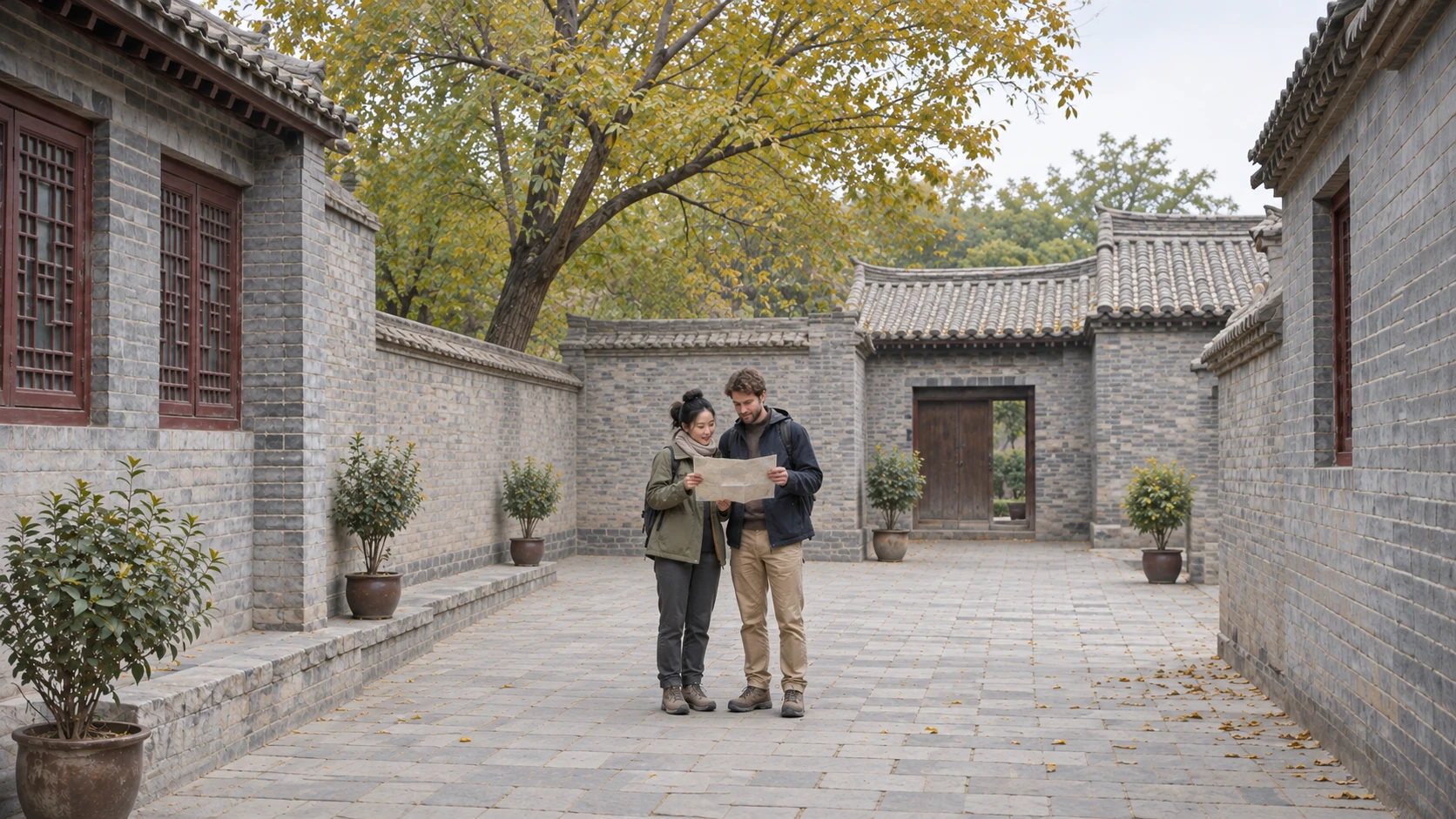
Lead image: AI-generated travel illustration showing two fictional adult travellers reading a map in a generic Chinese lane. It is not a photograph of a Nepal–China–Russia journey, Harbin, Tibet, any border, actual customers or a Vero Trip departure.
Choose whether the essential aim is a China holiday, bringing the same vehicle across China, or reaching Russia. This guide compares the northern border concepts and a China-only alternative. A reverse Russia-to-Nepal journey belongs to the same planning question, but the actual permissions and transport cannot simply be reversed.
Updated 5 November 2026.
Resolve the Nepal approach and the Russia decision first
The Nepal–China border and Tibet choices guide explains the affected-road restrictions around the Gyirong approach and the separate Shigatse border-document notice. Do not assume that a different document opens the road, or that the notice closes all Tibet. A Kathmandu departure is not evidence that this land entry can receive your party now.
For a passenger holiday, investigate an independently accepted arrival in China instead. A Tibet stay then needs its own permitted programme; it is optional rather than a compulsory bridge from Nepal to the northeast. Flying passengers onward does not move a Nepal-based vehicle or resolve its storage and customs position.
As checked for this guide, UK travel advice advises against all travel to Russia, identifies limited consular support and warns about insurance consequences. That is UK advice, not a universal immigration prohibition. Travellers should consult their own government’s current advice and insurer. The alternative below finishes in China rather than recommending a Russian holiday contrary to that advice.
Manzhouli and Suifenhe are different northern proposals
Name the Chinese port, Russian counterpart, region and passenger transport mode before choosing a China route. Manzhouli–Zabaykalsk is a different geographical proposition from Suifenhe–Pogranichny in the Russian Far East. Neither is an interchangeable last-minute exit from Harbin or Lhasa. The receiving town, China-side final room, accepted passenger service and vehicle release all change with the choice.
| Concept | Why someone might investigate it | What this guide does not establish |
|---|---|---|
| Manzhouli–Zabaykalsk | A specifically assessed Trans-Baikal arrival, with a China journey arranged around that end. | Current seats, the dated passenger channel, or permission for a particular foreign vehicle. |
| Suifenhe–Pogranichny | A specifically assessed Russian Far East arrival, with the actual road or rail facility identified. | That a similar port name or a railway listing admits a road passenger or private car. |
| A China-only holiday | The regional visits matter more than a continuous crossing or a Russia destination. | Nepal road entry, Russia admission, or moving the same vehicle throughout. |
The Russian foreign ministry’s unified e-visa instructions limit eligibility by nationality and require designated checkpoints. Its checkpoint list separates transport modes and regions. Zabaykalsk appears in both road and rail sections. Pogranichny under Kaliningrad is not the Primorye checkpoint; Pogranichnyy in the rail section is not proof for a road arrival. Check the exact current entry with the appropriate authority before purchasing transport.
A visa decision does not establish vehicle customs admission, an available carrier, insurance or access to a restricted area. Assess those separately. An exemption described for Russian passport holders entering China does not decide a Nepali or British passport holder’s admission to Russia.
Do not buy a China domestic train to a border city as though it were an international ticket. Ask which service actually crosses, where passengers report, how baggage is handled and where the next operator takes over. A freight opening or a year-end passenger total cannot answer those questions for your date.
An alternative with four Harbin nights and optional Lhasa
If the border project cannot be established, keep the China holiday worthwhile on its own. Four Harbin nights allow an arrival day, three usable city days and a departure day. An optional four-night Lhasa stay is a separate regional component. Together these are eight destination hotel nights, not the duration of a Nepal–Russia crossing. Flights, trains and additional gateway or connection nights are outside that allocation.
| Block | Useful rhythm | What needs its own arrangement |
|---|---|---|
| Optional Lhasa: four nights | Quiet arrival; two modest city days; a flexible recovery or accepted extra visit day; departure. | Tibet permission, named rooms and transfers; an extra night beyond the existing four-day outline. |
| Connection to northeast China | Give the booked journey, luggage and actual arrival their own time. | Any transfer airport, station change, transport night or extra hotel; no direct service assumed. |
| Harbin: four nights | Arrival; heritage and food day; separate historic district day; flexible seasonal or indoor day; departure. | Actual arrival station or airport, property reception, selected admissions and any specialist activity. |
| China departure | Leave on the independently accepted service and documents. | A final border-area overnight or international journey is not included in these regional nights. |
Harbin day one: settle into a practical city base
Choose a room near the walks you intend to make, with a workable vehicle approach for suitcases. A central Daoli base can suit Central Street and Saint Sophia Square; the cheapest distant room may add repeated transfers. Check the actual property, reception for your documents, heating, lift and bed arrangement. Avoid building a major evening attraction around an uncertain arrival.
Harbin day two: heritage streets and one proper meal
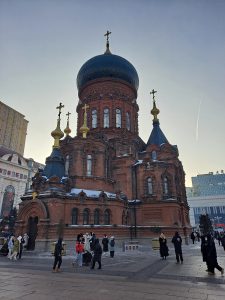
Begin around Saint Sophia Square, then take a selected stretch of Central Street. Keep the square visit separate from any interior admission or performance. Pause for a seated regional meal before adding more walking. Choose a permitted Songhua riverfront stretch if weather and footing suit; seeing the river does not authorise walking on its ice.
The city’s Daoli market regulator’s visitor guidance identifies these public city areas and stresses clear prices, legitimate transport and checking accommodation terms. For food, read the menu and establish ingredients before ordering. A familiar dish name is not a guarantee about allergies, preparation or the price of a set meal.
The existing Harbin heritage and food day tour is a relevant component. Its actual outline combines the square and streets with a regional meal and a selected Chinese Baroque walk. A cooking session is a request requiring an agreed kitchen, menu and language. It provides no hotel nights, northern border crossing or automatic ice-park extension.
Harbin day three: give the Chinese Baroque district its own pace
Use a separate, manageable neighbourhood walk rather than rushing between every city landmark. Select a few open public streets and a warm place to sit. If the day-tour proposal already covers this district fully, use the day for a different confirmed museum or exhibition instead. Check that venue’s operating day and accessible visitor route before leaving; an indoor alternative is useful only if it is actually open.
Harbin day four: keep the seasonal choice flexible
The 31 October provincial report on the coming ice and snow season describes forthcoming programmes across different dates. The start of a citywide season is not evidence that every outdoor ice attraction is open on arrival. Select one operating venue after checking its own current opening and ticket arrangements; do not buy an early-November holiday solely on a previous winter’s photographs.
Protect a warm break and a straightforward return to the room. If conditions remove that visit, keep the day for an accepted indoor activity and a shorter public street walk. Yabuli, Snow Town and Mohe require additional regional travel and nights, rather than filling spare hours before an international departure. Use the main Harbin planning guide for the city’s full sightseeing intent.
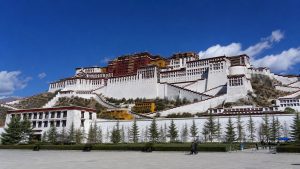
Optional Tibet: keep four Lhasa nights separate
The existing four-day Lhasa city programme has arrival, two city days and departure. It is a city component, not a Nepal land entry or an approved route across Tibet to northeast China. A fourth hotel night needs an amended written programme; it is not included merely because this planning example proposes one.
Keep arrival quiet and allow the programme to respond to how you feel. Admissions, visiting order and religious-site access need dated confirmation. If health suitability or Tibet arrangements are unresolved, remove this component. Do not fill the gap with an unverified border road, remote detour or rapid ascent.
Keep the same-vehicle project separate from a passenger holiday
A proposed foreign-car crossing needs accepted entry and exit ports, customs terms, temporary vehicle registration, each driver’s Chinese authorisation and appropriate insurance. Passenger documents and a permit for a local rental are different matters. The route and authorised period must fit both ends; choosing a longer sightseeing list does not extend them.
Read the China overland comparison before deciding between an own-vehicle project and separately booked passenger visits. If the vehicle enters China, the contingency must explain how it lawfully leaves or otherwise receives an accepted customs resolution. Passenger flights are not a vehicle recovery plan.
The existing eighteen-day northeast China and Inner Mongolia itinerary is a domestic regional road trip; the four-day Hulunbuir itinerary returns to Shenyang by train. Neither supplies a Russian crossing. Their Manzhouli sightseeing stages must not be re-labelled as included international transport or proof that a foreign private car is accepted.
Questions before a Nepal–China–Russia enquiry
Can the journey run in reverse?
The broad question belongs here, but reverse travel needs new actual arrival and exit acceptance, Tibet arrangements, transport and vehicle paperwork. The affected Nepal approach remains a limitation. Do not reverse old day numbers and present them as a current Russia-to-Nepal departure.
Does a listed e-visa port guarantee that I can drive across?
No. Match the eligible nationality, exact checkpoint, region and mode first. Vehicle admission, insurance, route access and an operating service remain separate. Similar English spellings do not make two checkpoints equivalent.
Can the eight destination nights cover the entire route?
No. They compare optional Lhasa and Harbin stays only. Nepal, Russia, international travel, connections and any border-area nights are additional. The Harbin component can stand alone if Tibet or the cross-border project is omitted.
What should a quotation identify?
Price on request. Separate rooms, guide language, transport, admissions, meals, document work, insurance and contingency costs. Any vehicle security or deposit needs its own terms. Supplier descriptions and published domestic itineraries do not establish Vero Trip’s confirmed cross-border services.
Ask for the regional visit and border feasibility separately
Send nationalities, travel dates, Nepal starting point, intended Russian destination and the visits that matter through Vero Trip’s planning enquiry. State whether bringing the same vehicle is essential, with its registration country, type and ownership authority. An enquiry does not reserve a departure or establish approval. A regional China holiday can be considered independently while any unsupported cross-border component remains unconfirmed.