Updated 28 October 2026.
Use the metro for longer urban moves, walk within one neighbourhood and choose a taxi when the final door-to-door leg matters. This combination is more practical than trying to walk the whole Qingdao coast or hiring a car for every short stop. Start with the day’s cluster, then choose transport between clusters. A route that looks continuous beside the sea can still be tiring, exposed or interrupted.
Keep the exact Chinese name of your destination and your hotel address available offline. English transliterations vary, and a famous district name is not a precise pickup point. For airport and railway-station arrival details, use the separate arrival guide; this page focuses on moving around after check-in.
Choose the mode for the actual leg
| Journey | Usually worth considering | Main decision |
|---|---|---|
| Old-town streets and nearby buildings | Walking with planned breaks | Slope, steps, road crossings and the return point |
| Old town to a different city district | Metro, then a local walk | Destination station, direction and useful exit |
| Hotel to a specific restaurant with bags or tired children | Taxi or a suitable booked car | Door-to-door address and capacity |
| A beach or waterfront outing | Metro or taxi plus a short coastal walk | Where the walking section ends and how you return |
| A Laoshan scenic sector | A sector-specific journey | Visitor centre, scenic transport and return arrangements |
| Several distant stops in one day | Simplify the route first | Whether the transfer time is worth each stop |
How to use the metro without overcomplicating it
Search the actual destination, then identify the nearest useful station rather than selecting a line from memory. Check the route direction, changes and station exit. At the station, follow the live signs; services, interchange arrangements and the final trains can change. A screenshot saved before travel is useful for orientation but should not overrule the information in front of you.
When choosing between two routes, include the walk from your hotel, the transfer walk and the exit-to-destination section. An extra change may be a poor trade for a small reduction in ride time when you have luggage or a stroller. Ask staff about lifts before entering a long underground passage if stairs are a concern. The closest exit on a map may not be the easiest accessible route.
Keep your ticket or valid ride credential ready for both entry and exit, and use the same method as instructed for the whole journey. A railway ticket does not pay for the metro. If your mobile payment or ride code is not working, use the staffed service point instead of testing unfamiliar gates while a queue builds behind you.
Foreign cards: purchase support is not universal gate tapping
A 2024 report quoting Qingdao Metro described foreign-card ticket purchases at staffed service centres in selected stations. That is different from tapping any overseas bank card directly at every gate. Ask the service centre what is currently supported for your card and ticket; keep another practical payment option available.
Do not assume your phone, bank card and transport app will behave identically in every city. Set up and test your intended method before a time-critical trip. If you buy a pass, compare its actual validity and conditions with your planned rides rather than assuming a tourist pass always saves money. Current fares and pass rules belong to the operator’s information at purchase.
Taxis and app-based cars: specify the entrance
Give the full destination in Chinese and check the map pin before departure. For a large attraction, identify the visitor entrance you need; a park’s geographic centre is not a sensible drop-off point. For a hotel, use reception’s vehicle entrance rather than a promenade or pedestrian street that happens to be nearer your room on a map.
App-based pickup zones and official taxi queues are not interchangeable. At a busy station or attraction, follow the relevant signs and share a fixed meeting point. Avoid walking around with bags while the driver is trying to locate you. Before booking a vehicle for a group, count the suitcases and specify unusual items. A child seat, accessible vehicle or English-speaking driver is a separate requirement that needs explicit confirmation.
For any quoted journey, establish what the charge covers and how payment works. A sightseeing car arrangement should specify the route, duration, stops and any waiting or additional costs. Do not interpret a driver’s agreement to take you towards Laoshan as admission to a scenic sector or permission for that vehicle to enter controlled roads.
Walk in clusters, not from one end of the coast to the other
| Walking focus | Build the outing around | Avoid adding automatically |
|---|---|---|
| Old town | One group of streets, the cathedral exterior or Zhanqiao | Every viewpoint and distant café on the same walk |
| Badaguan and nearby coast | Architecture streets and one nearby beach section | A full eastward waterfront march afterwards |
| May Fourth Square and Fushan Bay | A modern waterfront section with a return point | A guaranteed light show or cruise departure |
| Shilaoren | A beach walk and rest near the chosen access | A second distant beach just for a photograph |
| Laoshan | One selected scenic sector or a coastal-village plan | Several different entrances in the same short day |
A coastal walk is still an outdoor activity. Use footwear that handles steps and uneven surfaces, carry what you need for a break and decide where you can leave the route if someone becomes tired. In strong wind or rain, move the outing inland or choose a shorter section. A café is useful as a rest stop only if it is actually open and has suitable seating.
Rain, mobility and family adjustments
In poor weather, keep one indoor anchor and reduce exposed walking rather than replacing every promenade with another long transfer. Families can use a taxi for the final leg without abandoning the metro for the whole trip. For travellers with mobility restrictions, ask about the complete route from vehicle or station to the actual activity; “near the metro” does not establish step-free access.
Save the hotel card, a charged phone and a backup way to show an address. If your group separates, agree a named public meeting point and time in advance. Children and older travellers may need a rest before the evening journey, especially after a day that includes old-town hills.
Common transport questions
Do I need to rent a car? A typical city visit can be organised around metro, walking and occasional taxis. A car should solve a specific route or access need rather than add parking and meeting-point work to a compact sightseeing day.
Can I walk between every major sight? It is more comfortable to choose compact sections and connect them by transport. See the old-town walk and beach and coastal-walk guide for focused outings.
How do I organise the whole route? Use the Qingdao planning hub to settle days and hotel area first, then attach realistic transport legs. Pure transport instructions do not require buying a sightseeing tour.
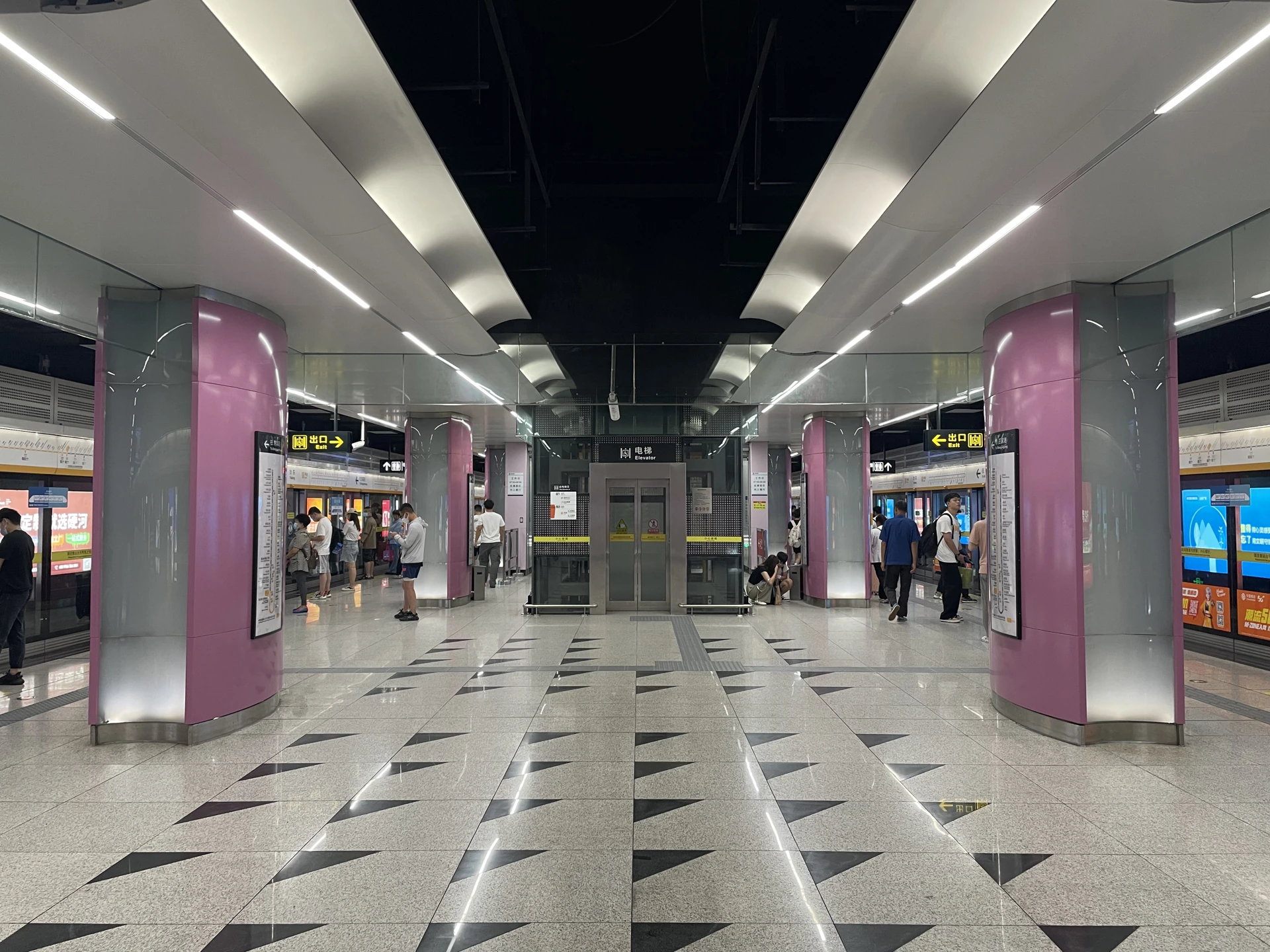
Check the train direction and exit as well as the station name.
Feature photograph: Painjet, CC BY-SA 4.0, 25 June 2023, 13:20:53. Resized and converted to WebP; no scene alteration. Photograph adaptation available under the same license.
Related Journeys to Compare
These existing routes offer starting points for the region or travel interests discussed above. Read the full daily itinerary to see what is included. A visit described in this guide, a specialist session or an international border crossing is added only when confirmed in your own programme.