Updated 28 October 2026.
For your first Qingdao old-town walk, choose one historic-street route and one waterfront or viewpoint stop. Start around Zhanqiao and Zhongshan Road, then decide between the cathedral-and-courtyard area or the Daxue Road side. Do not try to connect every famous building, hill and café in one uninterrupted walk. The slopes and repeated detours are part of the effort, even when the places look close on a map.
The old town rewards looking slowly: roofs above a side street, a courtyard entrance or a building’s relationship to the hill. You do not need admission to every interior to enjoy it. This guide is a practical route framework, with public-street viewing as the baseline and paid or restricted interiors treated separately.
Choose your old-town walk
| Walk style | Suggested focus | Who it suits |
|---|---|---|
| Short introduction | Zhanqiao waterfront, then Zhongshan Road and the cathedral exterior | First morning, limited time or a lower-energy outing |
| Courtyard architecture | Zhongshan Road and Dabaodao, with one food or café break | Visitors interested in neighbourhood form and old commercial streets |
| Cafés and a viewpoint | Daxue Road surroundings, then Xiaoyushan if conditions and legs allow | A separate half-day with time to pause |
| Architecture with a meal | One compact cluster followed by a seated lunch | Families or travellers who prefer fewer steps |
| An interior-led visit | One named museum or historic building, with nearby streets | Visitors with a particular interest and current admission information |
A useful first route: waterfront to cathedral and courtyards
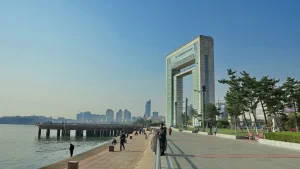
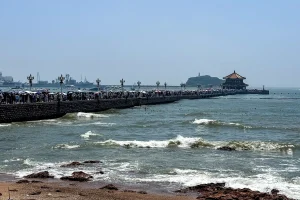
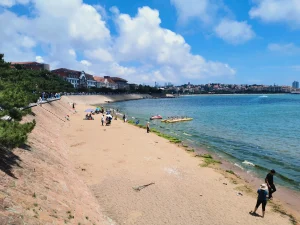
Begin at the public waterfront around Zhanqiao if the weather and access are suitable. The purpose is to orient yourself to Qingdao Bay, not to spend the entire morning in a photograph queue. If the pier is crowded or restricted, enjoy the view from the shore and continue. Choose a street crossing and actual pedestrian route rather than following a straight line on the map.
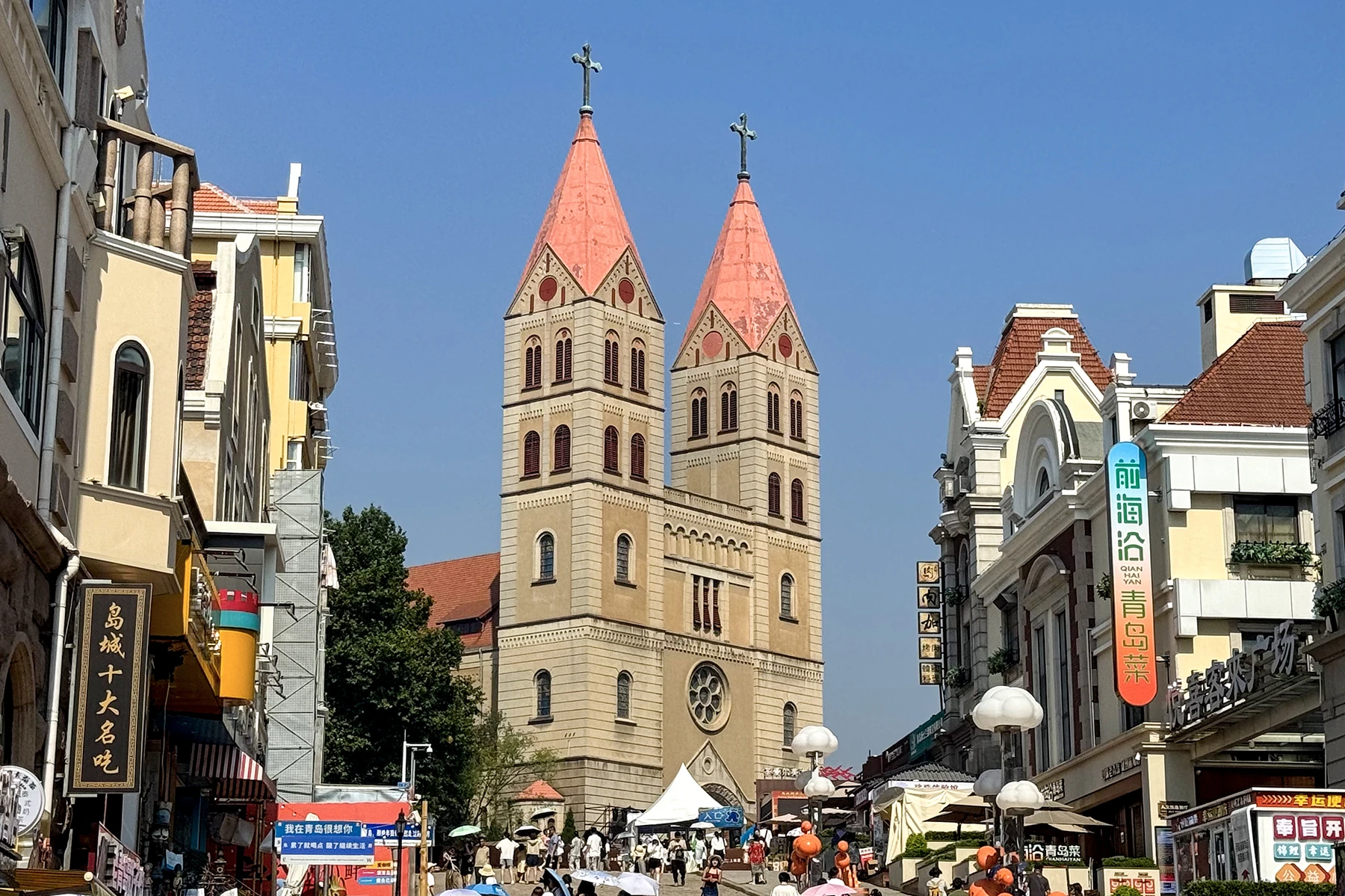
Move towards Zhongshan Road, then the area around St Michael’s Cathedral — 圣弥厄尔教堂, also identified by 浙江路天主教堂. The exterior can be the focus of your walk. Treat indoor entry as a separate question: opening, services, admission and appropriate behaviour may affect access. Do not assume a building’s appearance in a sightseeing list means unrestricted entry throughout the day.
If the group still has energy, continue towards the Dabaodao courtyard district. Look at the building forms and public lanes rather than entering private doorways for a photograph. Finish with a meal or a café break in the same general area. You can return to the hotel by transport instead of retracing every street on foot.
Dabaodao and Silver Fish Alley: understand what you are seeing
The city-sponsored Qingdao citywalk introduction describes the courtyard buildings of Dabaodao and Silver Fish Alley. These are useful neighbourhood references, not an instruction to follow its entire one-day route. Decide whether you want courtyards, former residences, cafés or food, then keep the walk around that purpose.
Historic character and new commercial uses can coexist. A restored shopfront does not establish that every business, room or activity is historic. Enjoy the architecture without assuming the café occupies an original interior or that a courtyard is open to the public. If a place matters to your interests, identify the specific building and read its own information.
Make Daxue Road a separate choice when needed
Daxue Road — 大学路 — works well as a street-and-café focus. Give it room in the day instead of treating it as another tiny pin after a long cathedral-and-courtyard loop. A café stop is also a chance to sit down and decide whether you really want to climb to a viewpoint afterwards.
Xiaoyushan — 小鱼山 — and Signal Hill — 信号山 — are distinct choices, not compulsory consecutive stops. A viewpoint is most rewarding when visibility, access and your energy make the climb worthwhile. Pick one, check its current visitor information and accept a street-level alternative if the day is hazy or wet. Do not build an itinerary around a guaranteed panorama.
| Decision at the halfway point | Continue when | Change the plan when |
|---|---|---|
| Add a courtyard district | Everyone still wants to explore streets | The group needs lunch, a toilet or a rest |
| Enter a historic building | The exact building is open and interests you | You only wanted an exterior photograph |
| Climb a viewpoint | Visibility and walking conditions are suitable | Steps, rain or tired legs reduce the value |
| Add Daxue Road | You have a fresh half-day or reduce another part | It would create a long cross-town walking chain |
| Stay for the evening | You have a meal and return plan | The family has already had a full outdoor day |
Practical walking details that photographs leave out
Wear shoes suitable for uneven paving and sloping roads. A small shoulder bag or daypack is easier than rolling a suitcase between stops. Leave main luggage at accommodation where that service has been agreed, or use another confirmed storage arrangement. Do not assume a church, café or museum can store it for you.
Check the complete access route for a stroller or wheelchair. A smooth stretch of main street can lead to steps at a particular doorway or viewpoint. For an older traveller, a short walk with a taxi at the end can be more comfortable than a supposedly easy loop that still requires walking back uphill. Choose a named pickup point accessible to vehicles.
In hot or rainy weather, shorten the route and choose a reliable rest stop. Wet surfaces, wind near the water and bright sun can make the same distance feel very different. Keep food and toilets in the plan before anyone becomes uncomfortable. A busy picture spot is optional; it does not need to dictate the day.
Photography and local etiquette
Use public areas and keep entrances, pavements and road crossings clear. Ask before photographing people at close range or entering a shop for an interior photograph. Residential buildings remain homes even when visitors like the façade. At religious buildings, follow the posted rules and avoid interrupting services. A quieter side street can be interesting without needing to recreate a particular online image.
If photography is your main interest, choose fewer places and allow time to observe. Look at how the roofline, street slope and light work together. Going back to one area at another time can be more satisfying than collecting every landmark once.
Frequently asked questions
Is the old town a full-day walk? It can be, but it does not have to be. The short introduction plus a meal is a complete outing. The three-day itinerary shows how to spread old and modern Qingdao over separate days.
Should I add Badaguan to the same walking route? Treat it as a different architecture area and use transport between them if visiting both. The local transport guide explains the cluster approach.
Which routes include this part of Qingdao? The existing city-and-coast and regional coastal itineraries below include relevant Qingdao sightseeing. Use the Qingdao planning guide to decide your overall length, then tell Vero Trip which buildings or neighbourhoods matter to you. Entry, guiding language and accessibility should be stated in the specific proposal.
- 6-day Qingdao and Laoshan coast private itinerary
- 6-day Qingdao, Weihai and Yantai coastal itinerary
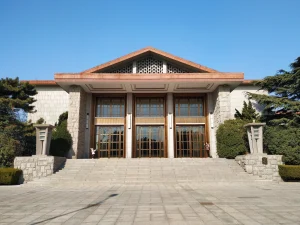
The cathedral exterior belongs to an old-town walk; indoor access is a separate decision.
Feature photograph: Windmemories, CC BY-SA 4.0, 30 July 2024, 15:06:59. Resized and converted to WebP; no scene alteration. Photograph adaptation available under the same license.