Updated 22 October 2026
For a first Hulunbuir road trip, allow eight days and seven nights if you want Hailar, Ergun, Shiwei and Manzhouli together. With six days, keep Ergun and the western grassland–Manzhouli circuit and leave Shiwei for another visit. The northern village stay adds more than a photograph stop: it changes where you sleep, how often you pack and the roads that must work for your dates.
The plan below starts and finishes in Hailar, with a two-night stay in Shiwei and a separate Heishantou night before Manzhouli. It uses a northern spur returning inland through Ergun, rather than depending on every riverside border-road segment being available. It is a warm-season planning framework; a winter journey needs a different driving and accommodation plan.
Hulunbuir is a large region in northeastern Inner Mongolia. Hailar is the arrival base for this itinerary; Ergun is also written Erguna, with its urban centre called Labudalin. Shiwei, Enhe and Heishantou are separate places within the wider Ergun area. Manzhouli is a border city on the western part of the circuit. None of these domestic stops includes crossing into Russia or Mongolia.
Choose six, seven or eight days by what you remove
Decide whether a northern village stay or a border-city evening matters more. Adding both to a short holiday leaves less time for the reason most people come: standing outside the car, walking slowly and watching the landscape change.
| Time available | Suggested overnight allocation | The real trade-off |
|---|---|---|
| 6 days / 5 nights | Hailar 1 → Ergun 2 → Manzhouli 1 → Hailar 1. | Skip Shiwei and the northern village spur. Use the Ergun stay for one manageable wetland or grassland visit. |
| 7 days / 6 nights | Hailar 1 → Ergun 1 → Shiwei 2 → Ergun 1 → Hailar 1. | Choose the northern villages and omit Manzhouli. The return Ergun night breaks the southbound journey. |
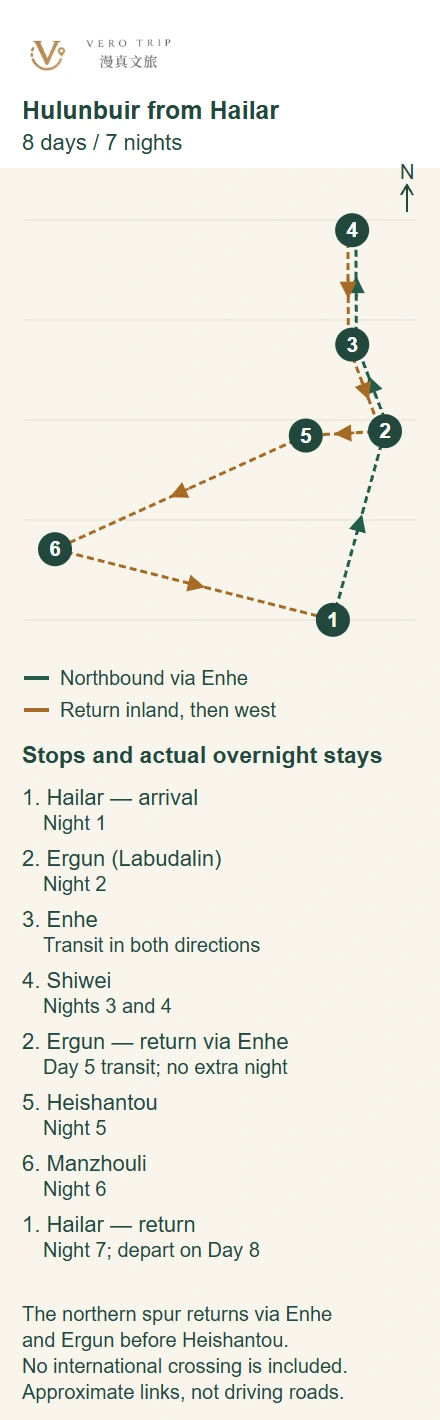
| 8 days / 7 nights | Hailar 1 → Ergun 1 → Shiwei 2 → Heishantou 1 → Manzhouli 1 → Hailar 1. | Combine the main themes, with the Shiwei–Heishantou approach planned through the inland corridor. |
| Forest is the main goal | Rebuild the route around Genhe and Mordaoga, with suitable overnight bases. | Replace destinations in the circuit rather than adding a forest detour to an already full day. |
The allocations include arrival and departure days. A late arrival should end in Hailar, not trigger an extra northern drive that evening. If your tickets use Manzhouli instead, redraw the sequence and confirm a one-way vehicle return before reserving hotels; do not keep the Hailar loop simply because it appears in a sample itinerary.
An eight-day route with seven actual nights
This framework deliberately makes Day 4 a local day in Shiwei. It also keeps the final Hailar night before departure. Exact roads, attraction access and operating hours need to fit your travel dates; the table is an overnight plan, not a promise of uninterrupted roads or a fixed daily driving time.
| Day | Route and overnight | What deserves the time | What stays optional |
|---|---|---|---|
| 1 | Arrive Hailar; sleep Hailar. | Vehicle collection or driver briefing, supplies and a simple city evening. | Any sightseeing that would compete with a late arrival. |
| 2 | Hailar → Morigele River area → Ergun; sleep Ergun. | One accessible grassland viewpoint, then settle into the town base. | Additional viewpoints if weather or the road journey takes longer. |
| 3 | Ergun → Enhe → Shiwei; sleep Shiwei. | A suitable wetland visit or Enhe stop, chosen around the onward drive. | Doing several parks, a long village lunch and every viewpoint together. |
| 4 | Stay in Shiwei; second Shiwei night. | A local walk and an arranged village experience within the areas open to you. | Extra drives, river activities and a Linjiang side trip unless separately confirmed. |
| 5 | Shiwei → Enhe/Ergun inland corridor → Heishantou; sleep Heishantou. | The transfer, comfort stops and an unhurried arrival. | A late horse ride or sunset appointment that requires rushing. |
| 6 | Heishantou → Manzhouli; sleep Manzhouli. | An agreed grassland stop and time in the city before an evening walk. | A border attraction if passport booking, opening or arrival time does not fit. |
| 7 | Manzhouli → Hailar; sleep Hailar. | A selected stop, vehicle handover if appropriate, and departure preparation. | Hulun Lake as an extra detour: include it only if the chosen shore access and transfer fit. |
| 8 | Depart Hailar. | A separate airport or railway-station transfer. | A fixed excursion before a tight onward connection. |
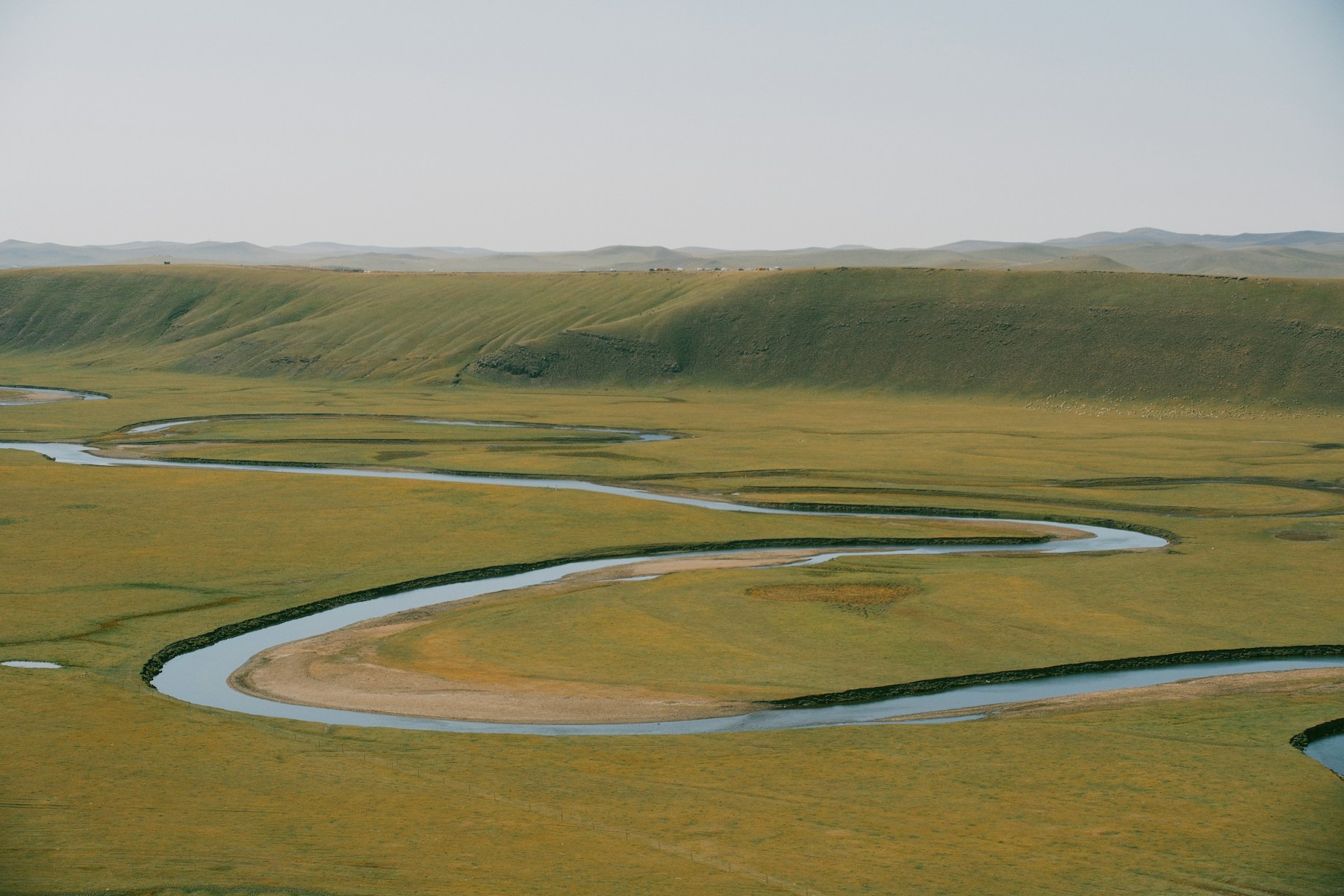
Morigele River is also transliterated Moergel or Morigel; use the exact Chinese attraction name and entrance pin. The Ministry of Culture and Tourism listing describes visitor centres and designated viewing stations. Ask which entrance and viewing route your visit uses, whether local transport is required and what walking is involved. The river landscape is not permission to drive onto any nearby meadow.
In Ergun, distinguish Ergun Wetland Scenic Area from Ergun National Wetland Park; the city’s official attraction list lists them separately. Send the precise Chinese name to your driver and hotel. Select one appropriate visit rather than paying for an attraction whose location, steps or walking circuit differs from what you expected.
Enhe and Shiwei offer different bases for village time. Choose Shiwei when that northern setting is a priority and a suitable room is available. Choose a shorter Ergun-based plan when dependable room access, meal choice or less packing matters more. Mordaoga and Genhe belong to a more forest-focused version; they are not included in these seven nights.
For Hulun Lake, agree a named managed shore entrance and confirm its current access, toilets, walking surface and permission for your party. A social-media photograph labelled “lake cliffs” may show a private pasture reached by an unmarked dirt track. It does not establish public access, a safe cliff edge or a usable wet-weather approach. Keep the lake optional if an appropriate managed visit cannot be arranged; the Manzhouli–Hailar transfer still needs its own time.
Treat a scenic border road as a road with access conditions
Inner Mongolia’s border-management regulations require valid identity documents and checks in designated border-management areas. They distinguish the frontier strip and port-controlled areas from the surrounding region. Carry your passport, follow staffed checks and stay within the route and areas confirmed for your visit.
Give the planner your nationality, dates and exact proposed stops, especially riverside lanes and port attractions. Ask whether any destination is restricted to foreign visitors and whether the route requires additional permission or advance notification. A national highway number, a tourism article or another traveller’s video does not answer those questions for your trip.
The numbered “ka” roads advertised between Heishantou and Shiwei are not an automatic part of this itinerary. The default Day 5 plan returns through the inland Enhe–Ergun corridor. Use a different road only after its current public access, conditions and suitability are established. Never use a track around a closed checkpoint or drive through a fence opening to reach a river view.
Keep border viewing separate from international travel. Admission to a scenic gate or a view across the river is not immigration clearance; visiting Manzhouli does not establish eligibility to take a vehicle into Russia. Stay away from operational port areas unless the specific visit is authorised.
Photograph the landscape within the permitted viewing area
Choose public viewpoints and follow local signs. China’s military-facilities law restricts photography in military prohibited and management areas. Do not point cameras at installations or checkpoint operations where photography is prohibited, and ask staff before photographing anything whose status is unclear.
Keep a drone packed unless the applicable registration, operating and airspace requirements have been resolved for that exact flight. The national drone regulations place specified areas near borders, airports and military facilities within the controlled-airspace framework; controlled-airspace flights require approval. A small drone or another person flying nearby does not establish permission.
Ask residents before portraits or entering a yard. Treat working pastoral land as someone’s livelihood. Use designated paths and parking, do not approach livestock for a photograph, and do not leave the road for a greener camera angle. Riverbanks and wetland edges deserve the same restraint.
Match the season to the road plan
For grassland views and longer outdoor days, start by comparing summer dates. Official regional tourism programmes promote summer grassland and forest trips, but a photograph from July is not a promise of green grass, flowers or clear skies on your chosen week. Ask for current conditions near the actual overnight bases.
Plan an alternative to a sunset appointment. Travellers can reach the same river in rain or just before a sharp change in weather; an autumn photograph gives no reliable date for your own visit. Ask about conditions at the named viewpoint shortly before travelling, and use the town evening if exposed outdoor stops no longer suit the group.
In wet weather, shorten outdoor visits and keep to roads and paths that remain usable. Do not turn a closed viewpoint into an off-road search for an alternative. Leave room for an extra town stay if weather interrupts the circuit, and avoid tying a remote transfer to a same-evening flight.
For autumn, ask about heating, seasonal restaurants, service areas and forest-access notices, as well as scenery. A transport-department notice from the 2025–26 cold season documented seasonal service-area closures. Its dates do not establish this year’s arrangements, but they are a reason to confirm fuel, toilets and meal stops rather than relying on every map symbol.
Winter needs a separate plan. The local tourism authority’s 2026 winter guidance calls for suitable winter vehicle equipment, emergency supplies and attention to snow, cold-wave and wind warnings. Use an operator familiar with the actual conditions if you lack winter-driving experience. Do not drive onto a frozen river or lake, and do not base the holiday on guaranteed snow conditions, ice activities or an aurora sighting.
Book rooms and transport around your group
A wooden guesthouse, a yurt and a city hotel are different accommodation choices. Confirm the actual room type rather than assuming a property’s promotional name tells you about heating, bathrooms or stairs. Send passport nationalities and obtain a clear booking and registration confirmation for every overnight.
| Need | Ask the provider for | Why it changes the choice |
|---|---|---|
| A Shiwei village stay | Private bathroom or shared facilities, heating on your date, hot water, sound insulation and vehicle access. | Two nights work only if everyone can sleep comfortably and reach meals. |
| A Heishantou grassland stay | Actual building or yurt type, bathroom location, evening meal arrangement and bad-weather access. | A scenic setting may require a different comfort compromise from a town hotel. |
| Older travellers or young children | Ground-floor or lift access, seat restraints, short walks and regular toilet stops. | Choose a suitable room and vehicle before adding activities. |
| Large luggage | Vehicle model, usable boot space with every seat occupied and a practical bag plan. | Passenger capacity does not establish capacity for the same number of large suitcases. |
| Halal meals and prayer | Named meal options, ingredients and preparation, opening on your date, and a clean private prayer space. | Beef or lamb dishes are not by themselves evidence of halal preparation. |
Carry warm and waterproof layers, water and essential medicines where you can reach them during the drive. Plan meal stops before leaving town. For Muslim travellers, explain requirements concerning pork, fats, alcohol and shared preparation; village menus and packaged snacks need the same attention. Do not assume a mosque will be available at the right time, or that a hotel breakfast can meet every dietary need without an advance arrangement.
For self-drive, settle the Chinese driving credential, branch acceptance of your passport, authorised additional drivers, insurance and the return condition. The China car-rental guide covers the pickup decisions. A driver arrangement should separately state vehicle capacity, language support, daily work, lodging and responsibility for disruption. Neither an SUV nor a hired driver removes road or border restrictions.
For horse riding or other outdoor activities, use a properly managed venue, obtain the age and ability conditions and ask about helmets, supervision and insurance. An optional ride should remain optional for children, older travellers or anyone uncomfortable with the conditions; it need not be replaced by a faster or riskier activity.
Agree what happens when the circuit changes
| If this happens | A workable response | Avoid building the day around |
|---|---|---|
| Shiwei room or access cannot be confirmed | Keep the northern nights in Ergun or shorten to the six-day western circuit. | Reaching a remote village before deciding where the group can stay. |
| A border-road segment is unavailable | Use the confirmed inland corridor and recalculate stops and arrival. | Following another vehicle onto an unapproved track. |
| Rain, snow or a warning affects the stage | Wait in a suitable town, shorten a visit or change the following reservation. | A non-refundable activity forcing the driver to continue. |
| A wetland or grassland attraction changes its opening | Choose an available local visit or a rest period. | Treating a map pin or old social post as current opening confirmation. |
| The group finds daily packing tiring | Keep a second night in a practical base and remove a destination. | Maintaining all stops by cutting meals, rest or the final Hailar night. |
Compare the right existing trip, then request a specific proposal
The existing four-day Hulunbuir and Manzhouli trip from Shenyang uses overnight trains and a compact Hailar–Hulun Lake–Manzhouli programme. It does not include the Ergun–Shiwei northern stay. The fifteen-day northeast China self-drive itinerary is a much longer Shenyang–Harbin journey whose Ergun and Hailar stages form only a small part of the route.
For your own enquiry, send arrival and departure tickets or proposed gateways, dates, passports, party size, children’s ages, luggage, room needs, dietary requirements and the one or two experiences that matter most. State whether you want to drive or travel with a driver. Ask for an itemised proposal covering the actual roads, overnight properties, vehicle, guiding, admissions, meals, optional activities and cancellation or weather-change terms. The China self-drive collection provides the enquiry route; this planning framework does not establish a confirmed departure, fleet, price or set of included services.