
To drive from Europe to China in your own vehicle, settle the mainland China entry, authorised driving arrangements and vehicle departure plan before fixing the sightseeing. Then work backwards through the countries between your starting point and that entry. A European departure address, a Chinese visa exemption and a line on a navigation app do not establish a continuous journey for a foreign-registered car or campervan.
Start by deciding whether the same vehicle must complete the journey. If your main aim is a China holiday, flying to China and arranging local transport can remove a separate vehicle-border project. If bringing your own car is central to the trip, plan the China section as a defined stage with its own responsible contacts, documents and exit obligations.
This guide focuses on that handover into mainland China. The countries before China require their own nationality, border, vehicle, insurance and current travel-advice checks. There is no single Europe-to-China permission covering them all.
Updated 19 October 2026
Choose the journey before choosing the road
Write down what would make the trip worthwhile: reaching a destination with your own campervan, exploring the Silk Road, or spending more time in a particular Chinese region. Make the transport choice serve that priority. A longer international drive is not automatically a better sightseeing holiday.
| Your priority | Arrangement to compare | Resolve before committing |
|---|---|---|
| Continue a long journey in your own car or campervan | Foreign-registered vehicle entry and an agreed China road programme | Acceptance of that vehicle, each driver, both endpoints and departure responsibilities |
| Visit China with less border administration | Passenger arrival followed by a driver-led tour or eligible local rental | The actual vehicle, who drives and how a one-way handover works |
| Spend time on the Silk Road | A China regional itinerary matched to your arrival point | Which overnight stops matter, rather than a continent-wide mileage target |
| Bring a motorcycle or a modified expedition vehicle | A separately assessed vehicle and licence case | Vehicle category, dimensions, driving entitlement and route suitability |
Be explicit about trailers, roof loads, a leased vehicle or a camper conversion when making the first enquiry. Ask which evidence the responsible authorities and providers need for your exact case. Do not assume that an arrangement described for a small passenger car also covers a large motorhome, trailer or motorcycle.
Define two endpoints for the China section
Give your planner both the country immediately before China and the country immediately after it. Also say whether you want a return to the entry side, a through crossing or a vehicle shipment at the end. These are different assignments. Finishing sightseeing in a Chinese city does not explain how a temporarily admitted vehicle will leave.
For either border, ask for the paired places on both sides, the intended road crossing and the team responsible for the handover. A familiar city name is not a precise border appointment. The availability of a passenger crossing, a railway service or freight movement does not establish the admission of your particular private vehicle.
Use the China overland route and border-planning guide to compare the structure of a loop and a through journey. Return here to connect that China stage with your European departure and the intermediate-country plan. Keep a dated decision record instead of treating a previous traveller’s crossing as a standing arrangement.
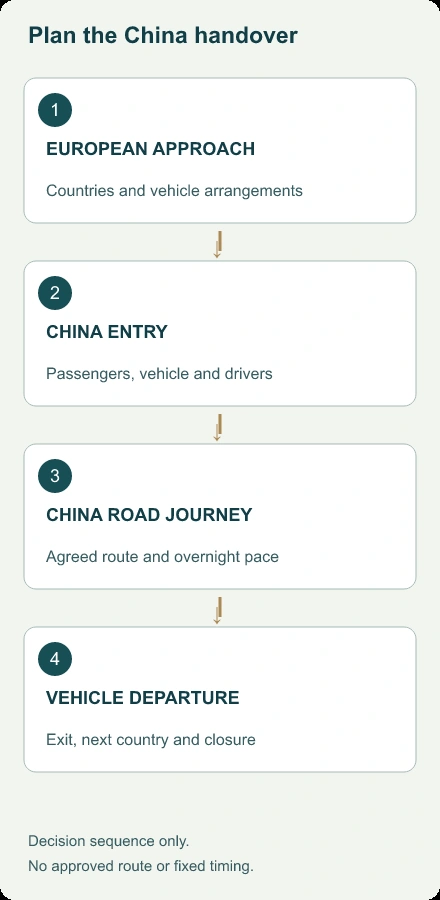
| Planning stage | Information to settle | Keep separate |
|---|---|---|
| Approach from Europe | Countries in order, passenger eligibility and vehicle arrangements in each | An attractive route idea versus accepted present-day passage |
| China entry handover | Paired road port, arrival window, contact and vehicle case | Passenger admission versus vehicle customs and road formalities |
| China travel | Agreed road programme, overnight sequence and support | A sightseeing preference versus a permitted driving route |
| China departure | Exit arrangement, next-country acceptance and vehicle closure evidence | Leaving as a passenger versus completing the vehicle procedure |
Treat this worksheet as a planning sequence, not a route approval or a promise that any named border is available. Put a responsible contact beside each stage. If the handover between two providers is unclear, resolve that gap before transferring a deposit.
Separate the passenger, vehicle and driver documents
Check each passenger’s passport nationality and actual travel purpose against the current entry rules. Starting in Europe does not identify someone’s nationality. Members of the same travelling party may need different entry arrangements. Confirm the rule for the dates and length of the China stay, including what happens if the approach journey slips.
The National Immigration Administration’s published visa-free FAQ expressly separates eligible passenger entry from the legal formalities for a traveller’s own vehicle. Its older country list should not be used as a current nationality checklist. Ask the relevant Chinese embassy or immigration authority about your passport case; do not turn a passenger exemption into a promise for the car.
For vehicle preparation, the Beijing traffic authority’s temporary-vehicle guidance lists overseas registration and translation, customs entry evidence, insurance and inspection-related material; reception-plan documentation applies to the relevant organised-travel case. It is a useful document-category reference. Its Beijing offices and local handling timetable are not an appointment service for a distant land border.
| File to prepare | Question to resolve | Who should answer |
|---|---|---|
| Each passenger’s identity and entry basis | Does the current rule cover this passport, purpose and planned stay? | Chinese embassy or immigration authority for that case |
| Vehicle identity and ownership | Which registration, translation and authority-to-use evidence is needed? | Responsible vehicle handler and relevant authorities |
| Customs and temporary road documents | Which approvals, dates, routes and departure steps apply? | The appointed customs and traffic-management contacts |
| Each intended driver | Which Chinese driving permission and vehicle category are required? | The responsible traffic-management office |
| Insurance and assistance | What territory, dates, use, vehicle and recovery are covered? | The named insurers and assistance providers |
A foreign licence or International Driving Permit alone is not authority to drive in mainland China. Australia’s official China travel advice distinguishes a valid Chinese licence or temporary driving permission from those foreign documents. Arrange the applicable permission for each intended driver and the correct vehicle class. A companion who can drive at home is not automatically an available relief driver in China.
Send legible document copies only through an agreed, appropriate channel after establishing who is receiving them and why. For an initial route discussion, nationality, vehicle registration country, dimensions and intended dates are often enough to explain the case. Keep originals available for the formal procedures.
Budget by responsibility, rather than one headline price
Ask for a proposal that distinguishes authority-related procedures, commercial handling, travel support and your own running expenses. A published fee for one administrative item is not the cost of an international vehicle journey. Equally, a package label does not tell you what happens when a date, driver or exit changes.
| Cost or service | Get it in writing | Question for a changed plan |
|---|---|---|
| Vehicle and driver handling | Named procedures, documents, contacts and exclusions | Which work must be repeated if the entry or driver changes? |
| Customs security or guarantee, if applicable | Who provides it, terms, evidence and release process | What closes the obligation after vehicle departure? |
| Guide or escort arrangements | Dates, language, vehicle position and working scope | How are additional waiting days handled? |
| Accommodation and daily support | Booked nights, parking, meals and contact coverage | Who arranges replacement nights if an approach is delayed? |
| Fuel, roads, repairs and recovery | What you pay directly and what assistance covers | Who can authorise and organise a breakdown response? |
Do not compare quotes using the total alone. A shared departure can spread specified commercial costs, but shared travel also requires a compatible pace, route and timing. Ask how many vehicles the proposal assumes and what changes if another party cancels. The China crossing cost-sharing guide explains those comparison questions without turning an indicative cost into a confirmed quote.
Set the China sightseeing pace after the border work
Count usable nights inside China, not only the number of calendar days between the two border dates. Identify the entry-stage night, the first realistic sightseeing block, rest or repair flexibility and the final vehicle-departure stage. A long approach from Europe may leave the driver needing a pause just when a tightly packed tour expects the longest road day.
Separate the border-arrival day from the point when the vehicle and every intended driver are ready for authorised road travel. Ask who meets passengers and the driver, where the party waits if document collection continues later, and which first-night booking can move. Keep the first sightseeing transfer flexible rather than relying on another traveller’s same-day or overnight experience.
If travelling alone or in an electric vehicle, discuss rest and charging as part of the actual road programme. Check charging access, payment and recovery with the responsible providers for the agreed stops. Another traveller’s long driving day or charging experience in Europe does not establish a workable day in China.
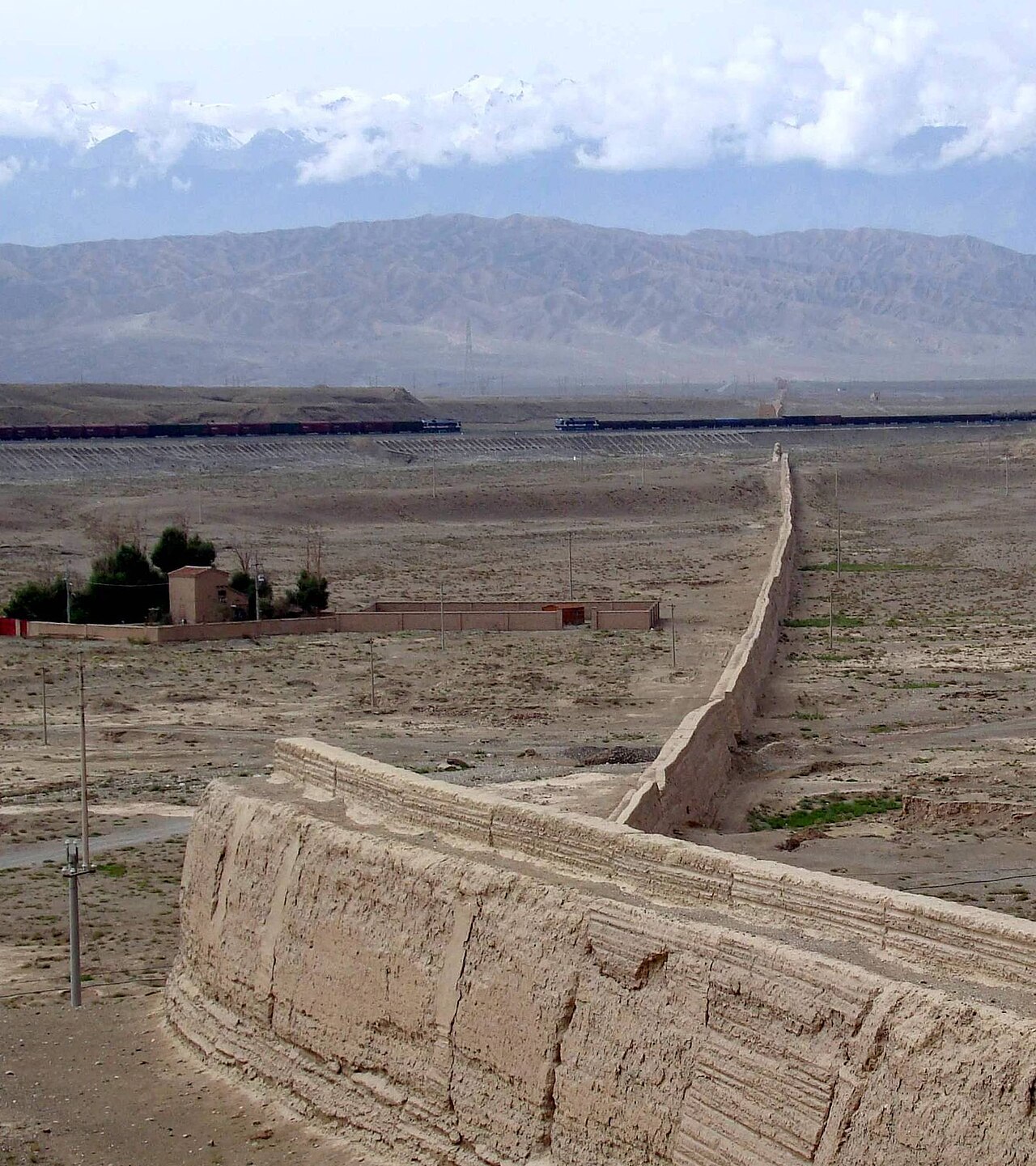
Choose one main sightseeing direction before adding distant regions. A western China journey might focus on Silk Road heritage; a different programme may prioritise Sichuan or Yunnan. These examples express interests, not a promise that every approach port can be combined with every destination within the same dates.
If the Silk Road is your priority, the published Xi’an-to-Urumqi self-drive itinerary can help you discuss regional stops. Its China starting point, direction and day count do not include the drive from Europe or establish a foreign-vehicle border package. Ask which elements suit your approach and which would require a different programme.
Do not add Tibet or a restricted border-area detour as an informal change. The immigration authority’s foreigner travel-permit guidance describes a separate process for relevant places not open to foreigners. Ask which requirements apply to the actual route and nationality. A general China visa and a border-area document used by a different category of traveller are not substitutes for the permissions your party needs.
For family travel, plan meal stops, toilet access, hotel arrival and luggage retrieval as part of each driving day. For a campervan, ask about lawful overnight parking, dimensions, water and waste arrangements instead of assuming a hotel parking space is a campsite. Discuss food and prayer preferences before assigning a long transfer; a broad destination label does not establish a suitable stop.

Keep separate calendars for entry, driving and vehicle departure
Make a simple date sheet with one row for each passenger’s permitted stay, the vehicle customs record, temporary road documents, each driver’s permission, insurance and any area-specific arrangement. Ask the responsible issuer what the actual dates mean. Do not assume every document starts or expires together.
The customs temporary-admission service guide includes self-driving tourism vehicles within its scope and describes re-export obligations. A customs period is not a grant of an equally long tourist stay or equally long road-use permission. Put the vehicle’s intended departure and the evidence needed to close its record in the original plan.
If you need to leave China unexpectedly, contact the responsible team before making arrangements that separate you from the car. Ask how a breakdown, hospital stay or flight home affects vehicle custody, document deadlines and lawful departure. A private parking agreement does not on its own settle a temporary-admission record.
Use a fallback that can actually be carried out
Review the approach countries before each major commitment. Use official immigration and customs information, relevant embassy advice, insurers and the providers who will perform the handovers. A ferry story, an old travel blog or an open route in a mapping app is a research lead, not a current permission or a space reservation.
| Change | First action | Avoid assuming |
|---|---|---|
| Delay before reaching the China border | Tell the China contact; recheck dates, appointments and accommodation | That every document automatically moves with the new arrival |
| Proposed port or onward country changes | Reassess both sides and the vehicle departure plan | That another crossing accepts the same paperwork |
| A vehicle or driver becomes unavailable | Arrange the responsible assistance and a lawful alternative | That another group member can immediately take over |
| The approach cannot proceed | Compare postponement or a separate passenger visit to China | That an improvised country-by-country detour is ready to use |
Agree how much waiting your party can absorb before the trip changes form. Keep flexible arrangements where uncertainty is still high. If the vehicle cannot reach the agreed entry, a passenger holiday in China is a separate option with its own bookings; vehicle storage, shipment or return outside China belongs in a separate written arrangement.
Questions before planning the China stage
Can I drive from any European country into China?
The starting country is only the beginning of the assessment. Each intervening country, border and vehicle case needs its own current arrangements. First establish a workable China entry and departure stage, then test the full approach against it.
Does visa-free entry let my car enter?
Passenger eligibility and vehicle procedures are separate. Check the current nationality rule and the car’s customs, temporary road documents, insurance and driving arrangements independently.
How many days should I allow?
Build a China overnight plan around the accepted endpoints, procedures, sightseeing priorities and driver pace. There is no reliable single duration covering all European starting points, intervening countries and border cases.
Can VeroTrip arrange the whole journey from Europe?
Start by requesting a China-stage proposal. Ask the proposal to identify the actual service scope and any separate overseas responsibilities. Do not treat a China itinerary as a commitment to provide every country’s admission, transport or assistance.
Send a useful first enquiry
Give VeroTrip your European starting point, every passenger’s nationality, vehicle registration country and category, dimensions or trailer details, intended drivers and licence countries, the country before China, the country after China and a flexible arrival window. Add the Chinese places you most want to visit and the maximum China nights you can allow.
Say which decisions are already supported by written arrangements and which are still route ideas. Begin with the China self-drive and overland collection, then use Plan My Trip to request a China-stage discussion. The next useful result is a clear scope, document checklist and endpoint plan for your party, before non-refundable travel commitments.