A Laos–China–Mongolia overland journey is a northbound crossing through Yunnan, Sichuan and northern China, ending at the Erenhot–Zamyn-Uud border. Start with the vehicle’s accepted entry and exit arrangements, then build the sightseeing between them. The 24-day example below allows 23 nights in China; your stay in Laos before entry and all nights in Mongolia are additional.
Choose this journey when reaching Mongolia with your own vehicle is part of a longer trip. If your main aim is sightseeing, travelling as a passenger and arranging separate transport in each country can make a shorter holiday easier to organise. A visa or a road on a map does not, by itself, admit a foreign vehicle.
Updated 15 October 2026
Choose the journey before choosing the daily stops
The decisive questions are practical: must the same vehicle reach Mongolia, how many nights can you spare, and is Beijing essential? This corridor heads north from Chengdu towards Xi’an and Shanxi. It does not follow the western Xinjiang exits used for Kazakhstan or Kyrgyzstan.
| Your priority | Journey to consider | What changes |
|---|---|---|
| Continue an international trip with your own car or campervan | Mohan to Erenhot through mainland China | Agree the road itinerary, both borders, vehicle documents and departure obligations before booking the full journey. |
| See Yunnan, Xi’an and Mongolia without importing a vehicle | Separate passenger journeys and local touring | Check actual train, flight or authorised cross-border transport options; do not assume a vehicle transfer is included. |
| Include Beijing as a major sightseeing stop | Add a northern extension before Erenhot | Allow extra nights, revise the approach and arrange lawful parking and local transport in Beijing. |
| Ride a motorcycle | A separately assessed riding itinerary on the same broad corridor | Check the motorcycle class, road access, licence category, weather exposure and luggage support independently. |
Erenhot, also called Erlian or Erlianhot, is in China’s Inner Mongolia Autonomous Region. Zamyn-Uud is in the separate country of Mongolia. Visiting an Inner Mongolian grassland tour does not establish permission to cross into Mongolia.
A 24-day China route with 23 overnight stays
Use this as a starting framework for a written itinerary. The southern approach keeps Pu’er and Kunming, then travels through Sichuan towards Xi’an, Pingyao and Datong. Dali and Lijiang require a separate westward detour; add nights if those places matter more than a direct northbound route.
The border blocks include rest and room to resolve practical arrangements. They are not processing-time promises. The proposed roads, daily driving demands and overnight bases must be agreed for your specific vehicle, season and accepted route. If the necessary border allowance is longer, move the exit date rather than remove every rest day.
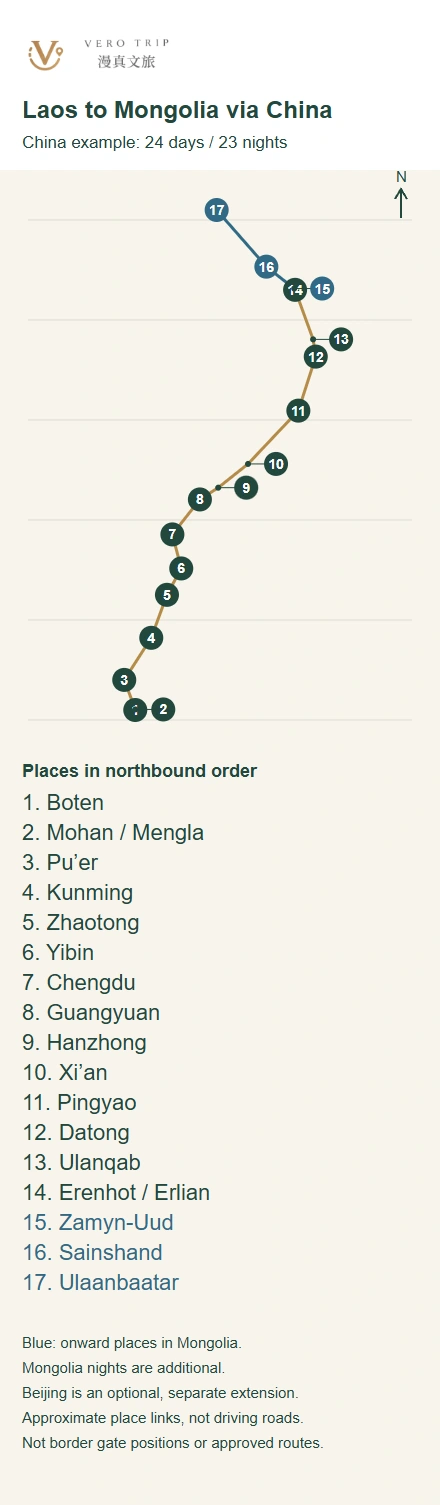
| Days | Route or base | Use the time for | China nights |
|---|---|---|---|
| 1–3 | Boten → Mohan / Mengla area | Entry arrangements, vehicle formalities, unpacking and rest; confirm the actual hotel base with the receiving team. | 3 |
| 4 | Mohan / Mengla → Pu’er | A dedicated onward travel day; leave a tea-country visit for spare time after arrival. | 1 |
| 5–6 | Pu’er → Kunming | Travel north, then use a full day for a local walk, laundry or vehicle supplies. | 2 |
| 7–8 | Kunming → Zhaotong → Yibin | Two overnight stages towards Sichuan, with each day’s stopping points agreed in advance. | 2: one in each city |
| 9–10 | Yibin → Chengdu | Arrival followed by a city day; choose one main outing instead of stacking distant excursions. | 2 |
| 11–12 | Chengdu → Guangyuan → Hanzhong | Break the journey towards Shaanxi into two overnight stages. | 2: one in each city |
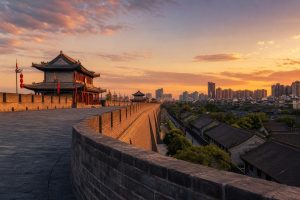
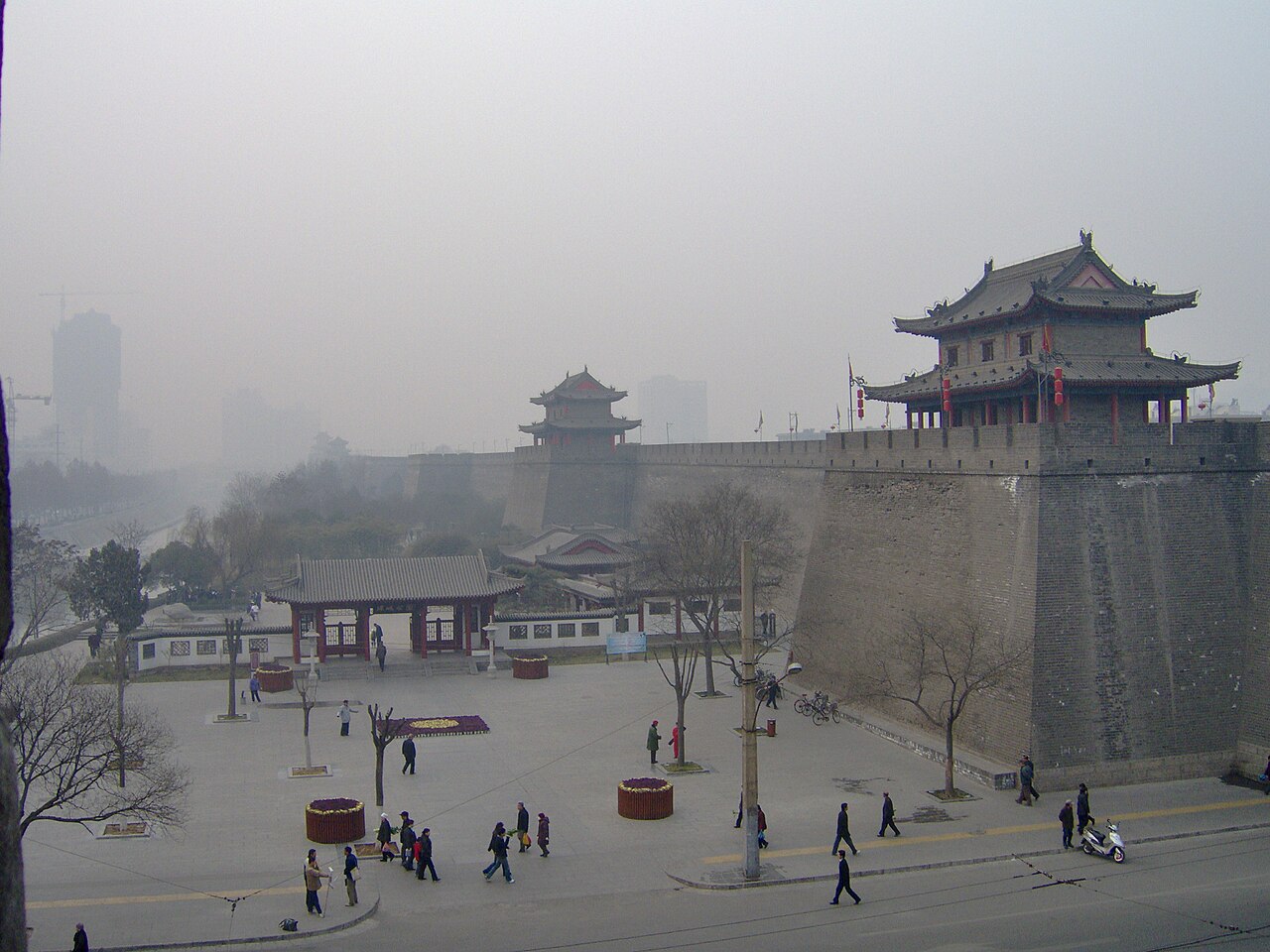
| 13–15 | Hanzhong → Xi’an | Arrival plus two days for heritage visits, shorter walks or rest. | 3 |
| 16–17 | Xi’an → Pingyao | Travel day followed by time in the historic town; arrange parking outside any restricted old-town streets. | 2 |
| 18–19 | Pingyao → Datong | Transfer and a separate sightseeing day; select visits around walking needs. | 2 |
| 20 | Datong → Ulanqab | Prepare for the final northern approach, including food, fuel planning and weather. | 1 |
| 21–23 | Ulanqab → Erenhot | Arrive before the intended exit, rest and complete the agreed departure arrangements. | 3 |
| 24 | Erenhot → Zamyn-Uud | Use the accepted road crossing and finish both countries’ formalities before onward travel. | 0; Mongolia accommodation is separate |
Night check: the table contains 23 Chinese overnight stays. Day 24 is the proposed crossing day, not a promise of same-day clearance. An extra night on either side changes the total. Meals, admission tickets, hotels and border services are not included merely because a stop appears here.
With one driver, children or anyone who finds consecutive travel days tiring, add nights at intermediate bases. A smaller car, a campervan and a motorcycle should not receive an identical driving schedule. Ask for the actual roads and realistic driving blocks before accepting a final day-by-day proposal.
How to include Beijing without squeezing the last border days
Beijing fits best as an extension after Shanxi. Allow at least three additional nights as an initial sightseeing allocation, then recalculate the Datong–Beijing–Zhangjiakou–Ulanqab approach. The full revision may need more time for driving and vehicle access.
Agree where the foreign-registered vehicle may be parked and how you will reach central sights. A driver’s account of entering without a check is not permission for another vehicle. Treat any required city access approval separately from the authorisation to enter China. Keeping the car at an accepted base and using local transport may be the practical choice.
If the exit date is fixed, choose Beijing or a fuller Shanxi visit instead of assuming both will fit. Shortening city sightseeing can save a night; it does not remove the distance between cities or the requirements at Erenhot.
Keep the traveller, driver and vehicle documents separate
Prepare one organised folder for each traveller and another for the vehicle. Keep originals accessible, with offline copies stored separately. The accepted document list depends on nationality, ownership, registration country, vehicle class and route.
| Document question | Before China | Before Mongolia |
|---|---|---|
| Can every passenger enter and stay long enough? | Check the applicable visa or exemption, port and permitted stay. A 24-day route cannot fit within a 240-hour transit allowance. | Check each passport through the Mongolian authorities, including permitted entry point and stay. Carry any issued visa or authorisation. |
| May each intended driver drive? | Arrange the applicable Chinese driving permission and correct vehicle category. | Check recognition of the issuing country’s licence and any required accompanying permit. Chinese driving permission does not settle this. |
| Can the vehicle enter temporarily? | Prepare registration and translations, customs entry evidence, inspection documents where required, Chinese compulsory insurance and the receiving plan. | Prepare the vehicle certificate, owner’s passport, ownership authority where needed and local host contact; settle the customs procedure for this vehicle. |
| What must happen when leaving? | Confirm the accepted exit and how vehicle and customs documents are closed. | Record the temporary admission deadline and how to return the vehicle endorsement documents on departure. |
The Chinese vehicle-document guidance describes the paperwork framework. Its Beijing office arrangements do not establish Mohan’s handling time. Read the Mohan–Boten road crossing guide for the southern entry decision, including the distinction between road and railway travel.
For Mongolia, the Mongolian embassy’s vehicle guidance lists ownership documents and an original carnet if the vehicle has one. It also describes a customs-issued endorsement sheet to keep and return when leaving. This is not a blanket promise that every vehicle enters deposit-free. Ask Mongolian Customs how the rules apply to your ownership and registration situation.
Discuss breakdown or early-departure arrangements before importing the vehicle. Flying home does not automatically end its temporary admission obligations. Establish who can handle storage, transport or a customs-approved alternative if the vehicle cannot continue.
Erenhot to Zamyn-Uud: the final day needs its own plan
For the crossing itself, follow the Erenhot–Zamyn-Uud documents and handover guide. Keep the two towns, actual permitted vehicle channel, receiving contact and first Mongolian overnight stop as separate planning decisions.
Get a written border-day arrangement naming the road channel, meeting point outside restricted areas, operating date, passenger and vehicle documents, and contacts on both sides. Record the time zone beside every appointment. Agree what to do if formalities continue beyond the planned day.
Erenhot’s port management notice distinguishes controlled passenger, freight and railway areas. Follow the designated approach and instructions; do not drive into a freight queue or a border sightseeing area assuming it serves the same purpose.
A 2026 freight-channel notice described a temporary May–September arrangement. That notice does not give current passenger crossing hours. Obtain the timetable relevant to your actual date and vehicle, including any holiday changes on both sides.
Keep medication, drinking water, suitable food, warm layers, chargers and children’s essentials together in a small accessible bag. Pack the remaining luggage so it can be opened or unloaded without blocking access to documents. Avoid promising a long onward drive after clearance.
Continue into Mongolia in separate stages
Zamyn-Uud, Sainshand and Ulaanbaatar give the onward journey three useful planning points. They are not included in the 23 Chinese nights. Begin with a near-border overnight option, then decide how much driving and sightseeing to place between the border and the capital.
| Stage | Decision to make | Practical next step |
|---|---|---|
| Zamyn-Uud | Stay after clearance or continue only if conditions and daylight allow. | Hold an appropriate accommodation option and confirm the next day’s route locally. |
| Sainshand | Use an intermediate overnight instead of treating Ulaanbaatar as a border-day target. | Confirm lodging, fuel needs, road conditions and communication arrangements. |
| Ulaanbaatar | Rest, maintain the vehicle and plan the next part of Mongolia. | Arrange parking and city transport; assess any rural extension separately. |
Mongolia’s Immigration Agency states that accommodation providers must register foreign guests within 48 hours. Confirm who handles this at the first stay. Camping or staying privately needs a clear arrangement too; a hotel’s registration is not a substitute for any other requirement applicable to your stay.
Do not turn a line towards Ulaanbaatar into an unplanned off-road detour. Ask about the actual road, expected conditions and recovery support. Carry offline navigation and a communication plan appropriate to the area; mobile reception cannot be assumed across rural Mongolia.
Plan comfort from warm Yunnan to northern open country
Use the northern section to decide your dates, then check the southern section for the same travel window. Conditions change along this long corridor. Wet driving in the south and cold, wind or poor visibility near Mongolia require different preparation; a pleasant arrival day in Yunnan says little about the exit weeks later.
| Need | Ask for | Useful adjustment |
|---|---|---|
| Children, older travellers or reduced mobility | Seat restraints, toilet stops, lifts, walking distances and room access. | Keep the Kunming, Chengdu and Xi’an rest opportunities; shorten sightseeing before sacrificing sleep. |
| Campervan or large luggage | Actual vehicle height, secure parking, access restrictions and storage needs. | Choose an accessible hotel outside narrow historic streets and use suitable local transport. |
| Halal meals or other dietary requirements | Ingredients, preparation, meal coverage and realistic availability at each overnight base. | Carry suitable permitted snacks and agree alternatives; a Muslim quarter visit does not establish every meal’s suitability. |
| Prayer arrangements | Date-specific travel breaks and a clean, private space where possible. | Agree options at the accommodation and during travel; mosque sightseeing does not guarantee access for worship. |
Tell the planner whether “short walking” means avoiding stairs, standing or uneven ground. Pingyao’s lanes and heritage visits around Datong are different from a short hotel-area walk. A rest day can remain enjoyable with one nearby outing and time to recover.
If weather, paperwork or the exit plan changes
For unsafe conditions, pause at an agreed overnight base and contact the receiving team before deviating from the accepted route. Check how additional nights affect your immigration stay, vehicle permission and insurance. A spare hotel night does not extend a document’s validity.
If Mongolia cannot accept the vehicle, resolve the lawful vehicle plan before changing the passenger journey. Returning towards an authorised exit, transporting the vehicle or using another customs procedure requires the relevant arrangements. A nearby border crossing is not an automatic substitute.
Travelling southbound needs the same separate assessment. Seasonal exposure, appointment order and the conditions for leaving Mongolia and entering China differ; reverse the itinerary only after checking these, rather than simply reversing the day numbers.
Ask for a proposal with clear service boundaries
Send VeroTrip your intended dates, passenger nationalities, vehicle registration country, vehicle class, ownership details and number of drivers. Include the time available in China, whether Beijing is essential, room requirements, dietary needs and how you plan to leave Mongolia with the vehicle.
Use China self-drive planning to discuss the China portion. For a separate city stay, the three-day Xi’an programme is a sightseeing option; its local transfers do not provide an international vehicle crossing.
Before paying, ask for the named service scope, receiving arrangements, roads and overnight plan, vehicle and driver permissions, insurance territory, customs responsibilities, inclusions, exclusions and change terms. Ask which amounts are service fees and which are refundable deposits or possible additional expenses. Prices depend on the actual accepted arrangement; this guide does not advertise a fixed departure or a confirmed cross-border package.
Plan your journey with VeroTrip, or compare the broader China overland transit choices before deciding whether the same vehicle needs to make the whole trip.