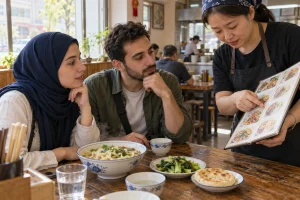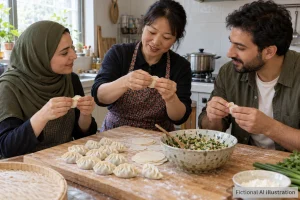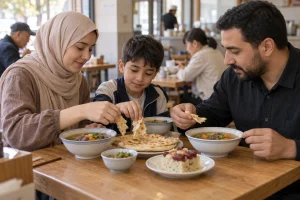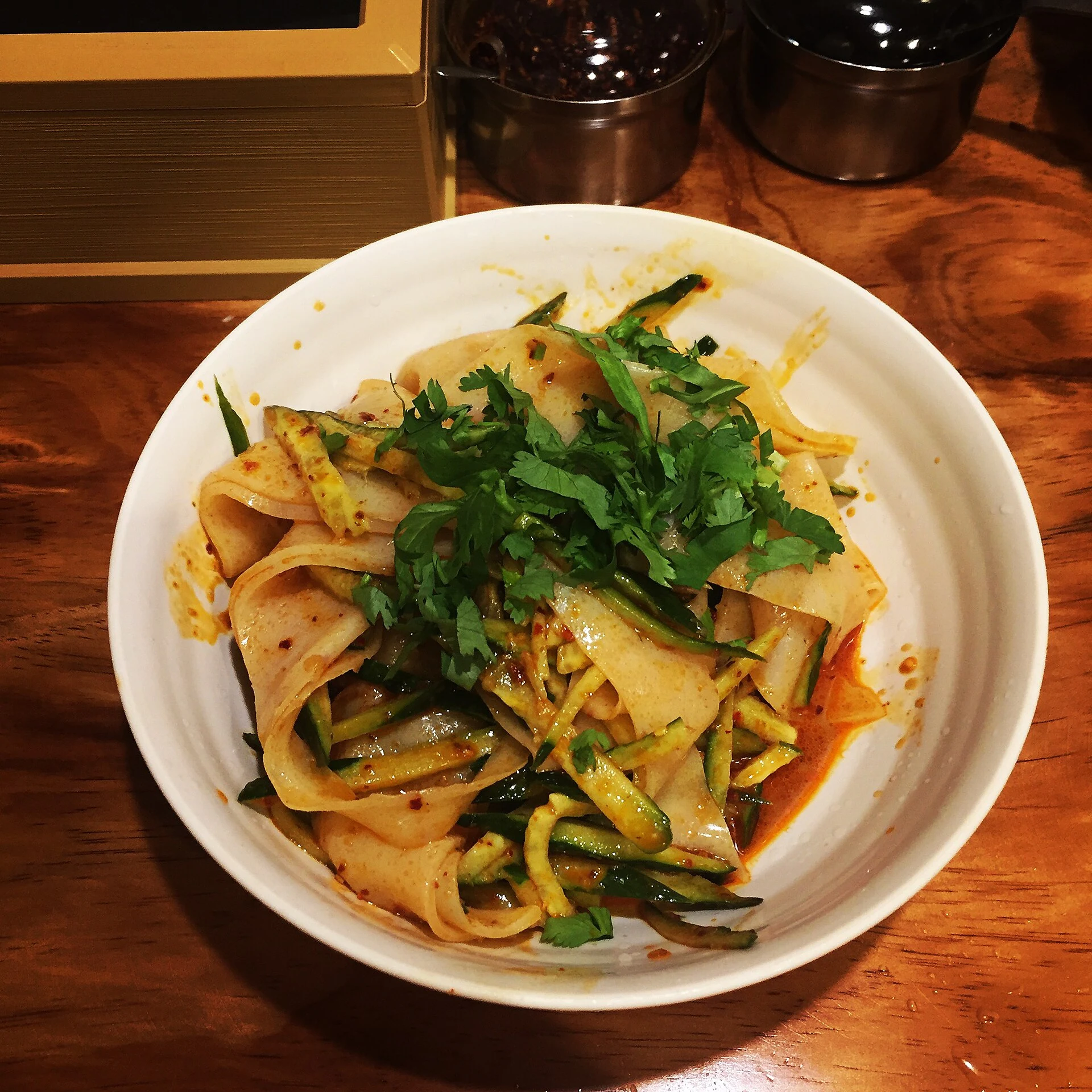
Cover: Shaanxi-style liangpi photographed in Tokyo in 2018, shown for food context.
A cold-noodle stop in Xi’an is a chance to choose a different texture from a hot soup or broad-noodle meal. Ask which kind of liangpi or niangpi the shop serves, then decide on the dressing and portion. The visible noodles are only one part of the order: sauces, oil, gluten pieces, vegetables and optional toppings all deserve a question when ingredients matter to you.
Use the Chinese name to narrow the choice
凉皮, liangpi, is a useful starting name, but it does not tell an overseas visitor everything about the base and preparation. You may also encounter 米皮, 面皮, 擀面皮 or 酿皮 on signs. Ask the shop to describe its version rather than treating every regional term as a perfectly standardised English category.
The city’s 2025 account of international visitors’ food experiences identifies liangpi as a cold-noodle dish among the foods they tried. That establishes its place in a Xi’an food visit, not the ingredients of every bowl. A restaurant’s own menu and explanation are the useful next step.
| What to choose | What to look for | What to ask |
|---|---|---|
| The noodle base | The particular style named on the menu. | What is this made from, and how is it prepared? |
| Texture | Thickness, firmness and the way it is cut. | Can you show us the style before the dressing is added? |
| Dressing | Chilli, vinegar, garlic, sesame or other sauces used by the shop. | Which sauces are already mixed, and which can be separate? |
| Extra components | Vegetables, wheat-gluten pieces or other toppings. | What is included in this serving? |
Dress the bowl for your own taste
A glossy red bowl in a photograph may be appealing, but it does not tell you whether the flavour is mainly chilli, vinegar, garlic or another sauce. Ask before the bowl is mixed. If the shop can separate added chilli, that gives you more control than trying to remove it after the noodles are dressed.
For a group with different preferences, individual bowls may be simpler than one shared dish. Ask about a smaller serving if you are also planning a main meal elsewhere. The bowl does not need to be the size of a full lunch just because it appears on a list of foods to try.
Do not let a plant-looking bowl answer every food question
A dish without visible meat still has ingredients and a preparation process. If you need a halal kitchen, specific fats or sauces, or another food standard, ask about the full bowl and the business. Do not infer those details from cucumber, coriander or the absence of a meat topping.
The base also deserves attention. A cold noodle is not automatically made from rice, and a regional name does not establish suitability for a dietary restriction. Ask for the actual ingredients and keep any essential food requirement separate and clear. A busy stall that cannot answer may simply be the wrong choice for that meal.
| Useful question | Chinese | Why ask before mixing? |
|---|---|---|
| What is the base made from? | 这个凉皮主要是什么做的? | The name alone may be too broad. |
| What sauces are used? | 里面放什么调料? | The dressing can contain several components. |
| Can chilli be separate? | 辣椒可以单独放吗? | An adjustment is easier before the bowl is dressed. |
| Is sesame sauce used? | 会放芝麻酱吗? | A specific ingredient question is clearer than guessing from colour. |
Pair it with a sandwich, or let it stand alone
A small cold-noodle bowl can contrast well with a roujiamo, but the pair may already be enough for lunch. If paomo is your main objective later, keep the cold noodles as a shared tasting or move them to another day. The point is to enjoy the difference in texture, not to complete a food checklist.
Choose a place where you can pause comfortably when the party needs a seat. A cold dish can still be awkward to eat while standing in a crowded lane with bags and a phone. Agree a meeting point if different members of the group choose food from separate businesses.
Use food photographs as context
Recipes and presentations vary. A photograph can help you recognise a style, but it does not identify the ingredients or current menu of the business you are visiting. Ask the vendor to show or explain the actual serving before ordering if the distinction matters to your party.
After a successful meal, save the exact Chinese shop name, the dish name and the map pin. This makes it easier to return or explain what you enjoyed to a guide. Do not rely on a broad English translation when several styles are sold nearby.
Questions that change the plan
Are liangpi and niangpi always identical?
Treat them as names to clarify with the shop. Local usage and preparation can vary, so ask about the base, texture and dressing rather than relying on a single English translation.
Does a bowl without meat automatically meet a halal requirement?
No. The kitchen, fat, sauces and preparation may also matter. State your requirements and ask the business.
Can I combine it with several other Xi’an dishes?
Yes, but begin with small portions. A sandwich and a cold-noodle bowl may already be a complete meal for one person.
Turn the ideas into a workable Xi’an day
Choose the route that fits your time and interests: Xi’an Evening Food Walk: Hui Lanes, Snacks & a Seated Meal; Yuanjiacun & Zhaoling Museum: Food Lanes and Tang Heritage. The named stops describe a route; meals, guiding language, transport, admissions and any specialist arrangement are specified in your dated proposal.
For the overall city base and the balance of sightseeing days, see the Xi’an trip-planning guide. Share your dates, walking preferences and food or prayer needs through Plan My Trip so the day can be shaped around your party.