Plan a Northeast China forest trip around one main landscape and a small number of overnight bases. Choose Yichun for pine forest and managed woodland walks, Wudalianchi for volcanic terrain and lakes, or the Mudanjiang–Jingpo Lake area for a lake-and-forest break. A longer borderland journey needs additional travel days and a separate check of every proposed visitor site.
For a first nature extension, a four-night framework with two full local sightseeing days is a useful starting point. It gives you arrival time, two distinct outings and a return before the onward departure. It is more adaptable than a regional circuit that changes hotel every night and treats every drive as a sightseeing day.
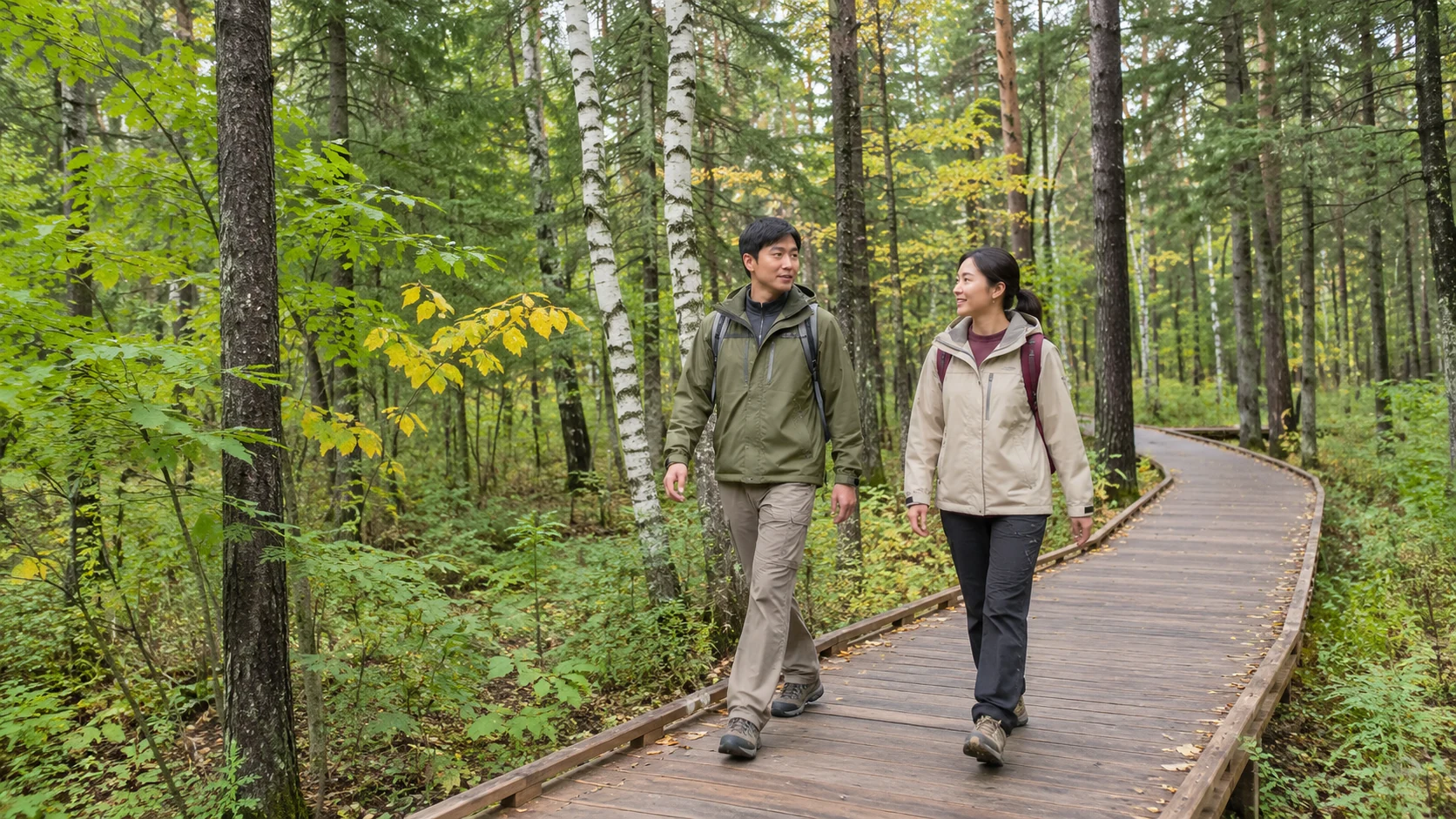
Checked 3 November 2026. Cover: AI-generated fictional forest-walk illustration. It does not depict an exact named attraction, current conditions, real clients, a guide or a Vero Trip group.
Choose the landscape before choosing the circuit
These destinations offer different experiences. Yichun is a broad forest region with dispersed visitor areas. Wudalianchi is a volcanic landscape, not another name for Yichun’s forest parks. Jingpo Lake lies in southeastern Heilongjiang near Ning’an and is a separate travel decision from a northern forest stay.
| Your main interest | Start with | Allow time for |
|---|---|---|
| Woodland walks and time among mature pines | A selected Yichun forest base | One principal park per day, with road transfers and a clear return. |
| Volcanoes, lava and connected lakes | Wudalianchi scenic area | A local geology day with a walking route matched to the party. |
| A lake landscape and forested volcanic country | Jingpo Lake, with a Mudanjiang or local overnight | A dedicated lake-area day and the complete journey from the chosen hotel. |
| A long regional road journey | A carefully selected sequence of these regions | Separate relocation days, rest nights and route-specific access checks. |
Choose one row if your available time is short. Adding all three is a larger holiday, not a free upgrade to a five-day extension. Ask which visit you would remove to make the extra travel possible. If the answer is both full local days, the route has lost the forest or lake experience you came for.
Yichun: distinguish the parks and the overnight base
A September 2026 national forestry report describes three distinct visitor areas: Wuying’s pine forest, the forest-and-granite scenery at Tangwanghe, and Shanggangling Xishui National Forest Park. Use those differences to choose an outing. Their shared regional identity does not make them one park with one gate.
Choose Wuying when spending time in a pine-forest setting is the main aim. Choose Tangwanghe when the relationship between trees and granite formations is the stronger interest. Xishui offers another woodland-and-stream setting. Two similar forest days can still be worthwhile for someone who enjoys slow observation; another traveler may prefer one forest day and a lighter day at the same base.
Locate the actual hotel before deciding whether to return there after each outing or move to another local base. Compare the whole day: breakfast, hotel-to-gate journey, the intended visitor route, lunch and the return. Do not use the word Yichun as a substitute for the hotel’s town, address and driving approach.
Keep the walking plan specific. A maintained path can still involve wet boards, uneven surfaces and steps. Agree the shared route and turnaround point before anyone separates. If one traveler wants a shorter visit, establish where they can rest and how the group will reunite; do not assume a car can collect them from an arbitrary point inside a park.
A five-day forest framework with four hotel nights
This is an illustrative rhythm, not a confirmed departure or a promise of transport, admission or particular accommodation. The gateway and local base must be selected using actual dated travel options. For a Harbin-based journey, check the complete outward and return sectors before deciding that the available days fit.
| Day | Main purpose | Overnight | Pacing decision |
|---|---|---|---|
| 1 | Travel from the gateway to the selected forest base. | Forest-region hotel | Allow arrival and a meal; a major park is optional only if the connection leaves time. |
| 2 | One chosen forest park, with breaks and a complete return. | Same hotel where practical | Keep bags at the base and choose the walk for the least mobile traveler. |
| 3 | A different forest-and-rock outing, or a lighter local day. | Same base or a deliberately chosen local move | Make the second outing genuinely different; shorten it if the party needs rest. |
| 4 | Return to the confirmed departure gateway. | Gateway hotel | Protect the main transfer and luggage retrieval before optional sightseeing. |
| 5 | Leave from the booked airport or station. | No fifth hotel night assumed | Allow the full hotel transfer, security and carrier procedures. |
That framework counts four hotel nights: three in the forest region and one at the gateway. If you arrive at the gateway late on the first day, add a gateway night or remove a local outing. An overnight train is a transport night and should be counted separately from the hotel allocation.
For a shorter trip, retain one complete forest day between the outward and return stages. For a longer stay, add a local night before adding a distant region. A free morning to revisit a pleasant short walk or rest can be more useful than another hotel change.
Wudalianchi: a volcanic alternative to another forest day
UNESCO’s Wudalianchi description identifies lava-dammed lakes, volcanoes and lava plateaus as the area’s defining features. A geology-focused visit gives the holiday a different subject from a woodland walk. Choose it because you want that landscape, rather than because every northern stop appears to belong in one circuit.
Plan a local day between arrival and departure. Ask which open visitor route provides the volcanic features you most want to see, how much ascent it involves and whether a shorter option exists. A route across lava terrain is a different physical proposition from a level lakefront pause. Establish the surfaces and turnaround before committing anyone with limited walking stamina.
Stay near the selected scenic-area activities when early starts and fewer transfers matter. Confirm the property’s actual location rather than booking solely by the broad city name. Meals, admission and any local transport need their own arrangement; a room described as a resort does not settle those details.
Mineral springs are part of the destination’s identity, but a landscape holiday need not include a treatment or claims about health benefits. Choose the geological visit on its own merits. Any separate therapeutic service belongs in an independently assessed arrangement, rather than being implied by a scenic-area ticket.
Jingpo Lake: give the lake its own usable day
UNESCO places Jingpohu in Ning’an and distinguishes its lake, waterfall and volcanic forest features. For a first visit, choose a manageable lake-area outing rather than assuming that all of the geopark’s features fit between two long road stages.
A Mudanjiang base can suit a journey that needs city transport and hotel facilities; a local lake-area stay can reduce repeated approaches when the scenery is the main purpose. Compare the hotel-to-visitor-entrance journey in each case. A hotel with lake in its marketing name is not sufficient evidence of the view, room location or final access.
Choose the land-based route first and treat a boat trip as a separate decision. Confirm the operator, boarding point, intended route and final return before buying it. A lake admission does not by itself establish that a cruise operates or is included. If sailing stops or visibility is poor, reduce the day to open visitor areas and protect the onward journey.
Crater-forest exploration is a separate walking commitment. Include it only after checking the open route and its demands, rather than adding an improvised forest crossing. In winter, a frozen landscape does not establish that lake ice is safe or authorized for walking.
Borderland travel: keep the visitor route explicit
A regional borderland theme describes geography; it does not grant access to every riverbank, island, port, border road or viewpoint. This guide’s sample forest plan does not include a border crossing, frontier-island visit or remote border-road excursion. Those additions need a dated, passport-specific access check before they become part of your holiday.
Do not assume that a site open to a domestic tour group has identical arrangements for every foreign passport. Name the exact public visitor site and check it individually. If its access cannot be established, leave it out and keep the confirmed forest or lake portion. An old itinerary, a map pin or a scenic photograph is insufficient evidence.
For a cross-border continuation, verify exit and entry permission, the actual port and transport arrangements separately. A domestic China proposal does not include a neighboring-country visa or a functioning border crossing unless it explicitly says so and provides the relevant confirmed arrangements. Avoid paying for nonrefundable onward services around an assumed crossing.
Match season, transport and walking comfort
Choose the season for the experience you want, then confirm the operating calendar of the exact parks. Green-season forest walking, autumn color and winter scenery require different plans. Color timing changes by location and year; a late-season photograph is not a promise of foliage on a particular date. Summer popularity can also mean busy gates and parking, as the forestry report records.
In sustained rain, shorten walks and avoid relying on views from an exposed route. A useful alternative may be a lighter local day with meals and rest, rather than another long drive to chase better weather. In snow or ice, rebuild the walking and road plan around current conditions instead of reusing the summer schedule.
Pack a manageable day bag with documents, essential personal items, water and an appropriate layer. Keep the large cases at the same accommodation where practical. On a hotel-change day, confirm whether bags remain in a vehicle, whether that vehicle stays with your party and how valuables are handled. A baggage plan is especially important when a park visit sits between two overnight bases.
A July 2026 Fenglin transport notice announced a Xinqing–Wuying National Forest Park route. It gives useful context for local connections, but it is not a current dated timetable or a guarantee of winter operation. Obtain the departure, stop, return and bag arrangements for your actual day before relying on any tourist bus.
If traveling by arranged vehicle, specify the exact hotel pickup, visitor entrance and return point, passenger and bag capacity, and waiting arrangements. An independent self-drive plan needs its own current driving-document and rental checks; hiring a driver and renting a car to drive yourself are different services.
Compare existing routes without inheriting every stop
The existing 20-day Dandong-to-Mohe regional route includes Jingpo Lake and Yichun within a much longer journey. It is a useful comparison for travelers considering a substantial Northeast holiday, rather than the five-day forest framework above. Its border-area stages still require the exact access checks described here; this guide does not certify every stop for every passport.
If the far north is your main interest, read the separate Mohe planning guide. For skiing and a snow-village stay, use the Yabuli and Snow Town guide. Those are different travel purposes and should not consume the days reserved for a forest stay by default.
Price on request. Compare written proposals by nights and exact services: intercity transport, local transfers, vehicle waiting, guide language, admission, scenic transport, boats, meals and room arrangements. A list of places does not confirm that every one of those services is included. Ask what happens to the sequence and price if a weather-dependent activity cannot operate.
Questions before choosing a Northeast forest trip
Can I visit Yichun, Wudalianchi and Jingpo Lake in one short break?
Choose one main region for a short extension. Combining all three adds relocation time and different overnight bases. Preserve full local days and add travel days before expanding the route.
Is a forest park suitable for someone who avoids strenuous hiking?
Potentially, when the chosen open visitor route, surfaces and distance suit that person. Ask for a specific shorter route and rest plan. A park label or scenic shuttle does not establish a step-free outing.
Does a borderland tour include entry to Russia or another country?
No such inclusion should be assumed. A domestic landscape route and an international crossing require different documents and transport arrangements. Confirm any crossing independently before committing to it.
Can I finish a forest walk and fly home the same day?
Only if the complete return, luggage collection and airport procedures leave a sound margin. A separate gateway night is the more flexible starting plan when the onward flight matters.
What details should I send for an enquiry?
Send your dates, number of nights, arrival and departure points, party size, preferred landscape, walking limits, luggage and accommodation needs through Plan My Trip. Mention any proposed border-area stop by name so it can be checked before it is included. Vero Trip can develop the route around those priorities, with availability, access and service scope established in the written proposal.