Reviewed 31 October 2026 · Vertical 5 · 古道秘境
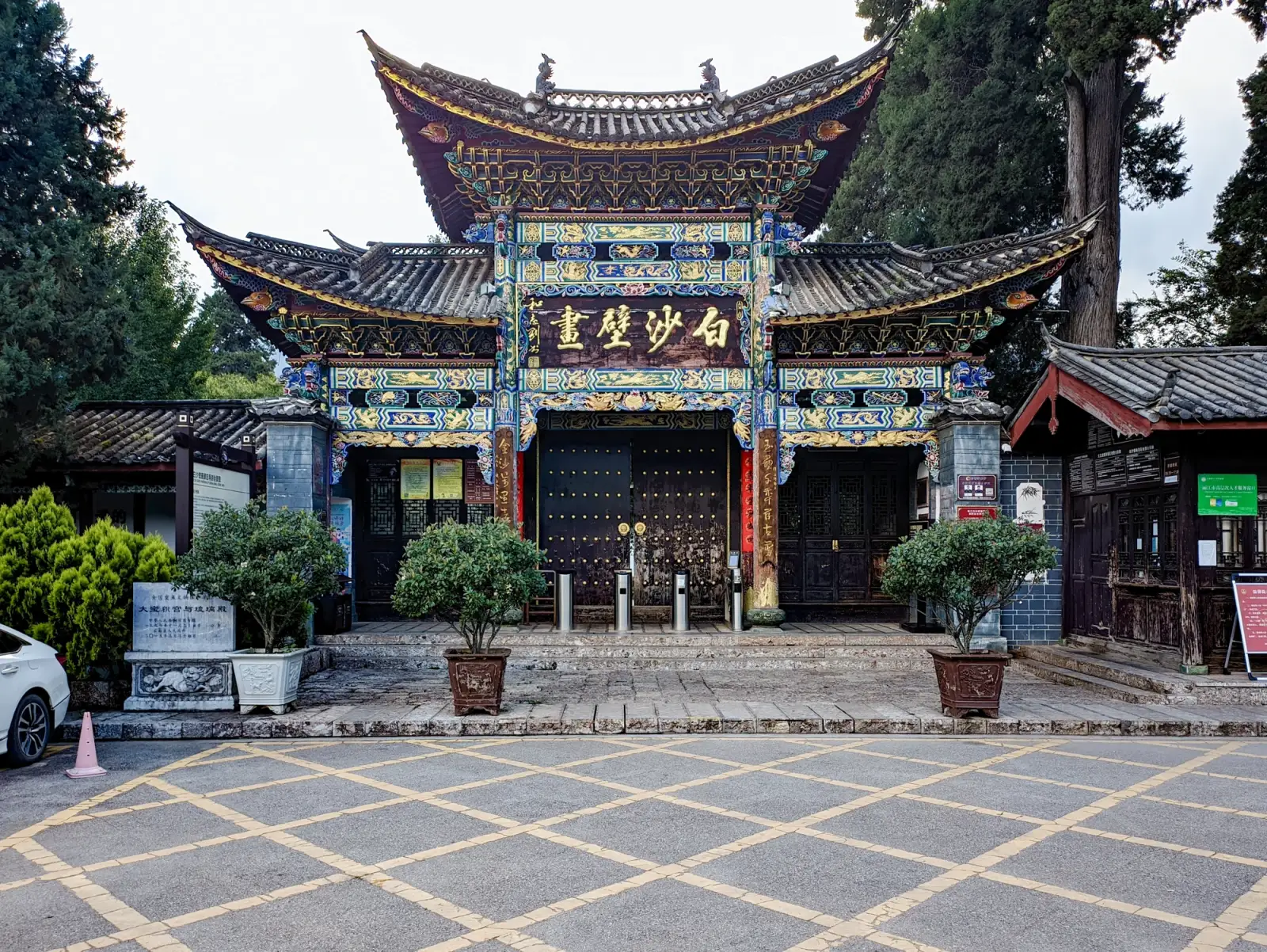
Entrance to the Baisha mural visitor area near Lijiang. Photograph: Kcx36, 6 August 2024. CC BY-SA 4.0. Proportionally resized and converted to WebP. The adapted photograph is shared under the same license. Archival view of the named place, not current road access, the entire corridor, included services or a Vero Trip group.
Choose a Qinghai block or a Yunnan block for a first journey along the G214 ancient-roads theme. Do not assume that the route’s national description makes a continuous Xining-to-Yunnan self-drive simple or unrestricted. The two regions have different gateways, overnight conditions and travel arrangements.
古道秘境 is the fifth north–south national road-tourism theme. Its published introduction identifies G214 and connects the Tang–Tibet and Tea Horse Road traditions, with resources including Qinghai Lake, Shangri-La and the Cangshan–Erhai landscape. The name describes a cultural corridor, not an intact ancient road that every modern vehicle follows.
Qinghai and Yunnan are separate planning decisions
Choose Qinghai when the lake, plateau setting and Xining-area cultural visits are the main interests. Use an itinerary with named public entrances and sensible overnight bases. A photograph of an empty lakeshore does not establish public road access or a place to camp.
Choose Yunnan when you want old towns, village visits and a staged move toward Shangri-La. A provincial public-information article identifies G214’s role linking these northern Yunnan resources with the wider ancient-road theme. It does not replace current road, scenic-area or accommodation checks.
This guide does not propose an independent through journey across Tibet or an unverified border-sector itinerary. A road number and a Chinese driving permit do not resolve destination-entry requirements. Keep any sensitive extension out of the programme until its actual visitor arrangements have been established.
An eight-day Yunnan cultural section
This example uses Dali, Lijiang and Shangri-La as three bases. It follows the corridor’s cultural interests without insisting that every transfer uses the old national road. Modern roads or a rail leg can be chosen when they leave more time at the places you came to see.
| Planning stage | Overnight or focus | How to use the time |
|---|---|---|
| Day 1 / Dali | Dali | Arrive, check in and keep the first walk optional. |
| Day 2 / Dali area | Dali | Choose one village, town or authorised lakeside visit rather than racing around the entire lake. |
| Day 3 / Dali to Lijiang | Lijiang | Make the transfer explicit; add a stop only when the timing genuinely fits. |
| Days 4–5 / Lijiang area | Lijiang | Give Dayan and a selected Baisha or village interest their own time. |
| Day 6 / Lijiang to Shangri-La | Shangri-La | Use the confirmed route and keep the arrival programme gentle. |
| Day 7 / Shangri-La | Shangri-La | Choose an authorised cultural visit and comfortable walking; retain a shorter option. |
| Day 8 / departure | No hotel night | Take the agreed local departure transfer or add a repositioning day. |
Seven nights, with time in each base
The nights are Dali twice, Lijiang three times and Shangri-La twice. If you must finish in Dali or Kunming, add a real return or repositioning stage. Do not present a distant return as part of a final morning that already contains sightseeing and a flight.
If Shaxi is essential, add a night or remove another programme. A longer village visit is different from a brief lunch stop. Likewise, adding a snow-mountain cable car or a distant lake changes the allocation; it is not automatically included because the journey follows a scenic corridor.
What ancient-road heritage looks like on the ground
Look for the places that explain trade, settlement and cultural exchange: a town’s public streets, a museum, a protected heritage building or a confirmed craft encounter. Do not expect every old lane to display surviving caravan marks or every bridge to be an original trade-road structure.
Baisha can add a focused mural visit to the Lijiang stay. Use the current Baisha mural guide to distinguish original halls, reproductions and digital interpretation. A village transfer does not include museum entry, English art interpretation or a craft lesson automatically.
| Item | Confirm in the proposal | Planning boundary |
|---|---|---|
| Travel between bases | Modern road, rail or a quoted combination | The cultural theme does not require one vehicle for the whole journey. |
| Heritage and hosted visits | Actual museum, public site or named host | Agree language, admission and participation separately. |
| Vehicle and overnights | Luggage, return branch, room access and departure transfer | A one-way proposal needs an accepted finish point. |
Altitude, comfort and current conditions
Choose the overnight sequence before adding viewpoints. Shangri-La brings a different elevation environment from Dali and Lijiang. Keep the arrival programme gentle and seek individual medical advice where your health or previous altitude experience makes that appropriate.
Retain the option to shorten a walk or change a road day when weather or local instructions require it. Do not use a scenic-image caption as evidence that a meadow, reserve shoreline or mountain track is open to unrestricted travel. Ask which public area the proposed outing actually uses.
Reuse the established regional owners
The Qinghai planning guide covers the Xining and lake choices. The Yunnan self-drive guide handles vehicle and regional-route decisions. They remain the detailed owners for those separate holidays.
For the Lijiang village component, the existing Baisha and Yuhu route is a local framework. It does not cover the entire G214 corridor or promise every mural or studio activity. Choose the part that matches your interests, then have the dated proposal state the actual inclusions.
Driving documents and a dated proposal
If you will drive yourself, resolve Chinese driving authorisation, rental acceptance, insurance and the permitted route before taking the wheel. Read the foreign-driver planning guide. A driver-led version is a separate arrangement and does not automatically include an English-speaking guide.
Send Vero Trip your dates, starting and finishing places, usable nights, party size, luggage and walking preferences through Plan My Trip. Say who wants to drive and which experience matters most. Price on request; the written proposal should state the actual vehicle, visits, rooms, meals, guiding, inclusions and change terms.
Compare all twelve themes in the China national scenic-road route directory.
Route framework and visitor information reviewed on 31 October 2026: Ministry of Transport: the national scenic-road framework; CCTV route introduction, republished by Hangzhou Net; Pu’er public-information account: G214 cultural corridor. Independent travel examples above are planning suggestions, not official turn-by-turn alignments or confirmed departures. Check current local notices and dated visitor arrangements.
Entrance to the Baisha mural visitor area near Lijiang. Photograph: Kcx36, 6 August 2024. CC BY-SA 4.0. Proportionally resized and converted to WebP. The adapted photograph is shared under the same license. Archival view of the named place, not current road access, the entire corridor, included services or a Vero Trip group.