
Plan a TCM and wellness visit in China by separating cultural learning, a leisure activity and individual medical care. A museum or herbal-craft workshop can suit a cultural holiday. Acupuncture, a prescription or a clinical consultation requires an appropriately registered provider, qualified practitioner, informed consent and a plan for follow-up. A travel package name does not establish those arrangements or a treatment outcome.
Start by explaining what you want to do, not only the word “wellness.” You may want to understand the history of Chinese medicine, try a suitable movement class, take a restful city break or consult a clinician about a health problem. The last choice needs medical planning with your healthcare professionals before the surrounding holiday is fixed.
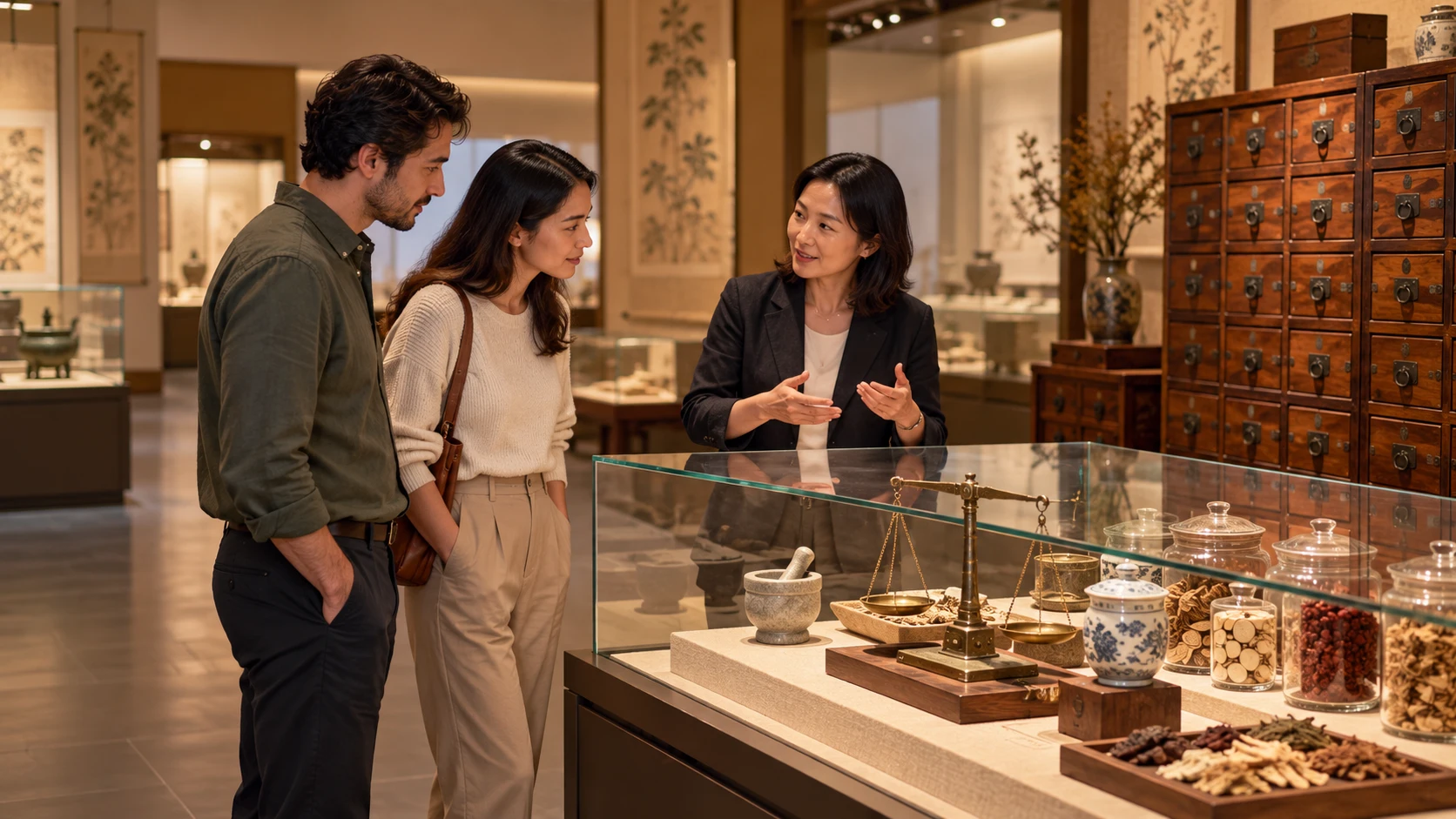
Updated 24 October 2026. The opening image is an illustration of a generic medical-history museum visit, not an actual institution, clinician, patient or treatment.
Which type of visit fits your purpose?
Choose the activity by its actual content and who is responsible for it. A demonstration is different from an assessment, and a product sold as traditional or natural is not automatically suitable for you. Keep the option to learn without receiving treatment or buying a product.
| Your purpose | Choose this kind of arrangement | Keep distinct |
|---|---|---|
| History and cultural learning | A museum, collection or specifically arranged educational programme. | Exhibition interpretation and personal medical advice. |
| A leisure or movement activity | A named class or venue with clear content and suitability requirements. | Participation in an activity and treatment of a health problem. |
| Individual clinical consultation | An appropriately registered provider and qualified practitioner, with proper communication and consent. | A clinical appointment and a sightseeing inclusion. |
| Buying herbal or wellness products | Understand the specific product and obtain appropriate professional advice where needed. | A souvenir, a medicine and the destination country’s import conditions. |
Shanghai’s September 2026 visitor information describes both TCM cultural experiences and separately developed medical services. That does not make every cultural venue a clinic or every advertised activity available on demand. Ask for the named museum programme, class or clinical department you intend to use.
A practical cultural option: Shanghai’s TCM museum
The Shanghai Museum of Traditional Chinese Medicine is on the Shanghai University of Traditional Chinese Medicine campus at 1200 Cailun Road, Pudong. It is a different destination from the general Shanghai Museum. Save the exact Chinese name, 上海中医药博物馆, and campus address when arranging transport.
The museum’s 2026 visitor notice lists opening from 9:00 to 16:00, with last admission at 15:30. It says Monday closure begins on 1 January 2027. For the 2026 arrangement, the notice describes no advance entry reservation, campus QR registration and on-site ticket purchase; the listed individual ticket is CNY15.
Ask the museum how a foreign passport is registered if the campus entry process does not fit your document or phone. Group explanation has its own advance arrangement, and an audio device does not automatically provide your preferred language. Confirm the actual visit date, language and any separate workshop before planning around it. Check the institution’s latest notice for a later trip.
Allow time to look at historical instruments and the development of medical practice without turning the visit into a clinical assessment. If a workshop uses herbs, fragrance, heat or other materials, disclose relevant allergies and ask what participation involves. A craft item or a museum explanation should not be treated as a prescription.
If you want clinical care, begin with your existing healthcare team
Discuss the purpose of the proposed consultation with your usual clinician before travel, particularly if you have an ongoing condition, are pregnant, take regular medicines or are arranging care for a child. Ask which records are useful and how care will continue after you return. A holiday enquiry cannot decide whether a particular treatment is appropriate.
The U.S. National Institutes of Health’s NCCIH guidance on TCM warns against using it to replace or delay conventional care. It notes that some herbal products have contamination or other safety problems and that improperly delivered acupuncture can cause serious harm. Tell the treating clinician about medicines, supplements, allergies and existing conditions so they can assess your actual situation.
Choose clinical care for an individual assessment, with a clear explanation of alternatives, expected benefits, uncertainty, risks and follow-up. Do not buy a guaranteed cure, a fixed prescription assembled by a travel seller or a package promising the same clinical result to everyone. Cultural interest and a provider’s experience do not remove the need for that conversation.
Check the institution and practitioner, not only the sales contact
Request the medical provider’s full legal Chinese name, address, applicable registration or clinic filing, clinical scope and the practitioner responsible. The National Health Commission’s medical-institution registration enquiry is an official starting point; the relevant local health authority can clarify the applicable registration or filing route. A tourism licence, wellness certificate or hotel contract does not establish clinical authority.
Ask the provider how to confirm the practitioner’s credentials and that the proposed service falls within the institution’s scope. Do not infer this from a white coat, a translated title or a promotional partnership. Keep the actual appointment confirmation and provider contact separate from the tour operator’s travel arrangements.
| Before booking | Get an understandable answer | Who should resolve it |
|---|---|---|
| Provider identity and scope | Legal Chinese name, applicable registration or filing, practitioner and proposed service. | The institution and relevant health authority. |
| Clinical purpose | Assessment, alternatives, uncertainty, risks and what follow-up may be needed. | Your treating clinician and usual healthcare team. |
| Communication and consent | The language of consultation, interpreter, written instructions and privacy. | The clinical provider and appropriately skilled interpreter. |
| Costs | Consultation, tests, procedures, medicines, interpretation and optional charges. | Each responsible provider before accepting extra services. |
| After the visit | Records, a contact for questions, return appointments and ongoing care. | The clinical provider in coordination with your usual clinicians. |
Request an interpreter with the relevant medical communication ability when needed. A sightseeing guide or phone translation app may help navigate a building but should not be assumed sufficient for informed consent, symptoms, risks and medical instructions. Agree confidentiality and who remains present during the consultation.
Keep the schedule flexible around the real appointment
A clinical appointment may involve registration, consultation, tests, discussion and further decisions. Do not treat a nominal appointment time as the total duration. Ask the provider what the day may involve, whether another visit is possible and what travel or activity restrictions they may advise afterwards.
For a cultural museum visit, a half-day block with the full campus transfer may be a useful starting allowance. For medical care, allocate time according to the provider’s instructions rather than a sightseeing quota. If follow-up is required, a quick visit immediately before an international departure may not fit.
| Travel block | What to arrange | Avoid assuming |
|---|---|---|
| Cultural museum outing | The exact campus/venue, document process, language and full transfer. | A museum ticket includes a workshop or clinical consultation. |
| Clinical appointment | Registration, consultation and time for any further decisions specified by the provider. | The appointment time is the whole duration. |
| Possible follow-up | A practical return visit and communication after departure, if advised. | One holiday stop completes every course of care. |
| Rest and accommodation | Actual room access, privacy, meals and suitable transfers. | A retreat description establishes clinical facilities. |
| Departure | Records, medicines documentation, provider instructions and the actual connection. | A receipt answers all insurance or customs questions. |
Choose accommodation around actual access, mobility, meals and the appointment location. A relaxing-looking retreat can be inconvenient for the clinic or offer no clinical service at all. Confirm the room, stairs or lifts, privacy, transport and emergency contacts, especially when a traveller may need more rest.
Medicines, herbal products and bringing items home
Have the treating clinician and your usual healthcare professionals assess any proposed product alongside existing medicines and supplements. Do not stop or change prescribed treatment on the advice of a tour seller. Ask the actual clinical provider for understandable written instructions, ingredients, product identification and the plan for questions or adverse effects.
Keep medical and purchase records, original packaging and any prescription required for travel. Before carrying a product across borders, ask the relevant customs and health authorities about its specific ingredients, quantity and destination rules. A legal purchase or a hospital receipt does not answer every import restriction, especially for plant or animal materials.
A souvenir tea, food or fragrant sachet should not be assumed safe for ingestion or suitable for a medical condition. Ask exactly what it is sold for and keep cultural learning separate from a treatment decision. Decline an unwanted purchase; participation in a tour should not require buying a clinical product.
Costs, insurance, privacy and consent
Separate travel costs from medical fees. Request the consultation charge, tests, procedures, medicines, interpreter and follow-up terms from the responsible providers. Ask what is optional and how an additional charge is authorised. A low headline price may describe only the initial appointment.
Ask your insurer about the exact purpose and services before paying. Ordinary travel cover, planned treatment, complications and repatriation can have different conditions. A provider displaying an insurer’s logo does not establish your personal cover or direct billing. Obtain the applicable response and payment process for your own policy.
Share medical records through the healthcare provider’s agreed secure channel, with appropriate consent and only what is needed. A travel planner usually needs the logistical requirements, not a full clinical history. Decide separately whether photographs or information may be used for publicity; agreeing to care or a museum visit is not permission to advertise your personal story.
Wellness activities still need a clear description
For a movement class, spa or other leisure session, ask about the actual instructor or practitioner, intensity, facilities, hygiene, changing arrangements and any contraindications the provider needs to know. Get clinical advice when an existing condition could affect participation. A gentle-sounding title does not mean the same activity suits every person.
Explain privacy, modest clothing, practitioner preferences, halal meals, allergies and prayer needs before choosing the venue. Ask about ingredients and preparation for food rather than inferring suitability from a “healthy” or vegetarian label. A quiet hotel room and a dietary menu should be real arrangements, not decorative descriptions.
What Vero Trip needs for the travel plan
Send dates, destination, party size, preferred type of cultural or wellness activity, mobility, language, accommodation and food needs through Vero Trip’s planning enquiry. If you already have a clinical appointment, provide the location, time and logistical requirements; send medical details directly to the healthcare team through its appropriate process.
The TCM and wellness collection can help identify travel interests. Ask for the named activity, responsible provider, inclusions, transport and change terms in writing. A travel outline does not provide a diagnosis, prescribe treatment, guarantee an outcome or confirm a medical appointment. Clinical decisions remain with appropriately qualified healthcare professionals and the traveller.
Related Journeys to Compare
These existing routes offer starting points for the region or travel interests discussed above. Read the full daily itinerary to see what is included. A visit described in this guide, a specialist session or an international border crossing is added only when confirmed in your own programme.

