Choose Shangli Ancient Town for a focused heritage outing during a Ya’an stay: old lanes, the Erxian Bridge setting and time to look at Han Family Courtyard’s architecture. A short walk and a seated meal can be enough. Stay locally only when you want a slower evening or another complete Ya’an-area day; an overnight is not required to make the town worth visiting.
Shangli — 上里古镇 — is in Ya’an’s Yucheng district. It is a separate town visit from Bifengxia’s panda base and from Mengding Mountain’s tea landscape. Begin with the place you want to spend time, then decide whether to use Ya’an city or a town-area property. Avoid making a panda visit, a tea-mountain excursion and the old town compete for one visiting day.
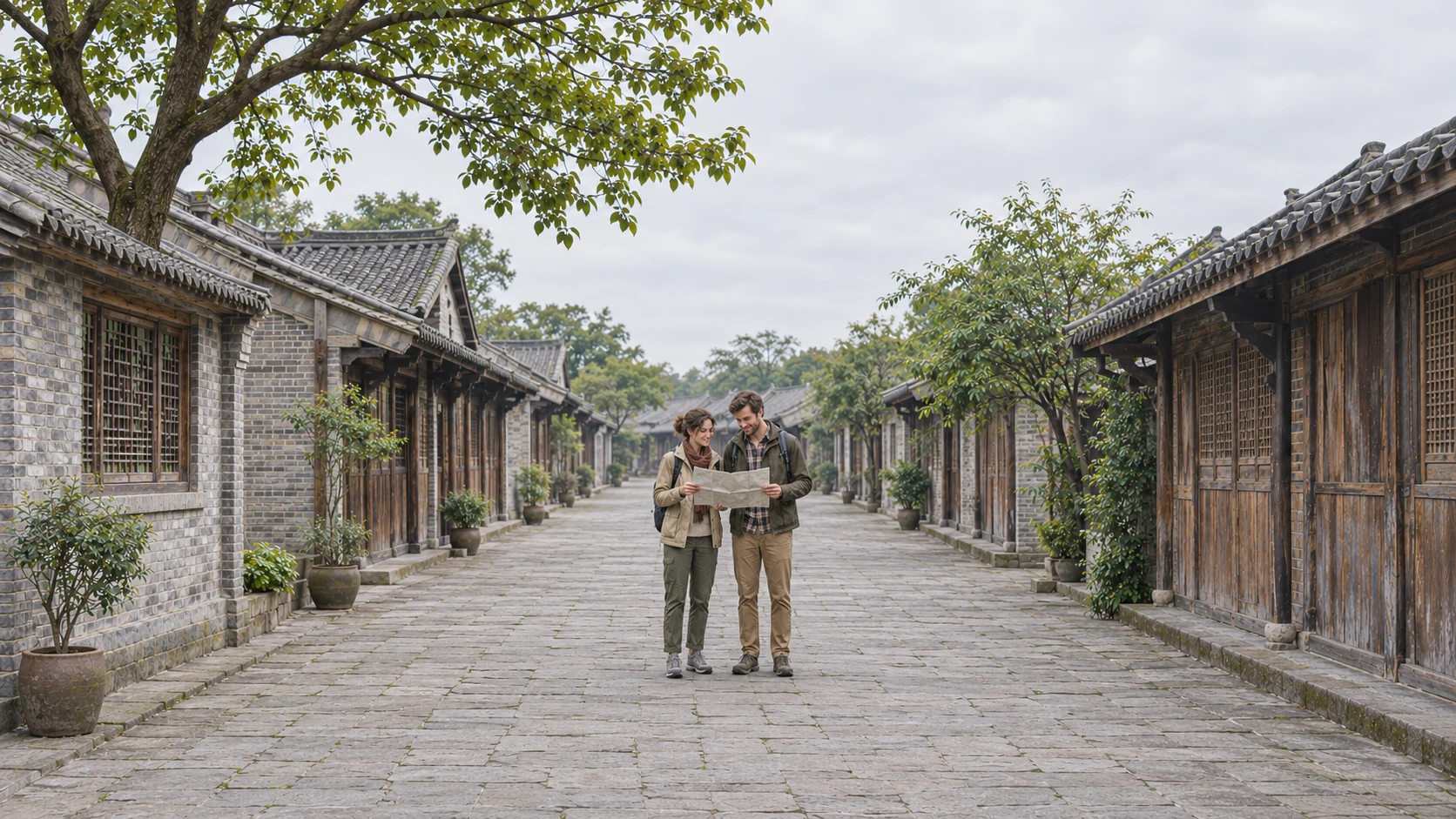
Cover: reused original AI illustration of two fictional adults reading a map in a generic western Sichuan-style lane. It is not a photograph of Shangli, Han Family Courtyard, a particular building or facility, current conditions, customers, a guide or an operated Verotrip departure.
Three choices within a heritage visit
| Focus | What to look for | Allow for |
|---|---|---|
| Old lanes and a meal | The relationship between streets, shops and ordinary town activity. | A short walk, a comfortable seat and the return to the vehicle. |
| Erxian Bridge / 二仙桥 | The stone bridge and its waterside setting from an open public approach. | Footing, other pedestrians and the conditions beside the water. |
| Han Family Courtyard / 韩家大院 | Courtyard arrangement and carved architectural details in the visitor areas that are open. | A separate entry decision, any charge and time to look rather than rush through. |
Sichuan Pictorial’s village-heritage account places Shangli’s main visitor area in Wujia village and identifies Han Family Courtyard and Erxian Bridge as local landmarks. Its historical account dates the courtyard’s beginnings to 1824. These details help you choose what to see; they are not current admission or opening instructions.
Give the courtyard a clear purpose. Look at the transition between entrance, open court and adjoining rooms, then choose a few carved windows or timber details to study. The Sichuan Daily account of Han Family Courtyard describes interconnected courts and varied carved designs. An interpreter can help explain the images and architectural arrangement without turning every room into a stop.
Check which spaces visitors may use before entering. An open outer door does not establish access to every room, upper floor or private living area. Ask before photographing residents and follow the instructions for interiors and protected objects. The value of a heritage visit is in noticing details, rather than touching carvings or moving furniture to arrange a picture.
A practical order: lanes, a selected interior, lunch and bridge views
Start at the agreed vehicle drop-off and save the collection point on your phone. Take an easy first walk through the public lanes to understand the layout, then decide whether the courtyard visit suits the day’s opening and your interests. This keeps a paid or longer interior visit deliberate, instead of joining a queue simply because it is beside the route.
Pause for a proper meal. Ask for a current menu, check portions and explain spice preferences or dietary needs before ordering. A dish praised in an older travel account does not establish today’s menu, price or ingredients. You can choose an ordinary meal close to the walking area without booking a formal tasting programme.
Use Erxian Bridge as a separate viewing choice within the remaining walk. Find an open, stable public vantage point and leave room for people using the bridge. The bridge, its approach and a riverbank path can involve different footing. A picturesque reflection is not permission to step into the water, climb a wall or stand on a barrier.
If the party wants a shorter visit, keep the lane walk, one main heritage interest and a seated break. The exact order can change with weather and opening arrangements. You do not need a prescribed circuit to enjoy the town, and a shorter return is preferable to carrying on after the group has tired.
Ya’an city or accommodation near Shangli?
| Base | Choose it when | Check before booking |
|---|---|---|
| Ya’an city | You want a city hotel, a separate Shangli outing and flexibility for meals or onward travel. | The real hotel-to-town journey and where the vehicle collects you. |
| A property near the old town | Time in the town after day visitors leave is part of the holiday you want. | Vehicle approach, room access, heating, hot water and an actual evening meal arrangement. |
| No local overnight | Shangli is a selective stop within a road day that comfortably supports the complete journey. | Total driving, bags, arrival time and the final destination. |
A listing described as “Shangli” may be in the wider town area rather than beside the lane you hope to walk. Ask for the exact Chinese address and map pin. Compare the route from the vehicle to reception and from reception to the room, including steps and any distance over uneven paving. These details matter for suitcases, children and travellers using walking aids.
A central-looking courtyard photograph does not confirm a quiet room or easy access. Ask about the room’s position, bathroom, bed layout and temperature arrangements for the season. If dinner needs advance notice, settle it before arriving late. Staying near the town is useful when you want time there, not simply because an itinerary needs another hotel name.
For a city base, use the Ya’an destination page to place the stop within a wider journey. The railway station, your hotel and Shangli are three separate points. A train to Ya’an removes neither the station transfer nor the onward road journey to the town.
One night or two: count the full visiting day
With one Ya’an-area night, you can arrive, settle in and make the town visit on the following day before returning to Chengdu, provided the complete return fits. Two nights give a full day between transfers and let you return to the same room after the outing. Choose that structure if walking pace, a longer architectural visit or a less hurried evening matters.
| Day in a two-night stay | Suggested focus | Overnight and limit |
|---|---|---|
| 1 — arrive | Travel to the selected Ya’an-area base, take bags to the room and have a local meal. | Night 1. Keep any town walk short and optional after the journey. |
| 2 — Shangli | Make lanes, Han Family Courtyard if open, a meal and selected bridge views the main day. | Night 2 at the same base. Leave time for the full return. |
| 3 — continue | Have breakfast, collect luggage and travel to the agreed next base. | No third night assumed. Add a stop only when the road sequence supports it. |
If you want pandas, give Bifengxia its own visiting block. If tea history and a mountain visit are the priority, compare the Mengding Mountain guide. Add another local night or change the main focus instead of calling all three a relaxed single day.
A two-night stay has one full middle day. It does not provide a full Shangli day, a full panda day and a full tea day between arrival and departure. For a longer stay, select the additional interest you actually want and give it a separate day, with its own access, transport and walking assessment.
Plan the complete road journey and the final approach
Begin with the actual Chengdu or Ya’an starting address, not only the city name. Agree the pickup point, road allowance, comfort stops and the final Shangli drop-off. The collection arrangement after walking should be equally clear. A driver who drops you at the town does not automatically remain available throughout the visit.
Confirm whether the vehicle waits, returns at an agreed time or supplies only one road leg. Settle the contact method, waiting basis, parking and any overtime charge. Keep the Chinese names of both the pickup point and the final hotel. If a mobile connection is difficult when you finish, a meeting arrangement made in advance is more useful than an unplanned request for another ride.
For a road trip with luggage, give the organiser the number of passengers and every large bag. Establish who keeps the bags while you walk and what happens if the room is not ready. A vehicle seat count is not a suitcase-capacity statement. Take only what you need into the lanes and keep your original travel document available for any agreed accommodation or admission check.
Keep the transfer comfortable when continuing beyond Ya’an. The town is a deliberate stop or an overnight choice, not free sightseeing time hidden inside a long drive. An important train or flight should determine the final departure margin before another courtyard visit is added.
Rain, walking comfort and a shorter alternative
Stone paving, bridge steps and waterside approaches can be slippery in wet weather. Reduce the outdoor section when footing or water conditions are unsuitable, and follow any barrier or closure. Do not replace a closed public approach with a shortcut along the river or private land.
On a wet day, an open courtyard visit and a sheltered meal may suit the group better than a long bridge-viewing walk. Confirm the interior is admitting visitors and that the approach is workable. A building’s historical interest does not guarantee a dry, step-free route or a place to sit in every room.
Agree a meeting point if companions browse separately. Someone who stops for tea should know when and where the party returns, and whether that changes the vehicle collection. Comfortable shoes, a manageable day bag and a flexible stopping point are more useful than a promised walking duration for every visitor.
Foreign visitors, fees and what is actually arranged
A May 2024 official account of overseas visitors in Ya’an includes Shangli among the places they visit. This supports an ordinary public-town visit. It does not establish the current booking process, opening of a particular interior or passport check-in arrangements at every hotel. Confirm those details with the selected venue or accommodation.
Compare costs by part: the road journey and waiting, any paid interior, interpretation, meals and room nights. A street walk and a heritage interior are different access questions. This guide does not quote an old entry price as today’s tariff or assume that every public area and building is covered by one ticket.
Price on request for arranged travel services. Tell Verotrip your dates, arrival and departure points, preferred Ya’an or Shangli base, group size and walking needs through Plan My Trip. Say whether architecture, a short town walk or an overnight atmosphere matters most. The written proposal should list the transport, return, language support, admission, meals and rooms that are actually agreed.
Questions about Shangli Ancient Town
Must I stay in Shangli?
No. A town visit from a Ya’an base can work well. Stay nearer the town when you want a slower evening and have checked the actual property and meal arrangements.
Can I count on entering all of Han Family Courtyard?
No. Check the current visitor areas and any admission arrangement. Historical descriptions explain the buildings, not unrestricted access to rooms or private space.
Is the town automatically an easy, step-free walk?
No. Ask about the exact approach, paving, bridge steps, room access and rest points. A shorter lane visit can be chosen without promising that every feature suits every mobility need.
Does a route passing through Ya’an include Shangli?
No. A road-stage name does not reserve time for a town visit. The extra road leg, visiting block and complete return or onward journey must be written into the actual plan.
Checked 5 November 2026. Cultural background uses the linked Sichuan sources; public international visiting is documented in the dated official account. Current room, admission, transport and service details need date-specific confirmation. Cover: reused original AI illustration of fictional people and a generic lane, not a Shangli building, current visitor condition or customer record.