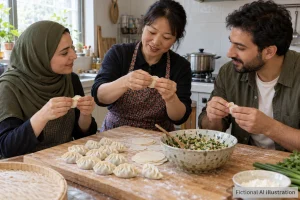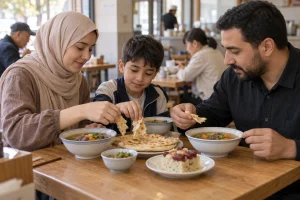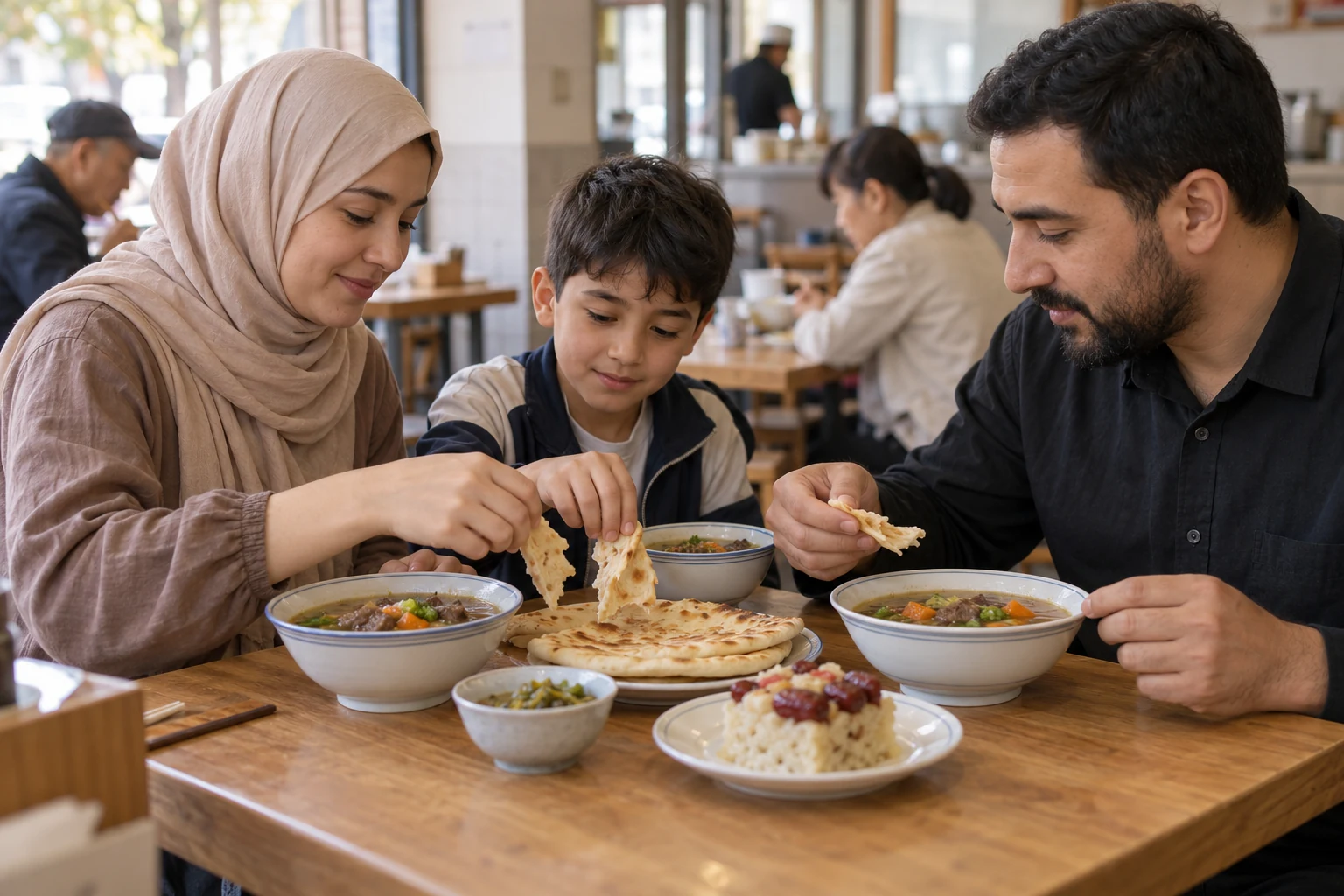
Cover: Illustration created with generative AI. The people, food and setting are fictional; it does not identify a restaurant or establish halal preparation.
A Hui-style breakfast can be one of the easiest ways to enjoy Xi’an’s food culture without attempting a long evening crawl. Start with one main choice: a warm bowl of meatball hulatang with bread, or a smaller sweet-rice stop followed by a later meal. The aim is a breakfast you can enjoy before sightseeing, with the ingredients and timing understood.
Know what the breakfast names refer to
Meatball hulatang, 肉丸胡辣汤, is associated with Xi’an’s Hui breakfast tradition. The city-published description of hulatang identifies beef meatballs, vegetables and a thick peppery soup, while noting that ingredients vary. That makes it a dish to ask about, rather than a recipe that is identical at every stall.
Zenggao, 甑糕, is a steamed rice-cake option often discussed in Xi’an food introductions. It is different from mirror-shaped jinggao, 镜糕. Save the Chinese name and ask which version is being served. A small sweet portion can be a change of texture, but it does not need to become a second full breakfast after a large bowl and bread.
| Breakfast choice | What the experience is like | What to establish |
|---|---|---|
| Meatball hulatang | A savoury, peppery bowl with vegetables and meatballs. | Meat, broth, seasoning and any cooking alcohol relevant to your requirements. |
| Bread with soup | A substantial warm breakfast rather than a small tasting. | How much bread to order and whether it is served separately. |
| Zenggao | A steamed sweet-rice choice with the vendor’s particular filling or layers. | Ingredients, toppings and the portion you want. |
| Jinggao | A separate small steamed-rice snack with its own shape and toppings. | Do not order by an English rice-cake label alone. |
Set the breakfast around the day ahead
On a city morning, leave time to choose a business and sit down. On a Terracotta Warriors day, breakfast must finish early enough for the road transfer and reserved entry period. A museum booking is not a reason to rush hot food or leave the party looking for a meal at the last minute.
If the group has an early pickup, ask whether a suitable breakfast can be arranged near the hotel or whether carried food is more practical. A hotel buffet should be checked on its own basis. Being in a city with a Hui food tradition does not establish the ingredients or kitchen practices of a particular hotel breakfast.
Order a small first round
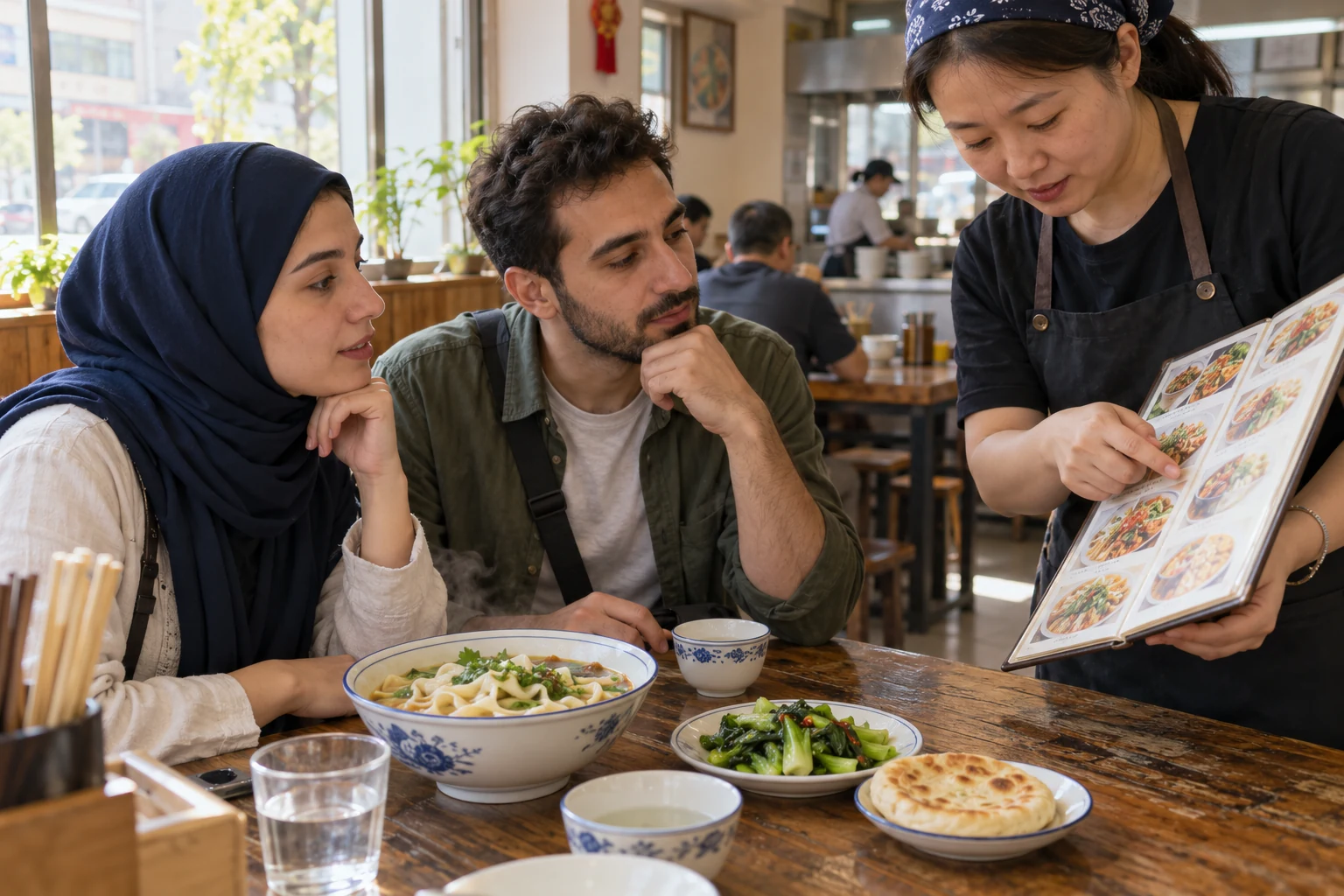
Begin with one bowl or one small sweet portion, then decide whether you need more. Bread can make a soup breakfast much more substantial. If you want to try both a savoury and sweet item, ask about the portion and how your party can share, rather than ordering a full serving of every familiar name.
Peppery and chilli-hot are not identical descriptions. Ask how the soup is seasoned and whether extra chilli is added separately. For children or anyone who dislikes strong seasoning, a request for less chilli will not necessarily remove pepper that is already part of the base. Choose another item if the recipe cannot be adjusted.
| Useful request | Chinese | Why it helps |
|---|---|---|
| Ask how spicy the soup is | 这个汤辣吗?胡椒味重吗? | Distinguishes general heat from a strong pepper flavour. |
| Keep added chilli separate | 辣椒可以另外放吗? | Lets you decide about an extra condiment. |
| Check a sweet filling | 这个里面有什么馅料? | A rice cake can have several fillings or toppings. |
| Start with a small portion | 有小份的吗? | Avoids treating breakfast as a large tasting challenge. |
Use the kitchen, not the dish name, for dietary decisions
The word Hui describes a cultural context; it is not the full answer to an individual meal requirement. If you need a halal kitchen, particular meat sourcing or no cooking alcohol, discuss it with the business. The historical hulatang description cited above lists possible ingredients, not a current guarantee about the place in front of you.
Keep other food needs separate. A sweet rice dish may have nuts, sesame or other toppings, while a soup can contain ingredients that are not obvious from a photograph. Ask about the components that matter to your party and use a business able to answer. A guide can help communicate, but should not guess at a recipe.
Make breakfast a small neighbourhood visit
An easy sequence is breakfast, a short lane walk and then the main city visit. Keep the walk brief enough that it does not consume the morning reserved for a museum or the City Wall. If the food is the main interest, choose a slower city day rather than squeezing it before a mountain departure.
Take photographs of your own meal before beginning to eat if you wish, and ask before making a close portrait of a vendor. Save the actual shop pin after a successful visit. Do not assume that an old social-media post gives today’s serving hours or that a similar shop name is the same business.
Questions that change the plan
Are zenggao and jinggao the same?
No. Use the Chinese characters and ask the vendor which snack is being served. English rice-cake labels can be too broad to distinguish them.
Does less chilli make hulatang mild?
Not necessarily. Pepper and other seasoning may already be in the base. Ask about the flavour before ordering and choose a different item if needed.
Can this fit before an early tour?
Only when breakfast, the hotel meeting point and the transfer leave a workable schedule. For an early mountain or airport departure, arrange the food plan beforehand.
Turn the ideas into a workable Xi’an day
Choose the route that fits your time and interests: Xi’an Evening Food Walk: Hui Lanes, Snacks & a Seated Meal; Xi’an Cooking Experience: Choose Dumplings or Handmade Noodles. The named stops describe a route; meals, guiding language, transport, admissions and any specialist arrangement are specified in your dated proposal.
For the overall city base and the balance of sightseeing days, see the Xi’an trip-planning guide. Share your dates, walking preferences and food or prayer needs through Plan My Trip so the day can be shaped around your party.