For a first hiking trip in China, choose an open, managed walking route that fits your comfortable time on your feet, tolerance for steps and travel dates. A shorter Great Wall visit or a selected valley walk can fit a sightseeing holiday. Huangshan suits travellers who want mountain scenery and can manage repeated stair climbs; Yading needs a separate decision about high altitude. Add a more demanding walk only when the whole group wants that effort and the route has a clear, permitted exit.
Start with the walk you can enjoy, then build the hotel and transport around it. A cable-car ticket, a dramatic photograph or a two-day tour label says little about the walking between stops. Use this guide to narrow your choices, then follow the destination’s current visitor map and the details in the linked local guides.
Choose a hiking destination by the day you want
The options below are planning choices rather than a universal difficulty ranking. One person’s easy day can be another person’s limit, especially with children, knee problems, heat or altitude. None of the suggested day allowances establishes a fixed walking time or a guaranteed opening.
| Destination and setting | Choose it for | What changes the effort |
|---|---|---|
| Great Wall near Beijing | A selected open wall section within a city-based holiday. | Repeated steep steps and descents remain after an uphill ride. |
| Golden Whip Stream, Zhangjiajie, Hunan | A flexible stream-valley walk below the sandstone pillars. | The full corridor is a substantial walk; the selected segment and exit matter. |
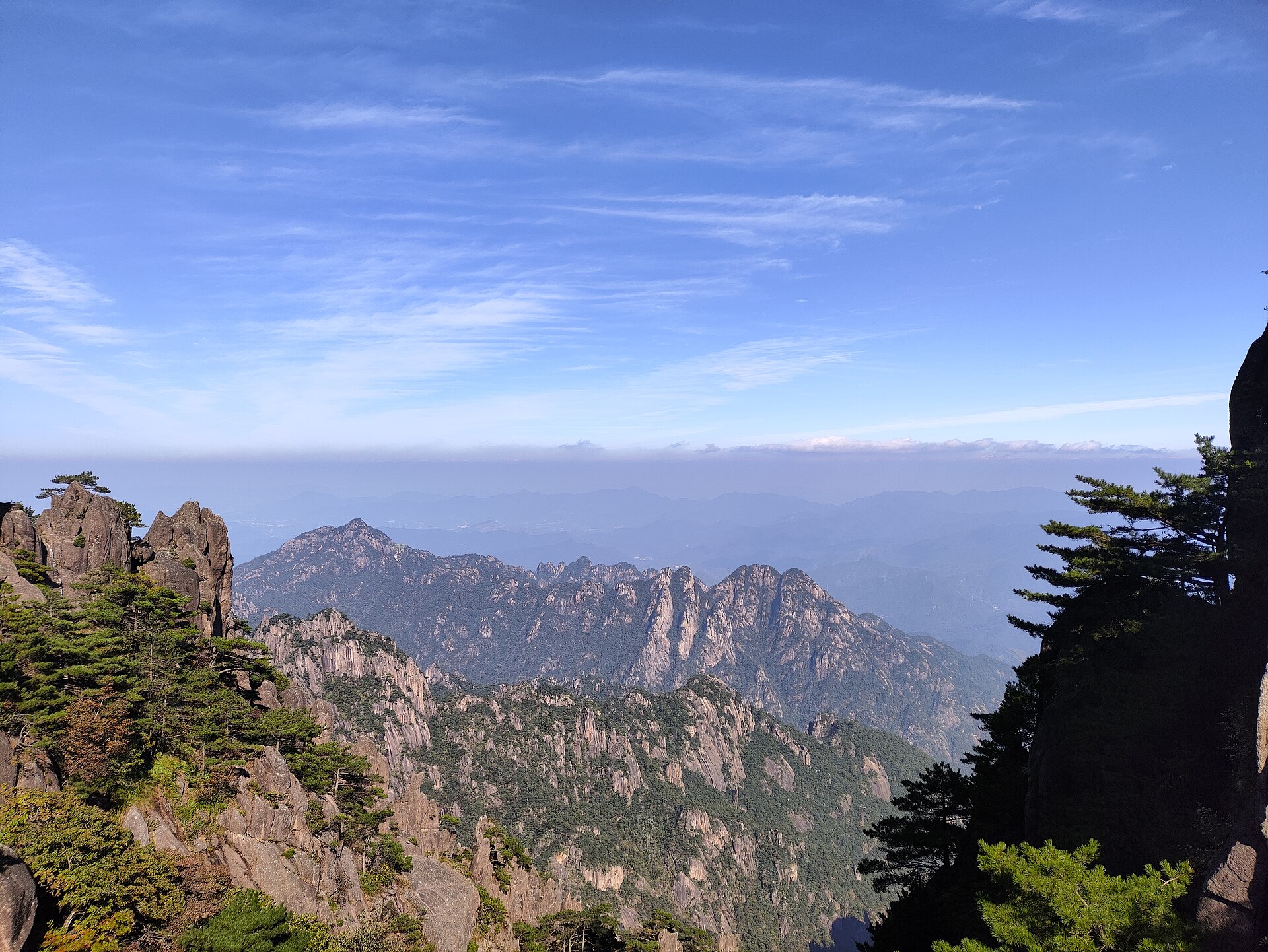
| Huangshan, Anhui | A mountain day or an overnight for granite ridges and pines. | Cable cars reduce the approach; ridge paths still have many stairs. |
| Yuhu Village, near Lijiang, Yunnan | A village-and-lake walk with room to shorten the outing. | Uneven local surfaces, weather and the group’s adjustment to elevation. |
| Cangshan near Dali, Yunnan | An agreed section of an approved mountain path. | Cable-car access, the exact permitted segment and the return to the same base. |
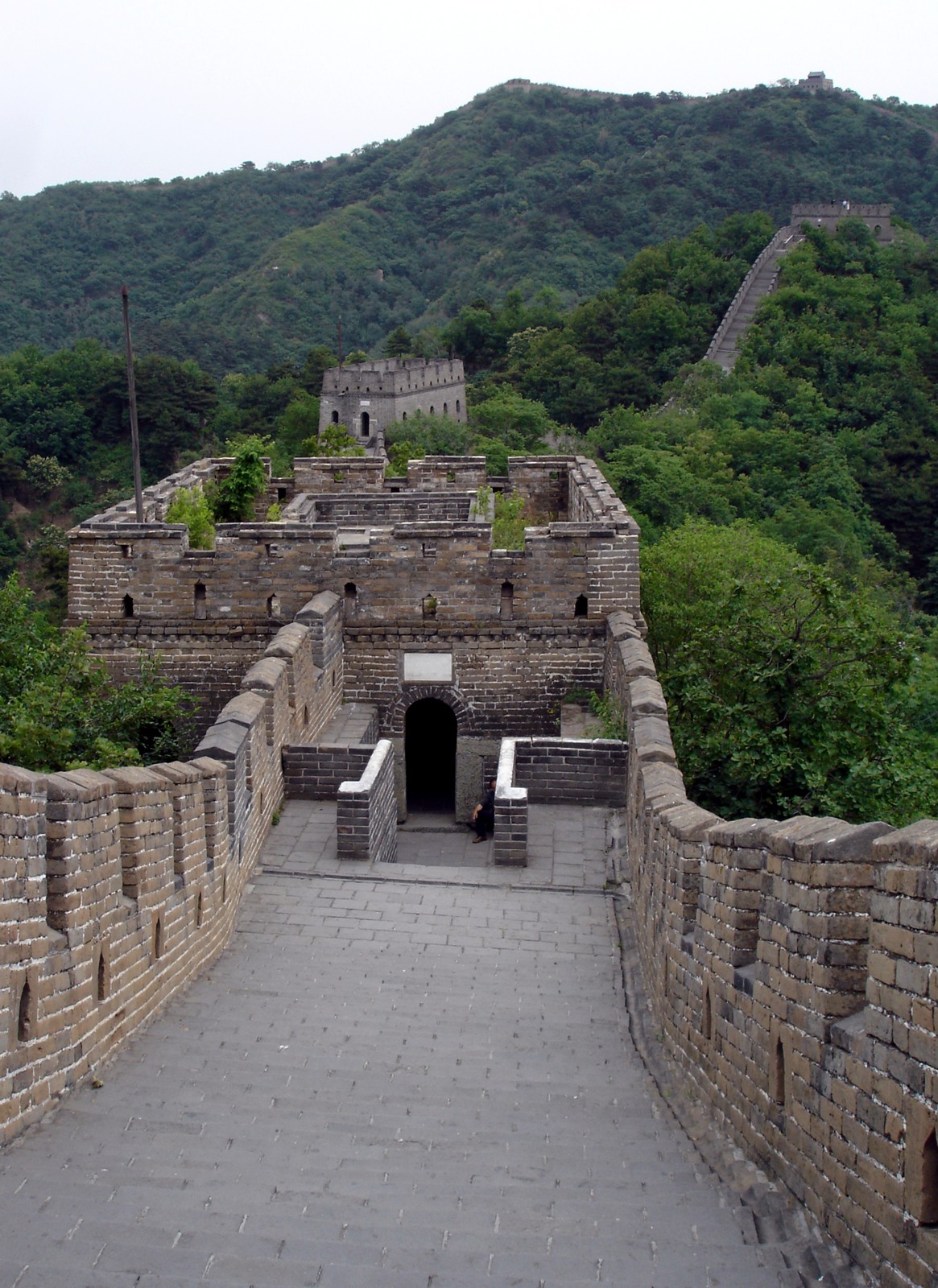
| Shudu Lake, Pudacuo, Yunnan | A defined lakeshore boardwalk within a managed park. | Altitude, steps and the walking-to-bus connection still need planning. |
| Yading, Sichuan | A high-altitude landscape visit with a route matched to your condition. | Short, middle and long routes differ; the longer walk requires substantial endurance. |
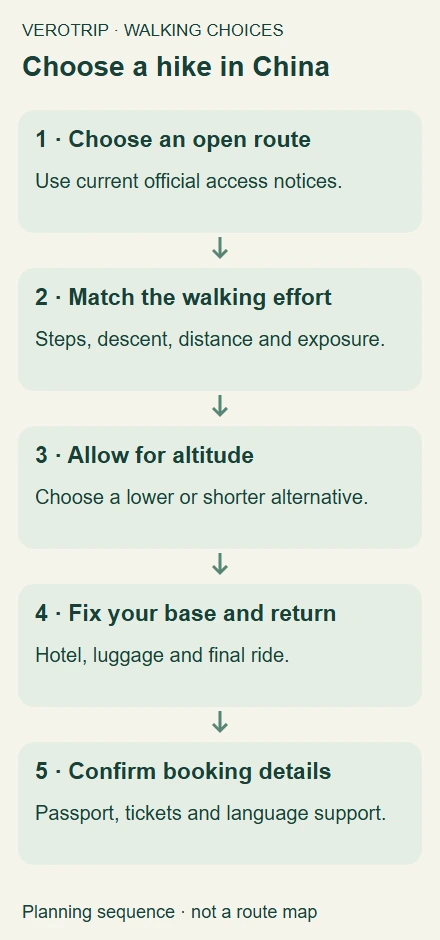
Great Wall: choose a segment, rather than a distance target
For a first visit from Beijing, decide how much time you want on the wall before choosing the ascent and descent. A short out-and-back on an open section can give you the experience without turning the day into a long ridge walk. A cable car may remove the initial climb, but the wall itself can rise and fall sharply between watchtowers.
People wanting a longer walking day should discuss the exact permitted start and finish, not simply request “the wild wall.” An old map or an attractive broken-wall photograph does not establish legal public access. Our Great Wall visiting guide compares sections, rides, walking effort and transport. Leave the return vehicle arrangement clear enough to work if you finish early.
Golden Whip Stream: keep a shorter return option
Golden Whip Stream is a valley corridor in Zhangjiajie National Forest Park, part of the Wulingyuan area. It gives a different view of the landscape from the high viewpoints. A selected section can suit a group that wants more walking and fewer extended staircase climbs, provided the actual surfaces and current access fit their needs.
Do not turn “a valley walk” into a promise of a short, completely step-free trip. Public descriptions use different lengths for the stream and walking corridor, so set a named turnaround point and confirm the distance on the current park map. An out-and-back can be more practical than completing the corridor and then having to reach a different hotel entrance. Keep food and drinking water with you; do not rely on every stall being open or hot water being available.
Golden Whip Stream and Tianmen Mountain are separate visits with different ticketing and transport. Put a high-level viewpoint outing on another day if it would remove the valley walk’s rest breaks. The geopark’s Golden Whip Stream description identifies the corridor; it does not guarantee today’s walking conditions.
Huangshan: allow for stairs between the cable cars
Huangshan is a good choice for granite peaks, pine trees and changing mountain views. Choose it because you want to walk through that landscape, rather than because someone called a cable-car route effortless. Going up by one cable car and down by another can still mean a demanding ridge traverse. A shorter return to the same cable-car area may suit your group better than trying to cover every named peak.
One full mountain day can suit a selective visit when arrival, weather and return transport align. An overnight on the mountain gives more room for walking and an early viewpoint outing, but it also means carrying an overnight bag and returning from the viewpoint to your room or exit. Sunrise and a sea of clouds are weather-dependent experiences, not hotel inclusions.
Use the Huangshan management notices to check the entrance, cable cars and paths for your date. The East Gate and Donghai cableway opened in June 2026, so older descriptions of only three cableway approaches are incomplete. That does not make the new approach the best choice for every hotel or walking plan. Tiandu Peak has separate opening and reservation conditions; a general mountain booking is not a promise that every peak is included.
Yunnan: choose a village, approved path or lakeshore day
Yuhu gives a village setting near Lijiang with a walking day that can stay modest. Cangshan, near Dali, offers mountain-path choices with their own access points. Pudacuo, near Shangri-La, has managed lakeshore walking and internal transport. They are useful alternatives to adding a long trek simply because you have reached Yunnan.
For Cangshan, use an agreed section of the approved path system. The Dali government route list names a Jade Belt Road section between Qingbixi and Taoxi Bridge; it does not turn an informal summit track into a visitor route. For Pudacuo, plan the selected boardwalk and bus connection together. A wooden path beside a lake is still walking at elevation and may have steps.
See the Yunnan hiking route comparison for regional choices, and the Yuhu Village and Longnv Lake walking guide for the village day. Add these to a realistic Dali–Lijiang–Shangri-La journey rather than crossing the region repeatedly for single walks.
Yading: the shorter route is still a high-altitude visit
Yading is in Daocheng County, Sichuan. Its gateway area includes Shangri-La Town, which is different from Shangri-La city in Yunnan; the similar name should not determine your airport, hotel or transfer. Decide which Yading route suits your condition after allowing time to adjust to altitude.
The county’s August 2026 account distinguishes short, middle and long visitor routes and identifies the longer route as a high-altitude endurance walk. A short visit may reduce walking effort, but it does not remove altitude. Neither a rented oxygen cylinder nor strong fitness makes the longest route the automatic choice. If your holiday cannot allow a measured approach, choose a lower-altitude walking destination.
Separate walking effort, altitude and exposure
Ask three different questions: can you walk the distance, can you manage the repeated steps, and do you feel comfortable on the route? A broad staircase may be physically tiring without feeling exposed. A short lookout may be unacceptable to someone uncomfortable with heights. A smooth boardwalk at altitude may feel harder than a longer walk at a lower elevation.
Describe your normal activity in practical terms when planning: the amount of comfortable walking you do, whether repeated descents bother you, and how far your youngest or slowest traveller wants to go. An enthusiastic family review does not establish the suitability of the same route for another child. Keep the group together or agree a staffed, accessible meeting place before anyone takes a longer optional section.
For a route relying on an uphill or downhill ride, ask what happens if wind, maintenance or capacity changes the service. Walking down the entire mountain is not a casual substitute for waiting in a queue. Agree a shorter route, a staffed waiting place or a change of day with the operator before the trip.
For high-altitude travel, the CDC’s altitude guidance supports gradual ascent and only mild exercise during the first 48 hours at altitude. Fitness does not protect everyone from altitude illness. Do not continue higher with symptoms; worsening symptoms need descent and medical help. Discuss relevant medical conditions with a clinician before fixing a high-altitude itinerary. Build an alternative day into the plan rather than relying on medicine or equipment to preserve the schedule.
Popular trekking names need an access check
Before using an online route, identify which authority or scenic operator opens that exact area. “People walked it last week” is a description of behaviour, not permission. A guesthouse, driver or guide cannot replace a required public-access decision.
This matters at Tiger Leaping Gorge. The Shangri-La notice published in February 2026, signed in October 2025, names the High Trail and Middle Gorge among undeveloped areas prohibited for visitor activity. The developed Upper Gorge attraction is a separate visit; its September 2026 operating report also records a temporary closed walkway and platform. Check the current designated visitor route. Do not substitute a two-day High Trail plan or a river-level ladder from an old blog.
Yubeng also needs exact route confirmation. Its villages and the named mountain trails are not interchangeable permissions. Choose a currently permitted visit with a clear return arrangement; if that cannot be established, use a different walking day. The Tiger Leaping Gorge access and planning guide explains the distinction for that destination.
Build the hotel, luggage and return around the walk
Give the mountain a usable day. Arriving by train, transferring to a village, checking in, queuing for a ride and starting a walk are different parts of the trip. Adding their labels to one day does not create enough daylight. Where practical, sleep at a suitable base before the walking day and keep the following departure flexible.
| Trip shape | A practical arrangement | Confirm before committing |
|---|---|---|
| City-based walking day | Keep the same hotel and carry a day bag. | Correct entrance, permitted finish and return vehicle. |
| Mountain day from a base | Arrive first; leave the large bag at the hotel. | Cable-car route, last descent and collection point. |
| Mountain overnight | Use the booked mountain room and a small overnight bag. | Room access, heating, meals and bag storage below. |
| High-altitude stay | Include gradual arrival and a shorter alternative. | Sleeping locations, physical tolerance and help if unwell. |
| Point-to-point walk | Arrange the bag transfer and both ends in writing. | Permitted route, named recipient and fallback collection. |
Do not assume a hotel will transfer luggage to a different village or that a bus will accept a large bag. Agree who receives it, how you contact them and what happens if you turn back. Carry your passport, booking information, phone, essential medicines, water and a layer for changing conditions in the bag you keep.
If a same-day train is necessary, shorten the walk around the earliest sensible finish rather than arranging a return against the final descent time. Keep the station name in Chinese and English. The scenic-area gate, mountain cable-car station and railway station can be separate road transfers.
Book the exact entrance and service scope
Check whether the booking platform accepts your passport type and how the scenic area checks that booking at the gate. A Chinese identity-card instruction is not a complete foreign-passport procedure. Carry the original passport that matches the booking. Huangshan’s May 2026 visitor notice specifically described passport and booking-information checks for overseas visitors; its three-day discount was temporary and should not be assumed for another date.
A mountain quotation should separate admission, internal buses, cable cars, hotel, meals, guiding and transport. Ask whether the guide walks with you, meets you at the gate or only supplies a driver. “Driver-guide” does not establish English interpretation on the path. For a demanding route, agree the guide’s actual scope and a realistic turnaround decision before paying.
Travel insurance should match your actual activities and elevations. Ask the insurer about a named route, evacuation and any exclusions; buying a standard sightseeing policy does not establish trekking or technical-climbing cover. If you need a step-free route, ask for the exact entrance-to-exit arrangement and available assistance, rather than relying on “family-friendly” wording.
Match the season and keep a useful alternative
There is no single best hiking month for all of China. Choose dates for the region and altitude, then check the near-term weather and operator notices. A valley outing can be appealing in cloud, while a mountain ridge may lose its main viewpoints. Heavy rain is a reason to reassess access, not a promise that a sheltered valley is safe to enter.
| Condition | Change the plan | Keep this detail clear |
|---|---|---|
| Heat or humidity | Shorten the walk and use cooler parts of the day. | Shade does not remove heat; carry water and rest. |
| Rain or low cloud | Use an open shorter route or a town-based day. | Check the operator’s warnings; avoid closed paths and streams. |
| Ice, snow or strong wind | Follow closures and change the day if needed. | A cable-car booking does not guarantee operation. |
| Busy holiday or long queues | Reduce optional viewpoints and protect the return buffer. | Earlier arrival does not guarantee an empty route. |
| Tired child or sore legs | Use the planned turnaround or a shorter permitted loop. | Keep pickup, meals and a warm rest point reachable. |
For food, decide what you can reliably carry and where the next meal will be. Vegetarian-looking dishes can contain meat stock or lard. If you need halal food or allergy precautions, agree suitable meals before a rural walking day and carry a translated ingredient note. A room break can be more practical for prayer than assuming there is a facility inside a mountain attraction. Keep wildlife viewing at a distance, secure food and avoid feeding animals; follow the park’s signs rather than copying a photograph pose.
Plan a walking trip with VeroTrip
Send your dates, arrival and departure cities, number and ages of travellers, passport nationality, usual walking level, comfort with steps and heights, and any meal or room needs. Say whether you want a short scenic walk, a full mountain day or a more demanding itinerary. Include your luggage count and whether English guiding is needed on the walk.
Compare the existing China hiking and mountain travel collection, Yunnan hiking options and Sichuan hiking options. For a smaller first step, see the Yuhu walking-day enquiry. Use Plan My Trip to discuss a route with the entrance, hotel, guiding and transport listed in a written proposal. Availability and the included services depend on that proposal and your travel dates.